

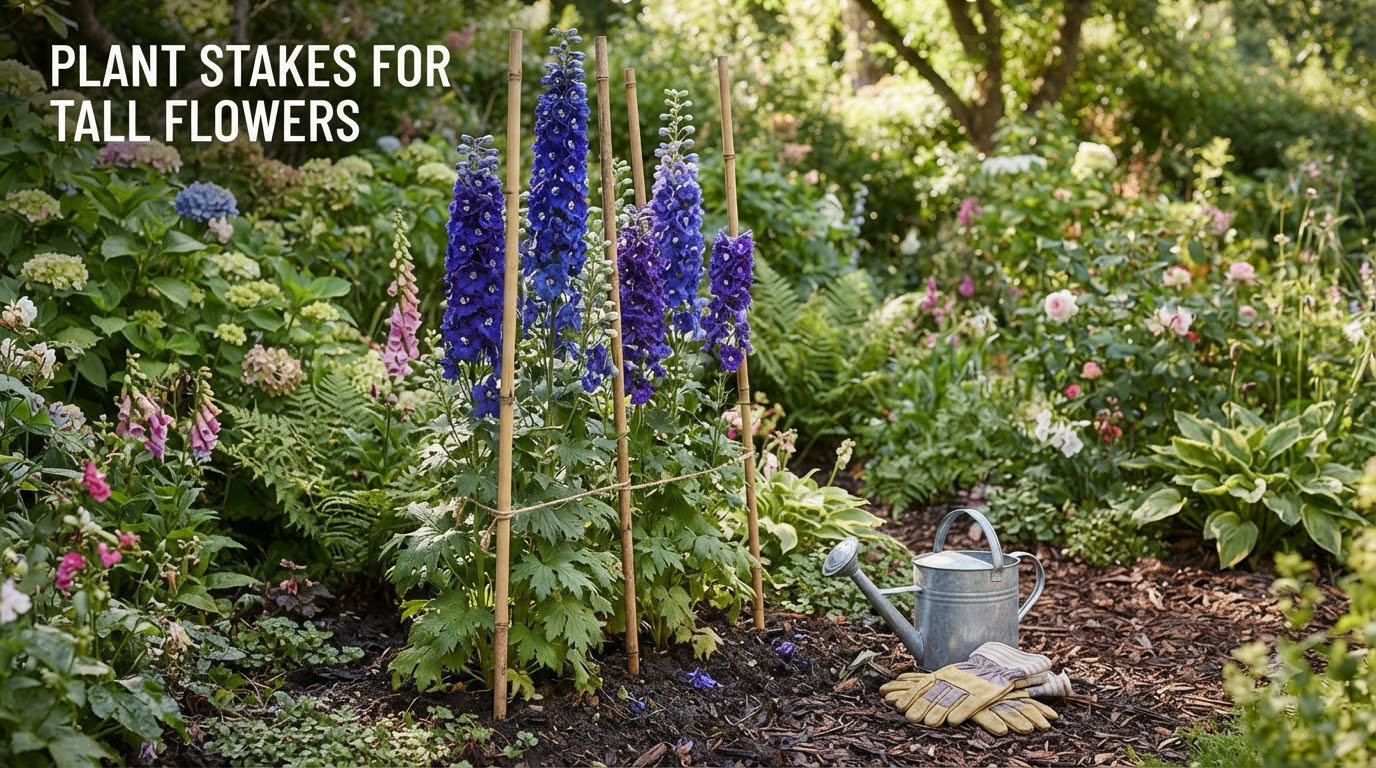
After losing three glorious delphinium spikes to a single thunderstorm one July, I finally committed to plant stakes for tall flowers as a non-negotiable part of my garden routine. That loss taught me a hard lesson: even the strongest-looking perennials can collapse under heavy blooms, driving rain, or sudden wind gusts. Our team has tested bamboo canes, metal rings, linking stakes, and DIY twig supports across more than a dozen flower beds over the past three growing seasons, and we have seen firsthand what works and what falls apart.
This guide covers everything you need to keep your tall flowers standing tall. You will learn why certain plants flop, which stake types suit which flowers, the right way to install and tie stems, and how to avoid staking altogether with better growing conditions. Whether you grow peonies, dahlias, hollyhocks, or coneflowers, the right support at the right time makes the difference between a garden that dazzles and one that disappoints.
Why Tall Flowers Need Support
Tall flowers flop for three predictable reasons: top-heavy blooms, weak or shallow roots, and weather. A peony in full bloom can hold a softball-sized flower head that catches rain like a sail, and a delphinium spike can shoot up to six feet on a stem no thicker than a pencil. When soil is rich and moisture plentiful, stems grow fast but stay soft, making them prone to bending exactly when you want them upright.
Staking does more than keep your garden tidy. It improves air circulation around the foliage, which reduces fungal disease. It protects stems from snapping at the crown, which can kill the entire plant. And it lets flowers face the sun properly, producing stronger colors and longer bloom windows. The goal of good staking is to keep plants upright while making the support itself as close to invisible as possible.
Wind and rain are the most common triggers, but overfertilizing also plays a role. Excess nitrogen pushes rapid, lush growth that flops under its own weight. Plants in partial shade stretch toward the light, producing lanky stems with poor structural integrity. Recognizing these patterns helps you decide whether to stake, relocate, or change your feeding routine.
Types of Plant Stakes for Tall Flowers
Choosing the right stake starts with matching the support to the plant’s growth habit. Single-stem flowers need vertical stakes, while clump-formers need rings or grids that support many stems at once. Here are the most common stake types our team has used successfully.
Bamboo Stakes
Bamboo is the workhorse of the garden-stake world. It is inexpensive, naturally rot-resistant, and blends into foliage better than metal. Bamboo stakes come in lengths from 18 inches to 8 feet and diameters from thin (for delicate stems) to thick (for dahlias and hollyhocks). We use them most often for single-stem staking of lilies, gladioli, and individual delphinium spikes.
The trade-off with bamboo is durability. Thin bamboo can split when driven into heavy clay, and untreated bamboo breaks down within two to three seasons. For gardeners who rotate plantings, that is acceptable. For permanent perennial beds, metal may be a better long-term investment.
Metal Garden Stakes
Metal stakes, especially plastic-coated steel or rebar, offer far greater strength and longevity than bamboo. They handle heavy clay soils, repeated insertion, and weighty blooms without bending. Powder-coated or galvanized finishes resist rust and stay presentable for many seasons. Our team uses 4-foot rebar stakes for dahlias and 6-foot options for full-grown hollyhocks.
Metal stakes are more visible than bamboo, so placement matters. Push them in behind the plant so foliage hides them, or use dark green or matte brown finishes that recede against soil and leaves. The added cost pays off if you stake the same bed year after year.
Spiral and Pea Stakes
Spiral stakes are single metal rods twisted into a corkscrew shape. You guide the plant’s main stem up through the spiral as it grows, which works beautifully for single-stem flowers like single-bloom dahlias or top-heavy lilies. Pea stakes are short twiggy branches or brushy cuttings pushed into the ground to give tendrils and weak stems something to lean against.
Both options are excellent low-profile choices when you want the stake to nearly disappear. They are also inexpensive and quick to install, which makes them favorites in cutting gardens where you need many supports at once.
Types of Plant Supports: Cages, Grids, and Grow-Through Rings
Stakes are vertical supports. Plant supports are structures that surround or contain stems. For tall flowers that grow in clumps or have many stems, supports often outperform stakes because they distribute pressure across the entire plant rather than tying it to a single point.
Peony Rings and Grow-Through Supports
Peony rings are circular wire grids with legs that sit above the ground. You place them over a young peony in early spring, and the foliage grows up through the grid. By bloom time, the ring holds every stem invisibly in place. The same design works for similar clump-formers like baptisia, coreopsis, and compact dahlias. This is one of the most natural-looking ways to support tall flowers because the foliage hides the wire completely.
Tomato Cages for Flowers
Tomato cages are not just for tomatoes. Heavy-duty cages provide all-around support for bushy flowers like large dahlias, hydrangeas, and even floppy asters. Choose cages at least 4 feet tall for tall flowers, and anchor them with stakes if your area gets strong wind. Many gardeners keep a stockpile of cages they rotate between tomatoes and flowers as the seasons change.
Linking Stakes and Tuteurs
Linking stakes are short stake segments that snap together to form rings, grids, or triangular tuteurs. They are adjustable, reusable, and pack flat for storage. Tuteurs are taller, often pyramid-shaped supports that add vertical interest to the garden while holding climbing or upright flowers like clematis, sweet peas, or single-stem hollyhocks. Both are strong, modular choices for gardeners who want one system that works across many plant types.
Nylon Grid and Cat’s Cradle
For perennial borders, a horizontal nylon grid stretched between stakes gives invisible support to entire plantings. Place the grid about one-third of the plant’s mature height, so stems grow up through it and the mesh catches anything that starts to lean. In cottage-style gardens, gardeners often build a “cat’s cradle” by crisscrossing twine between four corner stakes, creating a flexible web that holds floppy flowers without rigid geometry.
How to Stake Tall Flowers: Step-by-Step Guide
Knowing how to stake tall flowers properly is just as important as choosing the right support. Even the best stake fails if installed too late, too deep, or tied too tightly. Follow these five steps for a clean, invisible installation.
Step 1: Install Stakes Early in the Season
The single biggest mistake gardeners make is waiting until the plant is already flopping. By that point, the roots have spread and pushing in a stake risks damaging them. Install stakes when plants are about one-third of their mature height, usually in early to mid-spring for perennials. The foliage will quickly hide the support and grow up through it naturally. This preventive approach is what experienced gardeners consistently recommend, and it is the standard advice found in most horticultural staking guidance.
Step 2: Choose the Right Height
A stake should reach about two-thirds to three-quarters of the plant’s expected mature height. For a 4-foot delphinium, use a 3-foot stake. Anything taller looks obvious, and anything shorter fails to support the top growth where blooms sit. When in doubt, go slightly shorter rather than taller and let the foliage hide the top of the stake.
Step 3: Position Stakes Behind the Plant
Push stakes in a few inches behind the main stem, angled slightly away from the plant’s center of gravity. For clump-formers, place two or three stakes evenly around the perimeter rather than one in the middle. This distributes weight and keeps the plant looking natural rather than pinned to a single pole.
Step 4: Tie Stems Using the Figure-8 Method
Never tie a stem flush against a stake. Use the figure-8 method: wrap the tie around the stake, cross it over itself, then wrap it loosely around the stem. This creates a small buffer that lets the stem move slightly in the wind, which actually strengthens it the way exercise strengthens muscles. Use soft materials like garden twine, stretchy plant ties, or strips of old nylon stocking. Avoid wire, which can cut into the stem as it grows.
Step 5: Check and Adjust Throughout the Season
Plants grow fast. Check ties every two to three weeks and loosen or add new ties as needed. Remove stakes in late fall after the plant has died back, clean them off, and store them dry for reuse next year. A few minutes of seasonal maintenance saves you from replacing snapped stakes and bent rings.
Plants That Benefit Most from Staking
Not every tall flower needs staking, but some almost always do. Here is the list our team has come to rely on after several seasons of trial and error.
- Delphiniums and larkspurs — Hollow stems snap easily; stake individually with bamboo or metal rods.
- Peonies — Heavy blooms catch rain; use grow-through rings set in early spring.
- Dahlias — Top-heavy and brittle; stake each main stem at planting time.
- Hollyhocks — Tall, single-stemmed, and wind-prone; use 6-foot stakes driven deep.
- Gladioli — Tall flower spikes on shallow roots; stake before they bloom.
- Yarrows (Achillea) — Flat-topped flowers act like sails; use grid or ring supports.
- Coneflowers and rudbeckia — Floppy in rich soil; light staking or pinching early keeps them upright.
- Phlox — Dense flower heads weigh down stems; grow-through rings work well.
For more on why some plants stretch and flop, see our guide on why plants produce leaves but no flowers. If your tall flowers seem to grow well but lack blooms, the cause is often the same as floppy stems: too much nitrogen, too little light.
How to Avoid Needing Stakes Altogether
Smart growing practices can reduce or even eliminate the need to stake tall flowers. While some flopping is unavoidable in exposed or rainy gardens, most floppy-stem problems start with the conditions you provide. Here are six adjustments that help prevent plant flopping before it starts.
Give Plants More Light
Shaded plants stretch toward the sun, producing long, weak stems. If a perennial flops every year, it may simply want more sun. Moving it or thinning overhead branches can result in sturdier growth that supports itself.
Avoid Over-Fertilizing
Excess nitrogen produces lush, soft growth that flops easily. Most established perennials do not need much fertilizer at all. A yearly top-dressing of compost is usually enough. If your plants are flopping despite full sun, your soil may be too rich.
Pinching in Early Summer
Many tall flowers respond well to pinching. When stems reach about 12 inches, pinch out the top inch of growth. The plant branches, becoming shorter, bushier, and far less likely to flop. This works beautifully on phlox, asters, and chrysanthemums.
Provide Proper Spacing
Overcrowded plants compete for light and air, producing weak stems. Follow the spacing recommendations on plant tags. Yes, the bed will look sparse the first year, but the plants will be far stronger and self-supporting in the long run.
Choose Sturdier Cultivars
Modern breeding has produced compact varieties of many classic tall flowers. Look for terms like “compact,” “dwarf,” or “strong-stemmed” in plant descriptions. Many new coneflower and rudbeckia cultivars, for example, stay under 24 inches without any support at all.
Use Windbreaks in Exposed Gardens
If your site is consistently windy, even well-grown plants may need help. A simple windbreak, whether a hedge, fence, or even a row of taller sturdy plants, can reduce wind damage enough that staking becomes optional.
For broader garden health guidance, see our piece on establishing a native plant garden without constant weeding. Native plants often need less staking because they evolved in your local conditions.
DIY Plant Stakes from Natural Materials
Commercial stakes work well, but many gardeners prefer free, natural alternatives. Forked branches from pruning piles make nearly invisible supports that blend into the garden. Experienced gardeners in community forums and gardening groups consistently recommend thin branches with Y-shapes pushed into the soil beside floppy stems. The branch acts as both stake and tie point, holding stems gently in place.
Other DIY options include twiggy brushwood laid horizontally across short stakes (an old technique called “pea staking”), bamboo cut from your own patch if you grow it, or even spent plant stems from the previous season dried and reused. None of these will last forever, but they are free, blend into cottage gardens, and reduce the visible hardware in your beds.
One practical tip from experienced gardeners: install branches and twig stakes right after a rain, when the soil is soft. Pushing stakes into dry, hard ground is the leading cause of split bamboo and bent metal, and wet soil makes installation much easier.
Choosing the Right Stake Type by Plant
Matching the right support to the right plant is the most useful skill in this whole guide. A quick-reference table helps, but here is a simple rule our team follows: clump-formers get rings or grids, single-stem flowers get stakes, and tall bloomers with heavy heads get cages.
For peonies, baptisia, and similar mounding perennials, use grow-through rings set early. For dahlias, lilies, and gladioli, single bamboo or metal stakes work perfectly. For sprawling plants like clematis or climbing roses, use tuteurs or trellises. And for cottage garden mixes where many species grow together, a horizontal nylon grid stretched between corner stakes supports everything at once.
Material and Durability Considerations
Bamboo is renewable and inexpensive but breaks down in two to three seasons. Metal lasts much longer but costs more and is more visible. Plastic-coated steel offers the best of both worlds, blending rust resistance with a less industrial look. Natural materials like branches and twigs are free and invisible but need replacing each year.
Consider how often you want to stake the same bed. Annual vegetable rotations make bamboo economical. Decades-old perennial borders justify metal. And if you only need a few supports for one peony, a DIY twig stake costs nothing at all.
Height and Visibility Tradeoffs
The taller the stake, the more obvious it is. Anything above 4 feet is hard to hide in a small border. In tight spaces, choose slightly shorter stakes and accept that some flopping may occur. In large perennial borders, taller metal stakes disappear into the visual mass of foliage. Match the stake visibility to the scale of your garden.
Color also matters. Dark green or matte brown stakes recede against soil and leaves. Bright orange or untreated wood stakes catch the eye. If aesthetics matter in your front-yard garden, choose stakes that fade into the background.
Frequently Asked Questions
What is the best way to stake tall flowers?
The best way to stake tall flowers is to install supports early in the season when plants are about one-third of their mature height, position stakes behind the main stems, and tie loosely using the figure-8 method so stems can move naturally in the wind.
What to use to hold up tall plants?
For single-stem flowers use bamboo or metal stakes; for clump-formers use grow-through rings or peony cages; for tall bloomers with heavy heads use tomato cages or linking stakes; for entire borders use a horizontal nylon grid stretched between corner stakes.
How do I keep my tall plant from falling over?
Keep tall plants upright by staking early with appropriate supports, pinching stems in early summer to encourage branching, avoiding excess nitrogen fertilizer, giving plants full sun, and spacing them properly so they do not stretch toward light.
How to stabilize a tall plant in a pot?
To stabilize a tall plant in a pot, push a stake into the soil near the main stem, tie the stem loosely with soft garden twine using a figure-8 knot, and choose a stake tall enough to reach two-thirds of the plant’s mature height.
When should I put stakes on tall flowers?
Install stakes on tall flowers in early to mid-spring when plants are about one-third of their expected mature height. Installing too late risks damaging roots and leaves flopping stems visibly exposed before foliage can hide the support.
Final Thoughts on Supporting Tall Flowers
Choosing the right plant stakes for tall flowers comes down to matching the support to the plant, installing it early, and tying loosely enough that stems can strengthen naturally. Peonies and baptisia thrive with grow-through rings, delphiniums and dahlias need single stakes, and entire borders benefit from a simple nylon grid. Our team has found that early installation matters more than any other factor, because once a stem flops, it rarely returns to a fully upright position.
Combine smart staking with better growing conditions, more sun, proper spacing, and early pinching, and you will find yourself reaching for the stake bag less often every year. Use DIY branches and twigs where aesthetics allow, and save the metal and bamboo for windy corners and heavy bloomers. For more help diagnosing garden problems, read our guide on why hydrangea flowers turn green early or why zucchini flowers open but produce no fruit. A healthy, well-supported garden is a garden you actually get to enjoy, and that is what makes staking worth the effort.
Leave a Reply