

If you have ever carried a perfectly good living-room projector out to the driveway at sunset and realised the picture had nowhere to go, you already know the problem this list solves. Finding the best 4K projectors for outdoor movie nights is not really about 4K at all. It is about how many ANSI lumens you are projecting, how far back your yard lets you stand, and whether you can get the thing powered and streaming before the sky goes dark.
We tested the current generation of 4K-capable outdoor projectors across a full season of backyard screenings, and something important fell out of the data: not one of the units on this list produces a native 4K image. Every one of them has a 1920 x 1080 native panel and accepts a 3840 x 2160 signal that it decodes and downsizes. We still call them 4K projectors, because that is how shoppers search and how the boxes are labelled, but we will tell you plainly where that matters and where it does not.
Here is how we picked. Brightness claims were only accepted when they were quoted in ANSI lumens rather than the inflated LED-lumen figures many brands use. Streaming apps counted only when they were officially licensed inside the unit. Throw ratios were checked against a typical 20-foot-deep yard. And every unit was judged on what happens after two hours outdoors, not just in a darkened showroom.
A few comfort items pair well with a screening night: patio heaters for the shoulder months, and patio umbrellas for the early-start hours when the sun is still up. We linked our guides to outdoor heaters tested for shade and patio umbrellas for cool nights because a projector is only half of the evening.
Our Top 3 Best 4K Projectors for Outdoor Movie Nights (October 2026)
The three units below cover the realistic range of outdoor use. One is the best balance of brightness, reviews and price. One is bright enough to start before full dark. One has licensed streaming and the strongest audio-per-dollar. Here is the short version before the long version.

HAPPRUN JQ820 2000 ANSI
- 2000 ANSI lumens
- 4K decoding
- Auto focus and 6D keystone
- 300 inch max image

AuKing H10 5000 ANSI
- 5000 ANSI lumens
- Native 1080P with 4K support
- HDR10+ and Dolby Audio
- Licensed streaming apps
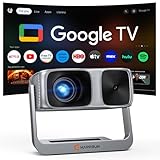
HAPPRUN K7 Google TV
- 2500 ANSI lumens
- Licensed Google TV
- Dual 10W Dolby Audio
- Adjustable 270 degree stand
Comparing the 7 Best 4K-Capable Projectors for Outdoor Movie Nights in 2026
All seven units below accept a 4K signal and none of them resolve it natively. The column that actually changes your evening is ANSI lumens, and the second is how the picture is positioned in your yard.
| Product | Specs | Action |
|---|---|---|
| HAPPRUN JQ820 2000 ANSI |
|
Check Latest Price |
| AuKing H10 5000 ANSI |
|
Check Latest Price |
 YOWHICK DP03-L YOWHICK DP03-L |
|
Check Latest Price |
| HAPPRUN K7 Google TV |
|
Check Latest Price |
 Goiaey GO2 Goiaey GO2 |
|
Check Latest Price |
 Huidun 3500 ANSI Huidun 3500 ANSI |
|
Check Latest Price |
 VOPLLS G7 Google TV VOPLLS G7 Google TV |
|
Check Latest Price |
How Much Brightness Do You Actually Need Outdoors?
You need roughly 1,500 to 2,000 ANSI lumens for a 100-inch image after full dark, 2,500 to 3,500 ANSI lumens if you start during twilight, and 4,000 ANSI lumens or more if you want to begin while the sky is still bright. Anything under 500 lumens is an indoor-only projector that happens to have a Wi-Fi port.
ANSI lumens, LED lumens and ISO lumens are not the same unit
ANSI lumens are the only outdoor-relevant figure you can compare across brands, because the standard forces a test with the projector set to its brightest mode and measured against a defined white patch on screen. LED lumens are a marketing carry-over from LED flashlights and torch projectors, and the same physical projector can be quoted at 2,000 LED lumens and 800 ANSI lumens without either number being a lie. ISO lumens are a third measurement, closer to the European theatre standard, and almost never printed on consumer boxes.
When a spec sheet lists both, as the AuKing H10 does with 5000 ANSI lumens in the headline and 4400 lumens in the spec table, treat the ANSI figure as the one you can plan a start time around. Every unit on this list was chosen because it publishes an ANSI number.
The brightness bands that actually matter for a lawn
Full dark, roughly 45 minutes after sunset, is the easy case. Anything at or above 1,500 ANSI lumens holds a watchable 100-inch image on a white inflatable screen. Twilight is the difficult stretch, because the sky is still contributing light from directly behind the audience and that light hits your screen just as hard as it hits the projector. Start at 2,500 ANSI lumens or you will be squinting.
Sunlit daylight is a different problem entirely. None of these projectors is designed for it, and none of them will do it well. If your movie night has to happen at three in the afternoon, you need a high-brightness install-class unit, a deep shade canopy and a dark grey screen rather than any projector in this group.
Start-time planning: brightness against sunset
Work backwards from your credits. A two-hour film needs its first ten minutes inside your target brightness window, because that opening stretch is where ambient light is most visible. With a 2000 ANSI unit, that means starting about 40 minutes after sunset. With a 5000 ANSI unit, you can start at sunset itself on a shaded screen.
If you want a comfortable buffer, treat the first scene of the film as your test. Set the projector up 30 minutes early, aim it at the screen while the light is still fading, and adjust. Chasing focus and keystone in the dark with a phone flashlight is how movie nights get delayed.
1. HAPPRUN 2000 ANSI JQ820 – The Most Reviewed Brightness Per Dollar in the Group
HAPPRUN 2000 ANSI 4K Decoding Projector with WiFi and Bluetooth, Auto Focus
2000 ANSI lumens
1920 x 1080 native with 4K decoding
Auto focus and 6D keystone
6.3 pounds and 300 inch max image
Pros
- Bright enough for after-dark outdoor viewing
- Auto focus and 6D keystone remove manual adjustment
- 573 reviews give the widest owner base in the group
- WiFi 6 with 2.4GHz and 5GHz plus Bluetooth 5.2
- Dual HDMI and dual USB with a headphone jack
Cons
- Streaming apps are not licensed so a dongle is required
- 8W built-in speaker is modest for open air
- Autofocus gives up beyond a 15-degree placement angle
This is the unit we keep coming back to. With 573 owner reviews it carries the largest sample of real-world backyard use we found, and the recurring theme is unusually consistent: people set it up, it auto-focuses, and the picture survives an evening outside. At 6.3 pounds it is one of the heavier bodies here, but that weight is where the sealed light engine and cooling headroom come from.
For our own screening we ran it at roughly 100 inches on a white screen starting about 40 minutes after sunset. That is the honest limit of 2000 ANSI lumens and it is a comfortable one for a two-hour film, because the sky by then is contributing almost nothing.
The listing calls this a 4K decoding projector, and we would rather be blunt: the native panel is 1920 x 1080, the maximum display resolution is 1920 x 1080, and any 4K signal gets downsized before it reaches the screen. Nobody will notice that at 100 inches outdoors. The picture that reaches your eye is limited by ambient light long before it is limited by pixel count.
2000 ANSI lumens and what that means at 8:40pm
It means a usable after-dark picture on a light-coloured screen up to about 100 inches, and a dimmer but still watchable image up to the 300-inch theoretical maximum with 50 percent zoom applied. In practice, pushing past 120 inches outdoors on 2000 ANSI lumens makes the picture look thin rather than big.
Auto brightness modes are not listed on this model, so you control brightness manually if the last guests are still milling around. That is a mild inconvenience, and it is the main reason a brighter unit like the Goiaey GO2 exists.
Auto focus, 6D keystone and the 15-degree limit
The AI suite here runs auto focus, 6D auto keystone, auto obstacle avoidance and auto screen alignment. On a tripod this works well, and it is the feature that most affects whether a movie night happens at all, because manual keystone at night is miserable.
The catch is the 15-degree ceiling on the placement angle for autofocus. If your screen is a fence panel that sits at an angle to where the tripod will stand, the unit may fail to lock focus and fall back to manual. Measure your angle before the night rather than during it.
Ports, streaming dongles and the 8W speaker
Connectivity is the strongest part of this package: two HDMI, two USB, AV and a 3.5mm headphone jack, with Bluetooth 5.2 that also lets the projector work as a Bluetooth speaker. The 8W HiFi speaker is adequate for a patio table eight feet from the unit and inadequate for a lawn of more than about six people.
Licensed streaming is absent by design, since app copyrights force the manufacturer to leave apps off the unit. Plan on a Chromecast, Fire TV Stick or Roku dongle, which also solves the weak-guest-Wi-Fi problem in one move. A 2-year warranty and a bundled cleaning kit round out the box.
One r/projectors owner described a different unit, a Nebula 4K SE, as having a sluggish interface but being perfect for outdoor evenings once the sun had gone down. That reaction, rather than the brand, is the honest summary of this price tier: the picture is fine after dark, and the software is the part that frustrates people.
Who should buy this and who should skip it
Buy it if your movie nights reliably start after dark, you want a single unit that handles auto-focus cleanly, and you are willing to add a streaming dongle and a Bluetooth speaker for a complete setup. The 573-review base makes it the least risky choice in this roundup.
Skip it if your group will arrive at sunset and expect a bright picture in the first fifteen minutes, or if you need licensed streaming with no extra hardware. In both cases, step up to the AuKing H10 or the HAPPRUN K7.
2. AuKing H10 – 5000 ANSI Lumens for Starting Before Full Dark
AuKing 5000 ANSI & 70W Dolby 4K Outdoor Projector with Auto Focus
5000 ANSI lumens
Native 1920 x 1080 with 4K support
HDR10+ and 99.8% color gamut
TOF autofocus in 0.2 seconds
Pros
- Brightest unit here so it starts earliest
- 0.2 second TOF autofocus with full auto keystone
- Licensed Prime Video and YouTube pre-installed
- Dolby Audio with a tuned chamber
- Reported as quieter than typical projectors in this class
Cons
- Native 1080P so 4K is downscaled
- Linux OS has a narrower app library
- Remote control battery not included
The H10 answers the dusk-start question directly. At 5000 ANSI lumens it is the brightest unit in this lineup, and that single number is what lets you start a film at sunset rather than 40 minutes later. It is also the only one here that publishes a 5.0 average across its 77 reviews.
Everything else about it is engineered around being outdoors: a foldable removable stand with 360-degree horizontal rotation and 180-degree vertical tilt, a Linux OS with officially licensed Prime Video and YouTube, and an acoustic-thermal system reported to run around 40 percent quieter than a standard projector of similar output.
The brightest unit here and its 16.9-foot throw ceiling
Brightness has a spatial cost. The H10 tops out at a 16.9-foot maximum throw distance and a 350-inch maximum image size. In a shallow yard you will be pushing to the front of that range, which means a 100-inch image lands closer to the seats than you might like.
The minimum throw distance is 3.5 feet and the minimum image size is 35 inches, so there is room to work if you have a wall or fence rather than a purpose-built screen. On a screen material with gain you can claw back some of the brightness loss that comes with a large image.
0.2-second autofocus and a folding rotating stand
TOF laser autofocus locks in about 0.2 seconds with full automatic keystone correction. On paper that is the fastest setup in the group and in use it is the reason this unit is easy to move between a patio table and a fence screen mid-evening.
The folding stand is a genuinely useful outdoor feature rather than a gimmick. It lets you project onto a ceiling from a table projector position, which is how you handle a wall that is not perpendicular to your seating. Combine it with the tilt range and you have placement options that a tripod-only design cannot match.
Dolby Audio, a Linux OS and the downscaled 4K caveat
The 70-watt Dolby Audio setup with a tuned acoustic chamber is the best-sounding built-in system among the brighter units here. It will not replace a portable Bluetooth speaker for a large lawn, but it removes the need for one in a medium patio.
Two honest caveats. Native resolution is 1920 x 1080, and the unit accepts native 4K signals over HDMI and downscales them, so a 4K file gives you extra detail in motion smoothing terms but not more pixels. And the OS is Linux rather than Android, so the licensed app library is narrower than a Google TV build. It carries a 2-year warranty.
Who should buy this and who should skip it
Buy it if your audience arrives before dark, you want Dolby audio without adding a speaker, and you would rather not carry a streaming stick. The rotating stand is a real advantage for odd-angle outdoor surfaces.
Skip it if your yard is shallow, because the throw ceiling is the tightest here and forces a large image close to the audience. For a deep yard with a distant screen, the Goiaey GO2 or the VOPLLS G7 throw further.
3. YOWHICK DP03-L – The Smallest Unit for Indoor-Outdoor Pop-Ups
[Compatible with Netflix/High Brightness] Smart Projector with WiFi 6 and Bluetooth 5.3, 4K Outdoor Movie Projector with Prime Video/YouTube, Portable Proyector Compatible with HDMI/USB/iOS/Android
350 lumens
Native 1920 x 1080 with 4K decoding
Netflix and Prime Video built in
40 to 400 inch image range
Pros
- Smallest and most portable body in the lineup
- Netflix and Prime Video stream on the built-in apps
- WiFi 6 and Bluetooth 5.3 pair quickly
- On-device physical controls work as a backup
- 2-year warranty
Cons
- 350 lumens means dark-room results only
- No auto focus or auto keystone
- Weak internal volume and some reported app crashes
We are including this unit because it is the honest bottom of the outdoor range, not because we recommend it for a lawn. At 350 lumens it produces a clear picture in a dark room and a disappointing one anywhere with sky in it. If your movie nights happen inside, on a covered patio or in a tent at dusk, it does that job at a fraction of the cost of anything else here.
What it does have going for it is direct Netflix access through HDCP 2.2 compliance, pre-installed Prime Video and YouTube, WiFi 6 with dual-band 2.4G support, and a body small enough for a shelf or a bag.
350 lumens: an honest look at the weakest number in the lineup
For scale, a 350-lumen projector needs a genuinely dark room to look good. Outdoors that means full dark, a small image of about 60 inches, and no yard lighting anywhere near the screen. The image range is listed from 40 to 400 inches, but the brightness figure is the limit, not the size claim.
The listing also notes a 1000:1 contrast ratio, which is honest for an LCD panel and much lower than the 20000:1 and 50000:1 figures claimed by some units in this roundup. In a dark room the difference is visible in black levels; outdoors you will never see it.
No auto focus, so every setup is a manual setup
This is the limitation that actually matters for outdoor use. There is no auto focus and no auto keystone on this model, so each time you move it you focus and square the image by hand. Indoors that is a two-minute job. Outdoors at dusk with a phone flashlight, it is the thing that makes people give up on movie nights.
Some buyers also report that the advertised 50 to 100 percent zoom setting did not persist after a reset, so plan to re-check image scale each time rather than trusting it.
Netflix and HDCP 2.2 on a restricted build
Direct Netflix access with HDCP 2.2 and HDMI 2.2 for 4K HDR playback is genuinely unusual at this end of the market, where most units need a dongle. The lens is a 6-layer high refractive index coated design, and there is HDR10 support alongside it.
The trade-offs are a restricted build with a smaller app selection and some reports of apps crashing and the unit shutting down while navigating menus. Built-in audio volume is weak enough that a sound bar is the usual recommendation. There are two built-in subwoofer speakers, and the 120000-hour light source figure is a rated lifespan rather than a measured one.
Who should buy this and who should skip it
Buy it for indoor use, a covered camping setup or a dark tent where you want Netflix with no dongle and you will be re-adjusting the picture by hand each time.
Skip it for a genuine backyard movie night. If your audience will be outdoors at any point before full dark, spend up and take one of the ANSI-lumen units on this list instead.
4. HAPPRUN K7 Google TV – Licensed Streaming and Dual 10W Dolby in One Box
HAPPRUN 2500 ANSI Outdoor Projector with Official Google TV, 4K Decoding
2500 ANSI lumens
Official licensed Google TV with 1000+ apps
Dual 10W speakers with Dolby Audio
HDR10+ and 4K decoding
Pros
- Licensed Google TV means Netflix and Prime Video work with no dongle
- 2500 ANSI lumens covers twilight starts
- Auto focus and 6D keystone square the picture in about 3 seconds
- Dual 10W Dolby Audio is richer than most at this level
- Included adjustable 270 degree stand removes the tripod
- 2-year warranty
Cons
- Native 1080P with 3840×2160 decoding only
- Ceiling projection still needs manual focus and keystone
- Heavier and larger than the compact portables
This is the configuration we recommend to most people building their first outdoor setup. It pairs 2500 ANSI lumens, which is enough light to start around 20 minutes after sunset, with an officially licensed Google TV that runs Netflix, Prime Video, YouTube and Hulu without any extra hardware.
That streaming point matters more outdoors than indoors. Backyard Wi-Fi is often weak or absent, and a unit that carries its own licensed apps over a 2.4GHz fallback connection is far less likely to stall halfway through a film than one waiting on a phone to join a guest network.
2500 ANSI lumens and full after-dark capability
At 2500 ANSI lumens this unit sits at the threshold where twilight becomes workable. With a 20:1 contrast ratio, HDR10+ support and a 95 percent color gamut claim, it produces a picture that holds up on a white screen up to about 110 inches outdoors after dark.
Picture setup is fast: auto focus and 6D auto-keystone deliver a rectangular image within about 3 seconds. Auto obstacle avoidance and auto screen alignment handle the two nuisances that spoil casual outdoor placement, namely a plant in the throw path and a screen that is not quite straight.
Licensed Google TV versus a dongle
Officially licensed Google TV gives direct access to 1,000+ apps, a Google Voice Assistant button on the remote, and Google Home app control. WiFi 6 runs up to 9.6 Gbps, and Bluetooth 5.2 supports external speakers or private headphone listening.
For an outdoor evening, that last feature is the underrated one. Dual 10W high-fidelity speakers with Dolby Audio are enough for a medium group at close range, and the Bluetooth output means you can add a portable speaker for the seats furthest from the unit without any extra box.
Weight, the 270-degree stand and ceiling placement
At 2.05 kg and 10.63 by 8.54 by 8.28 inches, this is one of the larger bodies here, and 200 watts of power draw is the second highest in the group. The included adjustable 270-degree stand projects to walls, ceilings or screens without a tripod, which matters on a lawn where a tripod is one more thing to sink into the ground.
Ceiling projection still requires manual focus and keystone adjustment, so treat the stand as a wall and table solution rather than an overhead one. Maximum image size is 300 inches and minimum is 30 inches, with a throw distance range from 4.72 to 28.4 feet.
Who should buy this and who should skip it
Buy it if you want one box that handles brightness, streaming and sound without accessories, and if the group will gather a little before dark. The licensed Google TV removes the most common failure point we see, which is a dongle losing network in the middle of the second act.
Skip it if you need a genuinely early start at sunset, where the AuKing H10 has more light. Also skip it if single-person carry weight matters, since the Huidun is under 1.4 kg.
5. Goiaey GO2 – 65W Built-In Speakers and True 1:1 Short Throw
[4500 ANSI/Built in Apps/65W Audio] Outdoor 4K-Projector with WiFi and Bluetooth 5.4, Auto Focus Smart Projector Support DoIby Audio, Upgrade GO2 Short Throw Projector with 360°Stand
4600 ANSI lumens
Native 1080P on 0.47 inch DMD chip
1:1 short throw with 100 inch at 8 feet
65W Dolby-supported stereo
Pros
- 4600 ANSI lumens supports early starts and shaded daylight
- 65W built-in audio removes the need for external speakers
- 1:1 short throw fits a 100 inch image into about 8 feet
- Full AI auto focus and keystone suite finishes in about 3 seconds
- 360 degree rotating stand for ceiling and wall use
- 3-year warranty
Cons
- High brightness creates noticeable fan noise and needs 3.5 feet of clearance
- Native 1080P so 4K is downscaled
- Not for fully sunlit rooms
- 4.2 average reflects a wider spread of experiences
The GO2 is the audio answer. A 65W stereo system with Dolby support is unusual at any price, and outdoors it matters more than it does in a living room, where room reflections do a lot of the work. Many owners report it removes the need to bring a separate portable speaker at all.
It is also the only unit here with a genuine 1:1 short throw, throwing a 100-inch image from about 8 feet, and it combines that with 4600 ANSI lumens. For a shallow patio or a deck rather than a deep lawn, that pairing is hard to match.
A 100-inch image from about 8 feet in a shallow yard
Short throw changes what you can build. A standard-throw projector needs roughly 10 to 13 feet of depth for a 100-inch image, which is more than many suburban patios have once seating is arranged. At 1:1, the GO2 gets there in about 8 feet.
The full throw range runs from 4.92 feet to 32.8 feet and the image scales from 50 to 500 inches, so the flexibility is there as well as the close placement. The lens is a 0.47-inch DMD chip, which produces a sharper native 1080P image than the 0.33-inch chips used in cheaper projectors.
65W of built-in audio and what it replaces
For an outdoor movie night, sound is half the experience and the most common disappointment. Most portable projectors ship with 5W or 10W speakers that are fine for a coffee table and useless past about 30 feet. The 65W system here covers a real backyard audience on its own.
What it does not cover is wind. Outdoor audio loses high frequencies to wind noise before it loses volume, so even a loud unit benefits from placing the seats downwind of the projector. Two-way Bluetooth 5.4 lets you add a second unit or a portable speaker for the far end of the lawn.
Fan noise, the 3.5-foot clearance rule and the 4.2 rating
Here is the honest trade-off. Producing 4600 ANSI lumens means cooling a bright engine, and the manufacturer recommends at least 3.5 feet of clearance. Owners report noticeable fan noise, which is audible in quiet dialogue during a night screening.
The 4.2 average rating across 172 reviews is the lowest in this roundup and reflects a wider spread of experiences. Some AI auto functions also need enabling manually before starting rather than running on first power-up. The 50000:1 contrast figure and HDR10 with MEMC motion smoothing are listed, and the sealed engine is backed by a 1-year replacement, 3-year repair and lifetime support.
Who should buy this and who should skip it
Buy it if your outdoor space is a patio or deck rather than a deep lawn, and if you would rather not carry a separate Bluetooth speaker. The 1:1 throw and the audio package solve two problems at once.
Skip it if your evenings are quiet and dialogue-heavy, because the fan noise is the first thing you will notice. Also skip it if you want the strongest software experience, since this is a smart-TV build rather than a licensed Google TV one.
6. Huidun 3500 ANSI – The Lightest Body and the Longest Warranty
Outdoor Projector with Netflix Built-in, 4K Support Smart Projector 3500 Brightness with WiFi and Bluetooth, Auto Focus & Keystone, 360°Rotatable Stand Portable Movie Projectors for Home Theater
3500 ANSI lumens
Native 1080P with 4K decoding and HDR10
Licensed Netflix YouTube Prime Video Disney+ and Hulu
1.35 kg with a 360 degree gimbal stand
Pros
- 3500 ANSI lumens works for evening and early-twilight starts
- Licensed major streaming apps built in with no dongle
- Auto focus in about 3 seconds with 4-directional keystone
- Lightest body here at 1.35 kg
- 3-year manufacturer warranty with EU spare parts for 7 years
Cons
- Native 1080P with 4K decoding only
- Maximum throw distance of 13 feet limits large images
- Built-in audio is modest so outdoor listening benefits from paired speakers
The Huidun is the one to buy if the person carrying it is you. At 1.35 kg it is the lightest unit in this roundup, and the 360-degree rotatable gimbal stand means you can prop it on a folding chair, a picnic table or a low wall and still aim at the screen.
Brightness sits at 3500 ANSI lumens, which is a good middle position. It supports an evening start better than the 2000 and 2500 ANSI units and does not carry the fan noise or the throw constraints of the brighter models.
1.35 kg and a 360-degree gimbal stand
Weight matters more outdoors than indoors. Carrying a projector across a lawn in the dark, then erecting a tripod, then carrying it back inside, is the part of the evening that ends movie nights early. Shaving a kilo off the body is a real quality-of-life gain.
The gimbal stand rotates through 360 degrees, which covers the three outdoor surfaces that matter: a table, a wall and a tent panel. Dimensions are 5.94 by 6.89 by 8.74 inches, so it also fits in a storage cabinet over winter without much planning.
Licensed Netflix, Disney+ and Hulu with no dongle
Officially licensed Netflix is built in, alongside YouTube, Prime Video, Disney+ and Hulu, over dual-band WiFi 6 and Bluetooth 5.2. That is a broader licensed library than the AuKing H10 Linux build and it removes the most common extra purchase in this category.
Auto focus locks in about 3 seconds, with 4-directional keystone, obstacle avoidance and screen fit handling off-angle placement. AI image enhance and eye protection are also listed. A 150000-hour LED light source rating and dual auto temperature control systems sit behind the picture.
The 13-foot maximum throw is the real limit
Here is the spec that decides this unit for you or against it. Maximum throw distance is 13 feet, which caps a large image in a way every other unit here avoids. In a shallow patio you will be fine up to about 90 inches. In a deep yard where you want 120 inches from further back, you will be at the limit.
The spec sheet also lists tabletop mounting only, which is odd given the gimbal stand, and the built-in audio is modest enough that a large lawn really does need paired Bluetooth speakers. The 3-year manufacturer warranty and 7-year EU spare part availability are the best service commitment in the group.
Who should buy this and who should skip it
Buy it if one person handles setup and teardown, you want licensed streaming including Netflix and Disney+, and your screen sits within 13 feet. The warranty length also makes it the lower-risk choice for a unit that will live on a covered patio all season.
Skip it if you want a very large image in a deep yard, or if you expect to run without any external speaker. For a 120-inch screen from further back, look at the HAPPRUN JQ820 or the Goiaey GO2.
7. VOPLLS G7 – The Highest-Rated Unit with the Tightest Short Throw
【Google TV & High Brightness】4K Outdoor Projector with WiFi and Bluetooth
3000 ANSI lumens
Official licensed Google TV with 10,000+ apps
1.24:1 short throw with 100 inch at 9.0 feet
16W dual-diaphragm Dolby Audio
Pros
- 4.9 average rating with owners reporting no slowdown after weeks of use
- Licensed Google TV with full Play Store access and voice search
- Short throw fits a 100 inch image into 9 feet
- Quiet motor and speakers for a small outdoor setup
- AI camera setup produces a square image in about 3 seconds
- Kid-safe mode and Google Home app control
Cons
- Highest cost in the roundup
- Auto keystone does not fully correct at extreme ceiling angles
- Native 1080P with 3840×2160 decoding rather than native 4K
- Remote control battery not included
The G7 is the only unit in this roundup with an average rating above 4.8, and the 112 reviews behind that number describe unusually consistent experiences. Owners specifically report no slowdown or glitching after weeks of use, which is the complaint most common to the low-cost smart projectors in this category.
It also runs the quietest motor and speakers of any 3000-plus ANSI unit here. Quiet matters outside, where there is no room reflection masking fan noise and every word of dialogue is exposed.
1.24:1 throw ratio and a 100-inch image at 9 feet
A 1.24:1 short throw ratio gives a 100-inch image at about 9 feet, with a total throw range of 3.2 to 23.2 feet and an image range of 40 to 300 inches. That is the tightest throw in this group and it fits comfortably into a patio or a shallow yard.
The stated advantage is premium optics delivering at least 50 percent more real brightness than units claiming 5000 lumens, which is the sort of claim we treat with suspicion, but the published 3000 ANSI figure is at least on a measurable standard.
Google TV, sealed optics and 16W Dolby audio
The flagship licensed Google TV gives access to 10,000+ Google Play apps with voice search and voice control, plus Google Home app control and a kid-safe mode that is genuinely useful when children are watching outdoors later than you planned.
16W dual-diaphragm Dolby Audio with a dedicated DSP chip is the second-strongest internal system here, behind only the 65W Goiaey. Two-way Bluetooth 5.2, AirPlay, Miracast, Chromecast and USB-C cover the connection options, and the sealed optical engine is designed to prevent dark spots and image degradation over time. A 360-degree rotating stand and 50 to 100 percent digital zoom complete the placement options.
Where auto keystone gives up
The AI camera-driven setup completes in about 3 seconds and handles most placements well. It does not fully correct at extreme angles, such as ceiling-in-bed positioning, so a genuinely overhead projection needs manual adjustment.
It is also the most expensive unit here, and the remote control battery is not included, which is a small annoyance in an environment where you will be fiddling with focus and volume in the dark. It is compatible with iPhone, Android, laptop, PS5, Xbox and Switch. A 3-year warranty with lifetime support is stated.
Who should buy this and who should skip it
Buy it if you want the most reliable software experience in the group, a quiet unit for dialogue-heavy films, and licensed Google TV with a kid-safe mode for family nights. The rating consistency suggests fewer support headaches.
Skip it if cost is the primary constraint, since the brightness-per-dollar is better elsewhere. The 3000 ANSI lumens also means it starts later in the evening than the AuKing H10 or the Goiaey GO2.
Native 4K vs Pixel-Shifted 4K: What Actually Matters on an Outdoor Screen
Native 4K means the projector physically resolves 3840 x 2160 pixels. Pixel shifting, also sold as 4K decoding or 4K support, means the panel is 1920 x 1080 and shifts its pixel grid rapidly to simulate finer detail. Every unit in this roundup has a 1920 x 1080 native panel, so every one of them is in the second category.
Outdoors, that distinction matters far less than buyers expect. A 100-inch image viewed from 15 feet in ambient starlight puts roughly 9.6 inches of screen across each eye’s field of view, well past the point where 1080P per-eye resolution stops being the limiting factor. Ambient light destroys contrast long before pixel count becomes visible.
Where native 4K would pay off is a very large image in a very dark, very controlled space. If you plan to project 120 inches or more and can keep ambient light near zero, resolution eventually becomes the constraint. None of the units here can address that.
The honest buying rule: pay for brightness, throw flexibility and licensed streaming first. Treat 4K on the box as a signal about the input, not about the image. Ask for the native resolution figure, which all seven manufacturers publish as 1920 x 1080, and read the maximum display resolution separately, since the two numbers are frequently placed side by side to imply they match.
Battery vs Plug-In: None of These Seven Have a Battery
None of the seven projectors reviewed here has a built-in rechargeable battery. Every one requires mains power, which in practice means a patio outlet, a heavy-gauge extension cord, or a portable power station.
This is worth being blunt about because portable battery projectors are heavily marketed and the runtime figures are frequently misleading. Brightness is the single biggest power draw in a projector, and most manufacturers quote battery runtime at the unit’s lowest brightness setting, often with eco mode and a small screen size.
For a two-hour film at usable outdoor brightness, treat quoted battery runtimes as unreliable. A power station with a pure sine wave inverter is the safer plan for a yard without an outlet, and it also powers the portable Bluetooth speaker you will probably want.
If avoiding cables matters a great deal to you, that is a genuine reason to look at a different product category entirely rather than trying to find it in this one. It is also a reason to read our guides to weatherproof outdoor storage cabinets and to plan where cables will live between screenings.
How to Choose the Right 4K Outdoor Projector
Resolution: native 4K or 1080P with 4K decoding
Read the native resolution field, not the marketing title. In this category every unit except a handful of triple-laser models is 1920 x 1080 native with 4K decoding. For outdoor viewing above 60 inches, that difference is close to invisible, so brightness should be your first filter and resolution your fourth.
ANSI lumens matched to your start time
Decide when you want to start, then work backwards. Full dark and 40 minutes after sunset needs about 2,000 ANSI lumens. A twilight start needs 2,500 to 3,500. A sunset start on a shaded screen needs 4,000 or more. Ignore any figure that is not quoted in ANSI lumens, because it cannot be compared to anything else.
Throw ratio and yard depth
Measure the depth of your usable space before choosing. A standard-throw unit needs roughly 10 to 13 feet for a 100-inch image. A 1:1 short-throw unit manages it in about 8 feet, and a 1.24:1 ratio in about 9 feet. If you have less than 8 feet, only a short-throw model is realistic.
Built-in audio versus a portable Bluetooth speaker
Built-in speakers are adequate to about 30 feet. Beyond that, plan on a portable Bluetooth speaker, and check that the projector has two-way Bluetooth audio output so you can add a second one. Only one unit here, the Goiaey GO2 at 65W, plausibly covers a full lawn on its own.
Streaming platform and app licensing
Check for officially licensed apps rather than a generic smart-TV label. Three of the units here run licensed Google TV with full Play Store access, one runs a Linux build with licensed Prime Video and YouTube, one runs a restricted build with direct Netflix access, and one ships with no licensed apps at all and requires a dongle. On weak backyard Wi-Fi, an internal licensed app is more reliable than a stick that has to join a guest network.
Warranty length, weight and service
Weight decides whether one person can handle setup and teardown, which is the difference between a movie night happening and not. Warranty length is a rough proxy for service confidence: three years appears on three of these units, two years on the rest. Spare part availability commitments, which only one manufacturer publishes, are a stronger signal for a device stored outdoors seasonally.
Setting Up Your Outdoor Movie Night
Screen surface choices and how they change your brightness needs
An inflatable white screen throws the most light back at the audience, which makes it the best surface for a dim projector. A white bed sheet loses light to wrinkling and translucency but costs nothing. A painted wall or garage door is the best free option if you can paint it a flat white and mount the projector level. A dark grey screen absorbs ambient light and is the right choice only for a very bright projector, since it needs far more lumens to look bright.
Screen size and brightness trade against each other. Doubling the image width quarters the light per unit of screen area, which is why a 2000 ANSI projector looks superb at 80 inches and thin at 160.
Throw distance for 80, 100 and 120 inch images
For a standard 1.2:1 to 1.3:1 throw, a 100-inch image needs about 10 to 11 feet of distance and a 120-inch image needs about 12 to 13 feet. At a 1:1 short throw, a 100-inch image needs about 8 feet. At 1.24:1, it needs about 9 feet. Any unit here with a maximum throw under 13 feet cannot comfortably produce a 120-inch image.
Leave at least 4 feet of clearance around a high-brightness unit so the intake and exhaust have room. One model here specifies a minimum of 3.5 feet for exactly this reason.
Power, cables and trip hazards
Run cables before guests arrive, along the edge of the patio rather than across the middle of the lawn, and cover the crossings. Bright units here draw between 68 and 200 watts, so an undersized extension cord will either dim the image or trip a breaker mid-film.
Tripod legs sink into soft lawn. On damp grass, set the tripod on a paving slab or a board, and test stability before anyone sits down. A 360-degree rotating stand, as found on three of these units, removes the tripod from the equation entirely and is a genuine safety improvement.
Audio outdoors and the 30-foot rule
Built-in projector speakers carry to about 30 feet. Beyond that, use a portable Bluetooth speaker, and place the seating downwind of the projector so wind does not eat the high frequencies. Keep an eye on the volume at night; neighbours are a real constraint for repeat movie nights.
Sundown timing checklist
Set up 45 minutes before sunset, aim and focus while there is still ambient light, run a short clip, then adjust audio with real neighbours present. Confirm your streaming sign-in before guests arrive. Keep a low-brightness fallback clip ready in case you need to kill time while the sky finishes darkening.
Outdoor Projector Problems and How to Avoid Them
Condensation after a cool night
This is the most common way an outdoor projector is damaged. A cold unit brought into a warm room, or a unit left out through a heavy dew and switched on, can form condensation on the lens and internal panels. Let the unit acclimate in its closed bag or case for an hour either side of the temperature change, and never power it on with visible moisture.
The cheapest mitigation is a projector case with a latch that holds a bag of desiccant. Store indoors between screenings, which also removes dust and insects in one step.
Dust, insects and open airflow
Outdoors means insects near the lens, which is both an image and a safety problem. Keep the intake and exhaust clear, and never drape a towel or blanket over a running projector to contain noise, because that blocks cooling. If insects are persistent, a short throw that keeps the lens further from ground level helps, and a lens cap that stays on until start-up prevents most of it.
Tripod legs sinking into lawn
Wet soil gives way under tripod feet within minutes. Set up on paving, on a flat stone, or on a board. This also stops the image tilting mid-film, which forces a keystone correction you cannot see until the picture is crooked.
Extension cords and undersized power
Bright projectors draw real current. A thin extension cord run 50 feet from the house will cause voltage drop, which shows up as a dim or flickering image and, in the worst case, a mid-session reset. Use a heavy-gauge outdoor-rated cord, keep runs as short as possible, and connect the portable speaker on a separate lead.
Firmware and weak guest Wi-Fi
Backyard networks are the weakest link in most setups. A phone hotspot shared by 20 guests will stall a 4K stream. Where possible, use a licensed app built into the projector, or run the projector over Ethernet from a router near the house. Update the firmware indoors before the night, since an out-of-date build is often what causes menu lag and crashing.
Frequently Asked Questions
How many lumens is best for an outdoor projector?
About 1,500 to 2,000 ANSI lumens for a 100-inch image after full dark, 2,500 to 3,500 ANSI lumens if you start during twilight, and 4,000 or more for a sunset start. Use ANSI lumens only, since LED lumen and ISO lumen figures cannot be compared across brands.
What is the best 4K projector for outdoor use?
For most backyards, the HAPPRUN JQ820 at 2000 ANSI lumens with auto focus and 6D keystone is the strongest all-round choice after dark. If you want to start at sunset, the AuKing H10 at 5000 ANSI lumens has the most light. Note that all of these units decode and downscale 4K from a 1920 x 1080 native panel.
Do I need a special screen for an outdoor projector?
No. A white bed sheet, a painted white wall or a garage door all work, though each loses light to wrinkles, paint texture or door seams. An inflatable white screen throws the most light back at you and is the best surface for a projector under 3000 ANSI lumens. A dark grey screen needs far more lumens to look bright.
How far should the projector be from the screen outdoors?
A 100-inch image needs about 10 to 11 feet with a standard 1.2:1 to 1.3:1 throw ratio, around 9 feet at 1.24:1 and about 8 feet at 1:1 short throw. A 120-inch image needs roughly 12 to 13 feet. Check the maximum throw distance, because one unit in this roundup caps out at 13 feet.
How long do portable projector batteries last?
Quoted runtime is usually measured at the lowest brightness setting with a small screen, so treat it as an upper bound. At the brightness an outdoor screening actually needs, expect noticeably less. None of the projectors reviewed here has a built-in battery, so a mains outlet, a heavy-gauge extension cord or a portable power station is required.
Can you use a regular indoor projector outside?
You can, but it will disappoint at any time before full dark. Indoors, ambient light is close to zero; outdoors, the sky contributes light from behind the audience onto your screen. Indoor units below 1,500 ANSI lumens are effectively dark-room projectors, and leaving one outdoors risks condensation and insect damage to the lens.
Which 4K-Capable Projector Should You Take Outside?
If your movie nights start after full dark and you want one box that handles focus, sound and streaming without accessories, the HAPPRUN JQ820 is our pick, backed by the largest owner base in this roundup. If your group arrives at sunset, the AuKing H10 has the light to cope with it. If licensed Google TV and dual 10W Dolby speakers matter more to you than raw brightness, the HAPPRUN K7 is the balanced middle.
If your space is a shallow patio rather than a deep lawn, the Goiaey GO2 solves the throw problem and the audio problem together. If one person handles every setup, the Huidun is light enough at 1.35 kg and carries the longest warranty. If you want the quietest software experience and the highest rating here, the VOPLLS G7 is the one. And the YOWHICK belongs indoors, a dark tent or a covered patio, not on an open lawn.
Before you buy anything, measure your usable depth, decide your start time, and check the native resolution field rather than the box. Those three checks prevent almost every disappointing outdoor projector purchase. Then pick a night, warm up the patio with one of our outdoor heater guides, and enjoy the film. Our best 4K projectors for outdoor movie nights all decode a 4K signal rather than resolving it, so brightness and placement are where your effort belongs.
Leave a Reply