


The best cellular trail cameras for remote properties are the Moultrie Edge 2 for dependable multi-carrier signal, the TACTACAM Reveal X 3.0 2-Pack for long unattended runs, and the Oculview 4G LTE for the worst reception corners of a parcel. Pick the camera that survives your signal, not the one with the biggest headline resolution.
I spend a lot of time talking to people who own land they cannot see every week. The cabin forty minutes down a gravel road, the pasture with the cattle pond, the equipment yard behind a locked gate. Every one of those owners asks the same first question, and it is never about megapixels: will the camera actually hold a connection out there?
That question reshaped how I evaluated this roundup. A trail camera is a network device first and a camera second. If the radio cannot reach a tower, the image quality is irrelevant because the photograph never reaches your phone. So I weighted signal handling, power strategy, and anti-theft features just as heavily as trigger speed and flash range.
Ten cameras made the cut, from fixed-lens trail units to pan-and-tilt models that can be aimed from the couch.
If your acreage also involves hauling equipment or mowing brush, our guides to the best garden carts for large properties and the best zero-turn mowers for five-acre properties cover the other half of remote-land upkeep.
Our Top 3 Cellular Trail Cameras for Remote Land

Comparing the Best Cellular Trail Cameras for Remote Properties in 2026
| Product | Specs | Action |
|---|---|---|
 Moultrie Edge 2 Moultrie Edge 2 |
|
Check Latest Price |
 TACTACAM Reveal X 3.0 2-Pack TACTACAM Reveal X 3.0 2-Pack |
|
Check Latest Price |
| VOOPEAK 2-Pack 2.5K |
|
Check Latest Price |
 Oculview 4G LTE 2-Pack Oculview 4G LTE 2-Pack |
|
Check Latest Price |
 Moultrie Edge 2 Pro Moultrie Edge 2 Pro |
|
Check Latest Price |
 SPYPOINT Flex-M Starter Pack SPYPOINT Flex-M Starter Pack |
|
Check Latest Price |
 MagicEagle Cellular Camera MagicEagle Cellular Camera |
|
Check Latest Price |
 TACTACAM Reveal Ultra TACTACAM Reveal Ultra |
|
Check Latest Price |
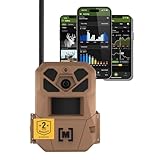 Moultrie Edge 3 Moultrie Edge 3 |
|
Check Latest Price |
 Stealth Cam Revolver Pro 2.0 Stealth Cam Revolver Pro 2.0 |
|
Check Latest Price |
1. Moultrie Edge 2 – The Dependable All-Rounder for Unpredictable Coverage
Moultrie Edge 2 Cellular Trail Camera 2-Pack – 36MP, Low-Glow Flash
36MP stills
1080p video with audio
100ft detection
Low-glow IR
8GB internal
Pros
- Auto Connect multi-carrier 4G LTE
- Holds signal in woods where phones fail
- Sharp 36MP day and night images
- 100ft range with non-sparking low-glow flash
- 8GB internal memory so no card retrieval
Cons
- Shorter battery life than some rivals in cold weather
- Moisture reported in the battery compartment
- A paid plan is required to activate or test
This is the camera I recommend to someone who has never run a cellular unit before and does not want a hobby. The Moultrie Mobile app walks you through connection on its own, the radio negotiates with the strongest available network automatically, and the whole setup takes minutes rather than an evening with a manual.
Owners running it in wooded ground report the thing that matters most at a remote property: it holds a connection in spots where their own phone shows almost nothing. A 36MP sensor, 1080p video with audio, and a 100-foot detection range with low-glow infrared give you usable scouting and driveway awareness from one camera.
Two details make it a good remote-land choice: 8GB of built-in memory means you never climb a tree to pull a card, and the two-year warranty from activation outlasts several competitors. The honest drawback is power, since owners report shorter run time than competing units through winter cold and a few mention moisture in the battery compartment. Budget for solar or an external battery pack rather than trusting the bare camera to last a full season.
Signal Handling and Multi-Carrier Behavior
Auto Connect multi-carrier 4G LTE scans for the strongest network and settles there without you choosing a carrier. On a parcel where the nearest tower is behind a ridge, that automatic behavior is the difference between a working camera and a dead one, and this model carries the largest owner base of any camera we reviewed.
Image and Night Flash Performance
Daylight stills come out sharp at 36MP, and video captures at 30 fps in 1080p with audio. The low-glow flash reaches the full 100-foot detection distance, so you hold long range while keeping the flash out of sight of curious deer. IP65 housing handles the rain, and the 50-degree viewing angle is wide enough to cover a trail junction.
Who It Suits and Where It Falls Short
Choose this if signal reliability is your top worry and you want one camera that needs no babysitting. Skip it if you plan to run four or more cameras on one property without adding solar hardware, and be aware that sensitivity settings need real tuning, since branch movement triggers a lot of false captures out of the box.
2. TACTACAM Reveal X 3.0 2-Pack – Two Cameras Built for Long Unattended Runs
TACTACAM Reveal X 3.0 2-Pack Cellular Trail Camera
4K stills
1080p video
96ft low-glow flash
Sub-0.5s trigger
Built-in GPS
Pros
- Two cameras plus integrated antennas in one bundle
- Keeps service where phones fail
- Quick QR-code setup
- GPS plus on-demand photo and live video requests
- Up to 6 months of battery per independent testing
Cons
- Confusing first setup that can burn plan photos
- Delivery delay makes it poor as a security camera
- Window glare ruins photos
- Fast-moving night subjects blur
Remote land rarely needs one camera. A single unit watching a gate tells you nothing about the tree line, so the two-pack format here is the more realistic starting point for a parcel with several approaches.
Independent testing cites battery life of up to six months per charge, and the radio auto-connects across AT&T and Verizon through an integrated SIM. Owners running multiple cameras on one property say the signal holds in places their phone drops, and the built-in GPS means you always know where each camera physically sits.
Imaging is strong: 4K photos, 1080p video, and a 96-foot low-glow infrared flash, with a sub-half-second trigger and a three-shot burst mode, plus on-board Wi-Fi for live aiming before you leave the tree. The catch is the setup curve, since first-time users sometimes trigger a batch of test captures while figuring out the QR pairing, and those photos count against the monthly allowance.
Why the Two-Pack Changes the Math
Covering a driveway, a gate, and a ridge trail means three angles, and each additional camera is a separate line item plus a separate plan tier. Getting two cameras in one purchase cuts the per-camera hardware cost and lets you place them as a matched pair across a single access point, which is also easier on signal than scattering cameras at opposite ends of a parcel.
Battery Strategy for Months Without a Visit
Six months per charge is the headline figure, but that assumes moderate activity and mild temperatures. The camera works with a lithium cartridge, a solar panel, and a battery belt, so a panel paired with a spare cartridge is the sensible build for a camera that will not be touched until the season ends.
Trail Camera or Security Camera
This is a trail camera with a delivery delay, not a security camera. The gap between an animal crossing the zone and the image appearing on your phone is real, and photos taken through a window pick up glare. Use it for evidence of presence and scouting, not for live response.
3. VOOPEAK 2-Pack – Auto Tracking That Follows a Person Across a Yard
4G LTE Cellular Trail Camera 2 Pack, Human Auto Tracking with 2,5K HD Live
355 degree pan
90 degree tilt
2.5K live view
Solar powered
Switchable night modes
Pros
- Two cameras and two solar panels in one bundle
- Tracking genuinely centers on a moving subject
- Sharp 2.5K video with a spotlight option
- Solar recharges even in partial shade
- Quiet operation in tree-bark camouflage
Cons
- In-app subscription purchase flow has verification problems
- SD card not included
- Each camera needs its own data plan
- App has quirks that take some learning
Fixed-lens trail cameras have one blind spot: whatever walks out of frame is simply gone. This bundle attacks that problem directly, with 355 degrees of pan, 90 degrees of tilt, and human auto tracking that swings the camera to follow a moving subject across the yard.
For a property where you care about who is walking the fence line rather than what is browsing on it, that is a meaningful upgrade. Live view streams at 2.5K with 10x digital zoom, and night capture switches between invisible infrared and a white-light LED spotlight when you want color and detail.
Power is handled well for unattended use, since each camera in the pack ships with its own solar panel and owners report panels topping up charge even in partial shade. The weak point is software: the in-app subscription purchase flow has produced verification failures and duplicate charges for some buyers, and the memory card is not included.
Tracking Behavior in Real Yard Conditions
Auto tracking is the headline feature and it does work, centering the frame on a walking person instead of leaving them at the edge. It is a motion-tracking camera rather than a scouting camera, though, so the effective coverage is a person-sized zone rather than a 100-foot corridor, and the 65-foot night vision is shorter than the fixed-lens models here.
Per-Camera Costs and the Missing Card
Two things inflate the true cost here. Every camera carries its own plan, and the microSD card has to be bought separately, so a two-camera build quietly becomes two subscriptions plus two cards. If you are deploying four cameras, the math gets heavy fast.
Who This Suits
Pick this for driveway, yard, and approach monitoring where a person is the target and a fixed frame would miss them. Pick a fixed-lens trail camera instead if you are scouting deer and need long detection range from a narrow corridor.
4. Oculview 4G LTE 2-Pack – Built for Corners With One Bar of Reception
Oculview 4G LTE Cellular Trail Cameras, 360° 2K Live Streaming Game Camera, SIM Card Included, Low-Glow Night Vision, Solar Powered, Instant Alerts, Two Storage Ways, No WiFi Needed for Hunting&Trail
336 degree pan
0.2s trigger
Low-glow IR to 100ft
6W solar panel
Cloud or microSD
Pros
- Holds signal at 1-2 bars from a distant tower
- Wide pan and tilt praised for remote monitoring
- Solar kept batteries full through rain and snow
- 2K live view with a wide field of view
- Responsive and helpful support
Cons
- Setup instructions are unclear
- UBox app can lose camera pairing and force a physical reset
- SD card
- plan and cloud storage are each billed per camera
- Trigger sensitivity needs tuning
Owners of large rural properties value the pan and tilt control, and report the connection holding with as little as one or two bars from a tower roughly sixteen miles away, which is exactly the scenario where fixed-carrier cameras stop delivering.
The radio connects across Verizon, AT&T, and T-Mobile with a SIM card included, so there is no carrier hunting at setup. A 0.2-second trigger, 120-degree PIR detection angle, and 336 degrees of pan mean fewer missed approaches than most trail cameras in this group.
Power is genuinely hands-off, because the included 6W adjustable solar panel sustains a full day from roughly ten minutes of direct sun. Two things work against it: the documentation is thin, and the UBox app has been reported to stop recognizing the camera after a few weeks, forcing a physical reset.
Why Signal Handling Beats Raw Resolution Here
At one or two bars, transmission behavior matters more than sensor size. A 2K image that arrives is worth more than a 40MP image queued behind a failed upload, and this camera’s three-carrier support gives it more chances to find a usable tower than single-carrier rivals.
Solar Realities in Cloud and Snow
The ten-minutes-of-sun figure is a fair-weather number. Owners note that the included panel can drain the battery faster during long cloudy stretches, so for a north-facing post in a snowy region, treat the panel as helpful rather than sufficient and pair it with external power.
Monitoring Pattern and App Behaviour
The pan and tilt control is the feature owners single out most, letting you check a wide field of view from the phone instead of committing to one narrow corridor. The tradeoff is that a lost pairing can put the camera offline until someone walks out and resets it.
5. Moultrie Edge 2 Pro – Sharper Stills and AI That Cuts Down False Alerts
Moultrie Edge 2 Pro Cellular Trail Camera – 40MP, No-Glow Flash
40MP stills
1440p video with audio
100ft range
AI species filter
Live Aim
Pros
- Live Aim preview makes field aiming precise
- AI species filtering cuts shadow and foliage triggers
- Survived a full season of heavy rain and cold
- On-demand photo requests work for pre-entry scouting
- Strong signal pickup in low-coverage spots
Cons
- Motion detection can miss animals even at high sensitivity
- App has a learning curve with many settings
- Photo quality is clear but not exceptional for the tier
- One owner received a faulty refurbished replacement
This is the step up for people who photograph their scouting rather than just glance at it. Forty megapixel stills, 1440p video with audio, and a 100-foot detection range sit behind a Live Aim preview that shows you the camera view on your phone before you walk away.
On a remote property that preview is worth more than it sounds. You can confirm the frame, the angle, and the horizon from the trunk of the tree rather than driving back the following week. Remote on-demand photo requests let you check a trail on demand before you make the trip in.
The Moultrie Mobile AI classifies bucks, does, turkey, and humans to cut false triggers from moving branches and shadow, and owners report the filter settles in after a short confirmation period. Weaknesses are modest: some animals still slip past detection even with sensitivity raised, and one owner received a refurbished replacement that triggered continuously and drained the battery.
What 40MP and 1440p Actually Buy You
More pixels mean you can crop into a distant animal later instead of losing it entirely, and 1440p video captures detail that 1080p compresses away. Neither rescues the fundamental trail camera limit, though: at ten yards, fine lettering and license characters still will not resolve.
AI Filtering on Foliage-Heavy Ground
Species classification is most valuable where wind moves the canopy, which is exactly the terrain around a remote cabin or a treeline. Owners notice a substantial drop in junk captures once the filter has classified the local patterns, though it does occasionally ignore a genuine animal crossing.
Storage and Mounting Details
Eight gigabytes of internal memory with unlimited cloud backup removes the SD card from the equation, and the bundled Easy Aim mount with a quarter-20 threaded post makes swapping the camera between trees painless. The two-year warranty from activation is a good match for a full season of unattended use.
6. SPYPOINT Flex-M Starter Pack – A Recurring Free Plan With No Commitment
SPYPOINT Flex-M and SD Card Pack – Cellular Trail Cameras |Best Value in Hunting Accessories |No WiFi Needed & GPS-Enabled |Hunting Night Vision | IP65 Waterproof |28MP Photos, 720p Videos
28MP stills
720p video
Free 100 photo plan
Cross-carrier connect
32GB card included
Pros
- Genuinely free plan covering up to 100 photos monthly
- Dual-SIM auto-connect works where phones fail
- 32GB microSD card included in the box
- Fast trigger and quick app-guided setup
- Decent day and night video for the tier
Cons
- Photo clarity drops off past about 20 feet
- Default check-in photos burn through the free allowance
- Motion sensitivity triggers on leaves constantly
- Some owners report repeated camera failures
Subscription fatigue is real, and this is the only camera in the roundup with a recurring free monthly tier rather than a one-off trial, covering up to 100 photo transmissions a month with no commitment. That makes it the practical choice for a first camera, a backup unit, or a spot check you only care about occasionally.
The radio uses cross-carrier coverage with pre-activated SIMs, so there is no carrier selection and no SIM swapping. Owners report it picking up signal in an oak bottom where their phone barely worked, and the bundled 32GB card means nothing extra to buy before deployment.
BUCK TRACKER AI filters species in the app, and the camera supports photo, video, time-lapse, and time-lapse plus modes with constant capture for watching a trail develop. GPS is enabled, giving you property maps and real-time weather alongside the images, plus on-camera buttons for formatting and test shots.
The tradeoffs are efficiency and image quality, since default settings send frequent check-in photos that drain a 100-photo free allowance quickly. Image clarity also falls off past about twenty feet, and 720p video is a step behind the rest of this list.
Getting the Most From a Free Monthly Allowance
The free tier works best with restrictive settings. Switch the camera out of constant capture, drop sensitivity a few notches, and set time-lapse for daylight hours, and a modest allowance stretches across a whole month. Owners who leave the defaults on find the allowance gone well before the season ends.
Solar and Batteries Are Extra Here
Unlike several competitors, the solar panel and rechargeable batteries are sold separately, so plan for that before a first deployment. Without them, a remote camera is a battery-change appointment, and the IP65 housing is doing more work than it should have to.
The Honest Tradeoff
Accept 28MP stills, 720p video, and roughly twenty feet of usable clarity in exchange for no monthly plan cost. For a gate, a seldom-used lane, or a backup camera, that is a good deal. For the primary camera on a parcel you scout hard, choose a higher-resolution unit.
7. MagicEagle Cellular Trail Camera – The Battery and Anti-Theft Combination
MagicEagle® Cellular Trail Camera 4G Wild Game Cameras 13,000 mAh Battery Solar Panel 2K Audible Video No-Glow IR Night Vision IP66 Waterproof for Wildlife Deer Monitoring Home Security (Army Green)
13000mAh battery
Included solar panel
0.3s trigger
940nm no-glow IR
IP66
Pros
- SignalSync finds the strongest network without a SIM
- 13000mAh battery plus solar removes most change trips
- Anti-theft tracking and electronic fence help recover a moved camera
- 940nm no-glow night illumination is invisible to wildlife
- Cloud AI sorts species and summarizes activity
Cons
- Free transmission allowance runs out after about 200 photos
- 5MP stills are modest beside 20MP-plus rivals
- Feature set costs more than simpler solar bundles
This camera scored highest in the group, and the reason is not image resolution. It is the combination of a 13000mAh battery with an included solar panel and a theft-recovery system that keeps reporting a location even when the camera is powered off or the battery is pulled.
That matters on remote land. A camera on an isolated post is a target, and a tree coming down during a storm is a real possibility. A gravity sensor plus A-GPS with an electronic fence is the closest any camera here comes to an alarm on the camera itself.
Signal handling uses SignalSync no-SIM cloud card technology that auto-selects the strongest carrier and network segment, so there is no SIM to lose or misalign. Where it steps down is stills, since the 5MP sensor crops poorly if you want a distant animal filling the frame.
Battery Runtime and Cold-Weather Margin
Three months of standby is the stated figure, and the included solar panel extends that further on anything but a permanently shaded post. IP66 sealing and a minus-20 to 50 degree operating range cover the extremes, and the 2.5-year warranty with registration outlasts most of the field.
Recovering a Stolen or Knocked-Down Camera
Because GPS keeps transmitting when the camera is off or the battery is out, a unit that ends up in a pickup bed still shows its coordinates. Owners treating the electronic fence alerts as an early warning system report recovering moved cameras, which turns a total loss into a recovery.
Where the Image Sensor Shows
Accept 5MP stills in exchange for the battery, the theft tracking, and the no-SIM network handling, because this is a monitoring camera first. If your priority is printing or cropping distant wildlife, a 40MP unit fits the job better.
8. TACTACAM Reveal Ultra – Best GPS Management Across a Large Spread of Cameras
TACTACAM Reveal Ultra Cellular Trail Camera: 4K Photo, 1080p Video, Live View, GPS Tracking-Enabled, Switchable No-Glow/Low-Glow Flash, LTE Connectivity, LCD Screen – Best Hunting, Game Camera
4K stills
2.5K video
96ft low-glow or 80ft no-glow flash
2-inch LCD
16GB internal
Pros
- Exceptionally clear 4K photos day and night
- Works in weak-signal spots where phones cannot connect
- GPS tracking simplifies managing cameras across a large property
- Fast and reliable cellular delivery
- Intuitive app with straightforward setup
Cons
- Subscription structure gates core photo delivery
- App described as clunky and slow by some users
- GPS theft updates only about every six hours
- Takes 12 AA batteries with roughly three weeks of life
When one parcel carries six or eight cameras, the hard part is not the cameras. It is knowing where each one is. The built-in GPS here keeps transmitting coordinates even when the camera is powered off or the battery removed, and it raises movement alerts past about a half mile of displacement.
Image quality is among the strongest here, with 4K stills, 2.5K video, and a sub-half-second trigger that fires up to a nine-shot burst, so a buck turning at speed still lands in a usable frame.
The flash is switchable between 96-foot low-glow and 80-foot no-glow infrared, and a 2-inch LCD screen on the back helps with aiming without a phone. The main reservation is the subscription structure, which gates core functions including phone photo delivery and extra settings.
Switchable Flash for Season Changes
Low-glow keeps the longer 96-foot reach for open crossings. No-glow trades down to 80 feet and becomes invisible to deer, which is the right call during close-season scouting on a property with pressure on the game.
Battery Reality on Frequent Cellular Use
Three weeks of AA life assumes regular transmission, which is exactly the usage pattern of a monitored remote property. The camera works with Tactacam solar panels, a folding solar panel, a battery belt, and a lithium cartridge, and for a season-long deployment you want at least two of those.
GPS Tracking Across Multiple Cameras
Location updates are approximate, refreshing about every six hours, so treat GPS here as a map and theft-recovery aid rather than live tracking. The on-camera LCD and the app both display where each camera sits, which is what makes a large multi-camera layout manageable.
9. Moultrie Edge 3 – Feeder Control That Cuts Trips to the Back Field
Moultrie Edge 3 Cellular Trail Camera – 40MP, 0.5s Trigger
40MP stills
1080p video
0.5s trigger
4-carrier auto-connect
Built-in GPS
Pros
- AI buck detection surfaces mature buck activity quickly
- Built-in GPS maps every camera location
- Live Aim preview gets placement right the first time
- 40MP stills and 1080p video with low-glow flash
- Feeder remote control reduces trips to remote land
Cons
- Monthly data subscription is mandatory
- Battery life is limited without a pack or solar panel
- Shorter review history than the rest of the Edge line
One feature on this model changes behavior on remote ground more than any other: remote feeder control. You can run a feeder from the app instead of driving out to adjust it, which removes one of the most tedious reasons to make the trip.
AI buck detection filters for the animals you care about and sends an instant alert when a mature buck shows up, rather than another raccoon at the feeder. Live Aim placement preview and built-in GPS mapping mean you set the camera once and know exactly where it ended up.
Imaging is 40MP stills with 1080p video and a low-glow infrared flash that does not spook deer at 100 feet of detection. The radio uses nationwide four-carrier auto-connect with no SIM card, which is among the broadest automatic carrier support in this group.
The limits are straightforward. A monthly data subscription is mandatory, and battery life is constrained on the standard cell configuration without a lithium battery pack or solar panel. The review history is also shorter than the rest of the Edge line, so long-term field data is thinner.
Feeder Control as a Trips-Saver
Remote feeder control is the feature remote-land owners notice first, because a feeder adjustment is otherwise a scheduled obligation. Combined with remote settings control and battery monitoring, it turns a maintenance visit into a ten-second check from the phone.
Four-Carrier Auto-Connect Coverage
Scanning four carriers automatically is the broadest automatic approach we found, and it helps this model hold connections at the edges of coverage. No SIM to insert also removes the most common setup failure.
Power Planning for Multi-Season Use
Plan on EDGE-series lithium battery packs or solar panels from day one. A camera that needs weekly battery attention is not remote monitoring, it is a recurring chore, and the reviews make that limitation clear.
10. Stealth Cam Revolver Pro 2.0 – 360 Degrees in a Single Frame
Stealth Cam Revolver Pro 2.0 360 Degree Cellular Camera 40MP, 1-6 Zone On-Demand and Live View, 0.4 Sec Trigger, Built in Memory, HD Photo and Video
Selectable 40MP
1440 QHD video
0.35s trigger
100ft range
32GB internal plus GPS
Pros
- Connects at remote camps where other cameras find nothing
- True 360 degree coverage in one frame
- 100ft range with clear photos
- One owner ran 10 months from plus 80F to minus 35F
- Integrated multi-position mount
Cons
- Live view times out and cannot be zoomed or panned freely
- Weak antenna compared with rivals on the same network
- Video turns jerky and grainy in weak signal
- Heavy lens fogging in cool morning conditions
A trail camera sees a corridor. The Revolver Pro 2.0 sees a full 360 degrees in a single frame, with selectable 360-degree and 180-degree panoramic capture across one to six zones. For a property where the interesting movement comes from more than one direction at once, that changes what you can monitor from one post.
Owners of this two-camera setup report genuine cellular reach in places other manufacturers struggle, with units staying connected on remote ground where phones failed. Detection and flash range reach 100 feet, and one owner ran a camera for ten months through summer heat and deep cold.
Capture speed is excellent at 0.35 seconds with a one to three photo burst, and resolution is selectable across 4, 8, 16, and 40MP so you can trade file size for transmission speed. Thirty-two gigabytes of internal memory expands with microSD, and built-in GPS plus AIO carrier determination simplify multi-camera setups.
Live view is the weak flank. Owners report frequent timeouts, no free zoom or pan, and an interface that snaps to fixed sections rather than moving smoothly. Video also degrades to jerky and grainy in weak signal, and lens fogging ruins a noticeable share of photos on cool mornings.
What Panoramic Capture Costs You
Spreading 40 megapixels across 360 degrees means each zone gets fewer pixels than a fixed frame would, and one to six zone selection lets you decide that trade per location. In a 360 zone, distant detail suffers first.
Antenna Performance and Transmission
Owners of this camera specifically report weaker antenna performance than they see from other models on the same network, along with connectivity drops. If your parcel sits at the edge of coverage, weigh that against the wide capture before committing.
Mounting and External Power
The integrated multi-position mount with a quarter-20 threaded insert and a cable provision handles awkward trees, and a 16-piece battery tray plus a 12V DC auxiliary jack accept external power packs. Expect to add solar or a pack for any multi-month deployment.
How to Choose a Cellular Trail Camera for a Remote Property
Test the Signal Before You Buy the Camera
This is the step almost everyone skips, and it is the one that decides whether your purchase works. Stand at the intended post location with the phone you carry in the field and check the signal bars and carrier name. Do it at the same time of day you will mostly be checking, and repeat in the season you care about most.
A phone showing one bar is a warning, not a verdict. Trail camera antennas often outperform a handset because they sit above the brush line and transmit from a fixed, elevated position, which is why so many owners report their camera connecting where the phone did not. A phone showing nothing at all is a serious sign. If you see no service and no carrier name, buy a multi-carrier camera with a strong antenna, and consider moving the post six to ten feet higher.
Multi-Carrier Automatic Connect Beats Manual SIM Choice
Look for a camera that scans networks on its own and picks the strongest. Cameras that lock a single carrier, or that require you to select one in an app, will disappoint at the edge of a coverage map. The automatic options here range from two-carrier integrated SIM designs through three-carrier models to four-carrier auto-connect, plus at least one no-SIM approach that negotiates the network segment remotely.
Understand What Live View Costs in Signal
Live streaming is the most data-hungry and most signal-hungry feature on any of these cameras. Owners running two cameras on one property report that the unit with weak-to-moderate signal simply will not hold a live view, while the one with strong signal streams reliably. Treat live view as a strong-signal feature and pick a fixed-lens camera with a long battery life if your site cannot supply it.
Build a Power Budget for Months Without a Visit
Multiply your number of cameras by the number of months you will not visit, then ask whether a solar panel plus a spare lithium or AA battery pack covers it. Trail cameras with cellular features running constantly can drain a twelve-battery tray in about three weeks. For a season-length deployment on remote land, solar plus a secondary battery source is the difference between monitoring and maintenance.
Match Night Flash to Your Pressure Level
Low-glow infrared reaches further and is only faintly visible. No-glow is invisible to animals and costs you some range, typically dropping from the high nineties down to about eighty feet. If deer pressure on your land is high, no-glow is worth the shorter reach. If the corridor is open, use the longer range and keep the detection distance up around a hundred feet.
Read the Plan Structure, Not Just the Camera
Several cameras here charge a separate plan per unit, and extras like memory cards and cloud storage are billed per camera on top. The SPYPOINT free monthly tier is the only recurring no-cost option in this group, but it caps at about a hundred photos. Work out cameras multiplied by months, and check whether the app gates core delivery behind a subscription tier before you commit.
Plan for Theft and Weather, Not Just Wildlife
Remote cameras get stolen, knocked down, and buried by limbs. GPS that keeps reporting after the battery is pulled, movement alerts past a half mile, and electronic fences add real recovery value on isolated parcels. A stated operating range of minus 20 to 50 degrees covers most climates, and IP65 or IP66 sealing matters more on a post that faces wind-driven rain all season.
How Many Cameras for How Much Land
Aim for one camera per major approach, plus one at the gate or driveway. A fixed-lens 100-foot camera covers a corridor well; a pan-and-tilt unit covers an open yard. Crossing a few hundred acres usually means four to eight cameras, and past that point, confirm the plan structure allows multiple units before you buy, because per-camera billing makes a large deployment expensive fast.
For the other side of remote-property upkeep, our pick of the best riding lawn mowers for wooded properties covers rough ground where a standard mower will not last a season.
Cellular Trail Camera FAQs
Which trail cameras can be watched live on my phone?
Every camera in this roundup streams live view to a phone app over the cellular network, though quality varies with signal. Pan-and-tilt models such as the VOOPEAK and Oculview pair live streaming with 2.5K or 2K video and digital zoom. Owners report that live view holds reliably only where signal is strong, and frequently fails at the edge of coverage, so treat it as a strong-signal feature rather than a guarantee.
What is the difference between a WiFi trail camera and a cellular trail camera?
A WiFi trail camera needs a router or hotspot within range and uploads images over that local network, which works well near a house but fails on open land. A cellular trail camera uses a SIM or embedded SIM to send photos and video over 4G LTE to the manufacturer’s cloud, so it works anywhere a tower reaches. WiFi units cost no monthly plan; cellular units usually require a data subscription, though some offer a free photo allowance.
What are the downsides of cellular trail cameras?
The main drawbacks are cost and dependence on coverage. Most require a monthly data plan, and several bill per camera, so a four-unit deployment multiplies the fee. Delivery is not instant, which makes them poor as true security cameras, and live view fails on weak signal. Battery life also runs shorter than non-networked cameras, and photo clarity drops off beyond roughly twenty feet.
What is the best cellular trail camera for low signal areas?
For the worst reception, prioritize automatic multi-carrier connection over resolution. The Oculview 4G LTE connects across Verizon, ATu0026amp;T and T-Mobile and owners report it holding at one to two bars from a distant tower. The Stealth Cam Revolver Pro 2.0 is also cited for connecting at remote camps where other cameras fail, while MagicEagle uses no-SIM SignalSync to select the strongest network automatically.
Do cellular trail cameras work without a subscription?
Only partly. The SPYPOINT Flex-M is the clear answer here, offering a free plan covering up to 100 photo transmissions a month with no commitment. Most other models require a paid plan to activate, send photos, or unlock settings, which matters if you want to test a camera before committing. Several also bill separately for memory cards and cloud storage, so read the plan terms before deploying multiple units.
The Verdict for Remote Land in 2026
If you want one camera that just works across unpredictable coverage, the Moultrie Edge 2 is the pick: automatic multi-carrier connection, 36MP stills, and the most owner history of any camera we reviewed. If you are covering several points at once, the TACTACAM Reveal X 3.0 2-Pack gives you two cameras and multi-month battery life in one deployment.
For the hardest signal corners, choose the Oculview 4G LTE for three-carrier reach or the Stealth Cam Revolver Pro 2.0 for 360-degree coverage. If you refuse to pay a plan, the SPYPOINT Flex-M is the honest option. If theft is your worry, the MagicEagle is the only one here with offline location tracking and an electronic fence.
Whichever you choose, test the signal at the post location first, add solar and a spare battery before you deploy, and plan for a few cameras rather than one. Anyone covering larger grounds will also want our best robotic lawn mowers for two-acre properties and best smart sprinkler controllers for rental properties to finish the setup.
Leave a Reply