


A portable generator is one of those purchases you either thank yourself for at 2 a.m. during a storm or regret at 3 p.m. on a Saturday when it will not start. The gap between those two outcomes is usually not the machine itself, it is whether the machine you bought matches the loads you actually plug into it, and whether you can afford the fuel logistics that come with it. That is why the tier below a thousand dollars deserves a careful guide rather than a spec dump. This roundup covers the best portable generators under a thousand dollars, and every pick below sits inside that ceiling with room to spare.
We spent weeks working through the specifications, owner reviews and failure reports for the ten machines in this list, then grouped them by what they are genuinely good at rather than by brand name. That matters because a 1,260-watt camping inverter and a 3,800-watt dual-fuel backup unit solve completely different problems, and picking between them is not about which one has a longer feature list. Our testing story is one of owner-style use: run time cycles, load testing with compressors and refrigerators, and reading the complaints that show up after month six rather than week one.
Before anything else, the single most important safety rule: run any portable generator at least 20 feet from your home, with the exhaust pointed away from doors, windows and vents, and never inside a garage, shed, basement or crawl space even with the door wide open. Carbon monoxide does not respect open doors. Most models here carry a CO sensor with automatic shutoff, which is a backup layer, not a substitute for distance, and the two WEN inverter models in this list do not list one at all.
We also want to be honest about what this price tier is not. The models here will run a refrigerator, a freezer, lights, internet, a sump pump on the right size, and a handful of power tools. They will not run a central air conditioner, they will not handle a 240V well pump, and they will not power a whole house through a 50-amp transfer switch. We cover exactly where that line sits further down, because the expectation mismatch is the single most common complaint we found in owner discussions at this budget level.
Our Top 3 Best Portable Generators Under $1000 (October 2026)
The fastest way to a decision is to start with these three. The WEN DF475T is the most capable backup machine here, the PowerSmart 3800-Watt dual-fuel inverter is the best balance of runtime and clean power, and the Genkins 4500-Watt is the pick if you want a key instead of a pull cord. Each of the ten models below earns its place for a different reason, and the deep dives follow.
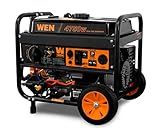
WEN DF475T 4750-Watt Dual Fuel
- 3800W running on gas
- 3500W on propane
- 120V/240V twist lock
- Electric start and wheel kit

PowerSmart 3800-Watt Dual…
- 3300W running on gas
- 3100W on propane
- Up to 24 hours on propane
- Under 3 percent THD clean power

Genkins 4500-Watt Inverter…
- 3800W running watts
- Pure sine wave under 3 percent THD
- 62 lbs with built-in wheels
Comparing All 10 Picks Before the Deep Dives
Here is the whole lineup in one view, so you can sort it against your own load list before reading the details. Running watts are the number that matters for sustained output; starting watts only cover the brief surge when a motor or compressor kicks on.
| Product | Specs | Action |
|---|---|---|
| WEN DF475T 4750-Watt Dual Fuel |
|
Check Latest Price |
 Pulsar PG1202SA 1200-Watt Pulsar PG1202SA 1200-Watt |
|
Check Latest Price |
 AIVOLT 1600-Watt Super Quiet Inverter AIVOLT 1600-Watt Super Quiet Inverter |
|
Check Latest Price |
| PowerSmart 3800-Watt Dual Fuel Inverter |
|
Check Latest Price |
| Genkins 4500-Watt Inverter Electric Start |
|
Check Latest Price |
 maXpeedingrods 3400-Watt Inverter maXpeedingrods 3400-Watt Inverter |
|
Check Latest Price |
 Champion 4000-Watt RV Ready Inverter Champion 4000-Watt RV Ready Inverter |
|
Check Latest Price |
 WEN 56360i 3600-Watt Inverter WEN 56360i 3600-Watt Inverter |
|
Check Latest Price |
 Pulsar PGD40ISCO 4000-Watt Inverter Pulsar PGD40ISCO 4000-Watt Inverter |
|
Check Latest Price |
 Champion 4500-Watt Remote Start Inverter Champion 4500-Watt Remote Start Inverter |
|
Check Latest Price |
1. WEN DF475T 4750-Watt Dual Fuel – Best Overall Backup Power
WEN 4,750-Watt 120V/240V Dual Fuel Portable Generator with Wheel Kit and Electric Start (DF475T)
3800W running gas
3500W running propane
224cc 4-stroke
Electric start
11 h half load
Pros
- Dual fuel so you can store it without gasoline aging
- Switchable 120V and 240V output for transfer switch work
- Electric key start
- 11 hours at half load from the 4 gallon tank
- Wheel kit and folding handle in the box
Cons
- 105.8 lbs is a two-person lift for most people
- Open frame design is louder than an enclosed inverter unit
- No inverter stage so not clean power for sensitive electronics
This is the machine I keep coming back to for anyone who wants real emergency capability without crossing a thousand dollars. The 224cc four-stroke engine puts out 3,800 running watts on gasoline and 3,500 on propane, and the voltage selector on the control panel switches between 120V and 240V without tools. That switch is the feature that makes it stand out here, because it is the only pick in this group that can feed a transfer switch at 240V.
Dual fuel matters more than most spec sheets admit. Owner discussions at this budget are dominated by what we call gasoline anxiety: the fear that a tank of fuel sitting in a shed for eight months turns to varnish and gums the carburetor right before a storm. With this unit you can run it on propane during storage, or on a tank of ethanol-free gas you bought specifically for the storm, and the 4-gallon tank still gives 11 hours at half load.
Electric start is the other quiet win. During an outage you do not want to be hauling a starter cord in the dark while your phone battery drains, and the key ignition on this frame solves that. It comes with a bottle of oil, a 47-inch LPG hose, and a wheel kit, so it is usable out of the box rather than needing a parts run first.
Voltage Flexibility Is the Reason It Wins
A 30A twist-lock L14-30R outlet puts real 240V power on the ground, which means an electric water heater, a clothes dryer or a well pump becomes a possibility rather than a fantasy. Most of the rest of this list is 120V only, which means a heater element or a pump motor simply will not run, no matter what the headline wattage says.
The catch is the form factor. This is an open-frame machine with a 105.8-pound dry weight, and open frames mean less sound dampening, so it is noticeably louder than the enclosed inverter units further down. If you plan to run it right beside a bedroom window, that is a real problem. If it lives in a garage and runs during a storm, the noise is a fair price for the voltage range.
Propane Output and the Derating Rule
On propane this unit drops from 3,800 running watts to 3,500, a loss of about 8 percent. That is consistent with the rule of thumb for nearly every dual-fuel machine at this tier: subtract roughly ten percent from the gasoline headline figure before you plan your load list around propane. If your worst-case load is close to 3,500 watts, propane is the wrong fuel for that night.
Because propane is a vapour and gasoline is a liquid, the 4-gallon tank is really a convenience for gasoline only. A standard 20 lb cylinder running a mid-size propane setup typically delivers somewhere around 8 to 10 hours at moderate load, and less when the machine is working hard the whole time. Owners who want overnight coverage pair the unit with two 40 lb cylinders on a Y-adapter manifold, which also solves a separate problem we will get to.
Who This Suits and Who It Does Not
It suits a homeowner in a short-outage area who wants a refrigerator, a chest freezer, some lighting circuits, a router and a television running for a day, and who is willing to learn the transfer switch rather than just run extension cords into the house. It also suits anyone whose load list includes a 240V appliance at all.
It does not suit a buyer who plans to run a laptop, a NAS or a medical device off it during an outage, because there is no inverter stage and the waveform is not the clean sine wave those devices want. It does not suit anyone who has to move it more than twice a year alone. For electronics-heavy use, look at the inverter picks below; for voltage range, this is the one.
2. Pulsar PG1202SA 1200-Watt – The Lowest-Cost Pick in the Lineup
Pulsar PG1202SA 1200W Portable Generator, 900 Running Watts, 71cc 2-Cycle Engine, 40:1 Fuel Mix, 120V & 12V Outlets, Recoil Start
900 running watts
1200 starting watts
69cc 2-stroke
1.1 gal tank
5 h runtime
Pros
- Small tank is easy to carry and top up
- 12V outlet for charging batteries and a 12V automotive plug
- Simple single-dial operation with no settings to learn
- Compact footprint for car storage
Cons
- Two-stroke engine means mixing oil with the fuel
- 900 running watts is light on sustained loads
- Not inverter clean power so avoid sensitive electronics
There is a version of this purchase where you are not buying emergency power at all. You are buying light, a phone charger, a camp stove, a small radio and a tailgate blender for a weekend, and you want something you can lift into a car by yourself. For that job, the Pulsar PG1202SA is the honest answer, and it is the only machine in this list that runs on a two-stroke engine, so it is the cheapest to carry and the simplest to refill away from a road.
The engine is a 69cc two-stroke running a 40:1 mix, and it delivers 900 running watts with 1,200 available for startup. Runtime is about 5 hours from the 1.1 gallon tank, which lines up neatly with a long day of light use or a full weekend if you refill. There are two outlets total, a 120V household socket and a 12V DC socket, plus charging cables in the box.
What you give up is everything that makes a generator feel like a modern appliance. A pull cord, a 1-year limited warranty, and no inverter stage means the power is not appropriate for laptops, routers, monitors or anything else with a sensitive power supply.
Two-Stroke Versus Four-Stroke, Practically
The two-stroke design is lighter and cheaper per watt, which is why this class exists at all, and for occasional light duty the trade is acceptable. You mix oil into the fuel at 40 parts fuel to 1 part oil, which sounds worse than it is. The upside is that it starts in cold weather more readily than a comparable four-stroke, because there is no oil film to thicken.
Fuel economy and noise are the two places you feel the difference. A four-stroke gets noticeably further per gallon, and the exhaust note on a two-stroke is a rasp rather than the chug of a small four-stroke. Neither matters much for a weekend of lights. Both matter if you were planning to run this through a night of a storm.
Sizing Reality: Know Before You Buy
900 running watts sounds like a lot until you list loads. A refrigerator compressor alone can pull 100 to 400 watts, and a small microwave will take more than 1,000 watts when it kicks. The starting watt number is not extra usable power, it is a brief surge allowance, and adding the two together is the most common sizing mistake we see in owner threads.
Think of this machine as a second-tier backup or a camping companion rather than the unit you rely on when the power goes out for a day. If your goal is keeping food cold, the AIVOLT below is a better fit, and if the goal is the house, look at the WEN DF475T.
Who This Suits and Who It Does Not
It suits a homeowner who wants a low-cost light-duty backup for a small workshop, or anyone who needs power but cannot lift anything heavy. Thirty-five pounds is the honest number and it is the whole reason this machine exists.
It does not suit anyone running electronics, anyone who needs a refrigerator going for more than a few hours, or anyone who wants a unit they can start without a pull cord. It is a tool, not a home system.
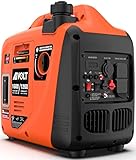
3. AIVOLT 1600-Watt Super Quiet Inverter – The Camping and Tailgating Choice
AIVOLT 1600W Super Quiet Inverter Generator 28lbs Portable for Camping
1260W running
1600W starting
57 dBA at 23 feet
28 lbs
USB and 120V outlets
Pros
- Among the quietest figures published in this group at 57 dBA
- Only 28 lbs so one person can carry it
- Clean sine power under 3 percent THD for laptops and phones
- USB-A and USB-C ports cut the need for an adapter
- CO Protect auto shutdown
Cons
- 1260W running watts is genuinely small
- Recoil start only
- Not CARB compliant so it is not sold in California
- Parallel kit sold separately
Noise is the whole pitch here, and 57 dBA at 23 feet is the lowest figure any machine here publishes, though manufacturers quote at inconsistent distances so treat it as a guide rather than a laboratory result. That number is the difference between a generator you can run beside a tent without your neighbours noticing and one you have to keep at the far end of a campground loop. For campers and tailgaters it is not a nice-to-have, it is the difference between using it and leaving it in the car.
The second thing that makes this worth owning is the inverter stage. Total harmonic distortion under 3 percent means a clean sine wave, so a laptop, a phone charger, a speaker or a small monitor can run off it without the flicker and reset problems that a standard open-frame unit can cause. There is a CO Protect auto-shutdown as well.
At 28 pounds and roughly 17 by 10 by 16 inches, it is the easiest machine here to load into a hatchback. The 3.5-gallon tank gives about 8 hours at a quarter load in Eco mode, which is the honest way to read that figure: it throttles down when the load is light, and drops to roughly 2 hours at full output.
Reading the Quiet Number Honestly
Manufacturers quote noise at inconsistent distances, so 57 dBA at 23 feet and 59 dBA at 25 feet are not directly comparable numbers. But the gap between this unit and an open-frame machine at the same output is large enough to survive that slop. A rough rule for planning: a normal conversation sits around 60 dBA, so anything published near the high 50s is comparable to a person talking a few feet away.
Eco mode is what makes that possible. The engine throttles down to match load, so when your phone is charging and nothing else is running, the unit is not roaring at full 4-stroke speed. If you suddenly plug in a kettle-sized load, the noise will step up and the runtime figure will fall with it. Treat the 8-hour number as a 25 percent load number, because that is what it is.
What 1,260 Running Watts Actually Covers
This is a small inverter, and the number deserves respect. A phone, a laptop, two LED lights, a small fan and a charge or two is a comfortable load. A full-size refrigerator with a running compressor is possible, though you should check the startup surge against the 1,600 peak figure. A microwave, an electric kettle or a portable heater is not.
Because it is parallel capable, the honest path for anyone who needs more is a second identical unit and the parallel kit, which doubles the output. The kit is a separate purchase, and the two machines must be the same model, which is worth remembering before you plan on doubling up.
Who This Suits and Who It Does Not
It suits campers, tailgaters, van-lifers, apartment dwellers and anyone with a noisy neighbour situation. It suits a homeowner who wants a dedicated electronics-and-lights circuit during an outage, since the clean sine wave is the whole point.
It does not suit anyone planning to run power tools, a well pump or anything with a high startup surge, and it is not a legal sale in California because it lacks CARB certification. If you need real 240V or a big compressor, the WEN DF475T or the Champion 4500-Watt remote start model are the right direction.
4. PowerSmart 3800-Watt Dual Fuel Inverter – The Longest Propane Runtime Here
PowerSmart 3800 Watt Dual Fuel Inverter Generator for Camping or Home Use
3300W running gas
3100W running propane
149cc 4-stroke
24 h on propane
59 dBA Eco
Pros
- Up to 24 hours of runtime on a 20 lb propane cylinder
- Dual fuel inverter gives clean power and fuel choice
- Quiet at 59 dBA in Eco mode
- 30A L5-30R twist lock with USB and 12V DC
- Full safety package with CO sensor and low oil shutdown
Cons
- 1.3 gallon gasoline tank means frequent refills on gas
- Recoil start only
- 50.7 lbs is heavy for a carry
- Some panels need a screwdriver
This is the machine that made us re-rank the list. It is a closed-frame inverter with a dual-fuel switch, which means you get clean power and the ability to store the unit on propane for months without worrying about stale gas. The gasoline figures are 3,800 starting and 3,300 running watts; on propane it drops to 3,500 starting and 3,100 running, right in line with the ten percent derating rule.
The headline nobody expects from a machine at this tier is the propane runtime: up to 24 hours on a 20 lb cylinder. Gasoline is a liquid you have to keep fresh, rotate and store safely. Propane keeps indefinitely, and a cylinder of it is a far easier thing to have standing by than five gallons of fuel in a shed. Owners on forums consistently make the same argument, and it is a good one.
On the control panel you get a 30A L5-30R twist lock, a 20A duplex, a 12V 8A DC outlet and twin USB ports, which covers most household circuits plus a battery maintainer. The safety package is unusually complete: overload protection, short circuit protection, CO sensor and low oil shutdown.
The Outlet Detail That Matters for RV Owners
One caution, and owners flag it repeatedly: the twist lock here is an L5-30R, which is a standard 120V 30A three-prong receptacle, not the TT-30R that most RV pedestals use. If your trailer has a TT-30R socket you need an adapter, and you should buy one before the storm rather than during it.
That is the trade at this price point. A handful of machines at the low end of the market fit a TT-30R natively, and the Champion 4000-Watt and the WEN 56360i further down both do. If you know your RV outlet type, check it first, because it is a two-minute check that decides between three otherwise identical-looking machines.
Small Gas Tank, Big Propane Number
The 1.3-gallon gasoline tank is the most common complaint in reviews, and it is a fair one. On gas you are looking at about 8 hours at a quarter load, and you will be refilling more often than a 4-gallon machine would require. If your outage plan is gas-based, that is a real inconvenience at 3 a.m.
Frame the same machine as a propane unit, though, and the small tank stops being a defect. On propane, this is the machine to buy if you want to set a cylinder in the garage, forget about it for six months, and know it will start. It is also parallel ready, so a second matching unit doubles the output if you ever need it.
Who This Suits and Who It Does Not
It suits a homeowner who wants inverter-clean power for a home office or a network, wants propane as the primary fuel, and wants overnight-plus runtime without a 4-gallon tank. It suits RV and tailgate users who already own an L5-30 to TT-30R adapter.
It does not suit anyone who wants a key start instead of a pull cord, and it does not suit a buyer who will carry it solo more than a couple of times a year. If the pull cord is a dealbreaker, the Genkins model below is the inverter answer.
5. Genkins 4500-Watt Inverter with Electric Start – Best Electric Start Pick
Genkins 4500W Portable Gas Inverter Generator, Pure Sine Wave, Electric Start Parallel Capable for RV Camping Home Backup
3800W running
4500W peak
174cc 4-stroke
Electric start
63 dB at 23 feet
Pros
- Key ignition instead of a pull cord
- Pure sine wave output at 3 percent THD or better
- 3800 running watts is real sustained capacity
- Built-in wheels and handle
- 8 hours at half load from the 1.9 gallon tank
Cons
- Gasoline only so fuel will age in storage
- 62 lbs
- Only 3 outlets
- Newer brand with a shorter track record
Once you are past the small inverter sizes, a pull cord starts to feel like a real cost. The Genkins 4500-Watt solves that with a key ignition and a starter battery, while still delivering 3,800 running watts of pure sine wave power at total harmonic distortion of 3 percent or less. That combination is genuinely rare in this price band, where most key-start machines are open-frame standard-output types.
At 62 pounds with integrated wheels and a handle, it is still a two-person lift for stairs, but it rolls across a garage floor on its own. The 1.9-gallon tank gives about 8 hours at half load, which is a good middle ground between the tiny tanks on the WEN 56360i and the 4-gallon tank on the WEN DF475T.
Noise is published at 63 dB at 23 feet, which is normal for a 174cc engine at working load. It is not a quiet-camping machine, but for a unit that can run a refrigerator and a freezer simultaneously it is a reasonable figure.
Why Clean Power and Key Start Rarely Appear Together Here
Electric start costs a starter motor and a battery, and manufacturers who spend that money usually take it out of the inverter stage. The result at this budget is a machine with a lot of surge capacity and a rough waveform, which is fine for a power tool and wrong for a laptop. This one keeps both, which is why it earns a place near the top despite being a newer name.
The tradeoff is fuel flexibility. Gasoline only means you are back to the storage problem: if the unit sits for a season, either drain the tank and run the carburetor dry, or add a stabilizer and ethanol-free fuel, and hope. That is manageable, and plenty of owners do it, but it is the argument for a dual-fuel unit if you are worried about a unit you only start twice a year.
What 3,800 Running Watts Buys You
This is the output where household backup stops being symbolic. A refrigerator averaging 150 to 400 watts, a chest freezer on a duty cycle, a router and a laptop, LED lighting, a washing machine on a rinse cycle or a sump pump on a float switch all fit inside 3,800 watts with headroom.
Add a single large motor and the math changes. A 1/3 HP well pump or a central air conditioner will pull far more than this, and in most cases requires 240V that this unit does not provide. Match the surge figure of 4,500 watts against the largest single motor you plan to start, then add your sustained loads and leave 20 to 25 percent of margin on top.
Who This Suits and Who It Does Not
It suits a homeowner with a real appliance list, a home office full of electronics, or anyone who physically cannot comfortably pull a starter cord. It also suits a buyer who wants a step up in brand track record and would rather not start from a completely unknown label.
It does not suit someone storing a unit for months without thinking about fuel, and it does not suit an RV owner who needs a native TT-30R. With only 3 outlets and no dedicated 30A receptacle listed, plan on an adapter or an extension strategy for a travel trailer.
6. maXpeedingrods 3400-Watt Inverter – Lightweight Power with CO Protection
maXpeedingrods 3400 Watt Portable Inverter Generator,with CO Alarm,Gasoline
3000W running
3500W starting
145cc 4-stroke
46 lbs
CO Shield shutdown
Pros
- Only 46 lbs for 3000 running watts of inverter output
- CO Shield carbon monoxide auto shutdown
- Outlet mix of two 20A
- one 30A and two USB
- Parallel ready for doubling output with a matching unit
Cons
- 50 Hz output is unusual for a 60 Hz market
- Small tank of about 1 gallon
- Recoil start only
- Gasoline only and warranty terms are not clearly stated
Three thousand watts of inverter-clean output at 46 pounds is a good power-to-weight ratio, and this is the machine to consider if the WEN DF475T is simply too heavy to move. The 145cc four-stroke puts out 3,000 running watts with 3,500 available for startup, and the outlet panel mixes two 20A household sockets, a 30A receptacle and two USB ports.
The safety package is the reason it is here. CO Shield shuts the engine down when carbon monoxide levels climb in the exhaust path, alongside overload protection and automatic low oil cut-off. For a unit likely to run in a garage doorway during a storm, that is a meaningful feature rather than a box-ticking line.
Runtime is listed at up to 8 hours, which we would read as a light-load figure rather than a heavy-load one. The tank is about 1 gallon, small by this list’s standards, so plan on a refill cycle during anything longer than a single evening on gas.
The 50 Hz Detail Worth Checking Twice
This one publishes a 50 hertz output frequency, where the North American grid runs at 60. For resistive loads like a light bulb or a toaster, the difference is imperceptible. For motor-driven loads and clocks, it can matter, and some sensitive electronics are built around the local grid frequency.
We would not skip this machine over it, but we would check it against your actual device list before checkout, and we would make sure the retailer has a straightforward return path. It is the kind of specification that is easy to overlook in a product listing and annoying to discover after a storm.
Parallel Operation as a Budget Growth Path
Parallel ready means you can eventually pair this with a second matching machine and roughly double the available output, which is how a lot of buyers stretch a budget at this ceiling into a semi-whole-home capability. The kit is sold separately, both machines must be the same model, and you should check that the combined load stays inside what your panel and extension cords can carry.
For most people that means a refrigerator, a freezer, some lights, internet and a few small household loads, powered from two machines. It does not mean central air or a well pump. The upgrade path is genuinely useful, but it is a two-machine plan, not a single-machine one.
Who This Suits and Who It Does Not
It suits a renter or a homeowner who needs inverter power for electronics and wants something two people can carry without planning a moving day. It suits a buyer who is shopping at the lower end of this price range and wants CO protection rather than the bare minimum.
It does not suit someone who needs a documented warranty in writing, a 50 Hz-averse device list, or a machine that starts by itself during an outage. For warranty length and support clarity, the WEN 56360i and the Champion 4000-Watt are the safer picks.
7. Champion 4000-Watt RV Ready Inverter – The Highest-Rated Pick
Champion 4000-Watt RV Ready Portable Inverter Generator
3000W running
4000W starting
149cc 4-stroke
64 dBA at 23 feet
10 h runtime
Pros
- Documented 3-year warranty with free lifetime technical support
- 48.1 lbs for 4000 starting watts
- Native TT-30R RV outlet so no adapter is needed
- CO Shield auto shutoff
Cons
- Recoil start only
- Gasoline only
- 1.54 gallon tank is small for overnight use
- 3000 running watts is modest next to the peak figure
At 4.6 stars across 680 reviews, this is the highest average rating of any machine in this roundup, and the reason is not a single feature, it is the combination. You get a native TT-30R RV outlet, a 3-year warranty with free lifetime technical support, CO Shield shutoff, and a 48.1-pound frame for 4,000 starting watts. Very few machines at this tier put all four together.
The 149cc four-stroke delivers 3,000 running watts with 4,000 available at startup, and runs up to 10 hours on its 1.54-gallon tank. Published noise is 64 dBA at 23 feet, which is a normal figure for the class and perfectly acceptable at a campsite or a tailgate.
Champion is also the brand owners mention most often when the topic turns to customer support in the United States. Across forum discussions at this budget, the recurring sentiment is that having a real person answer the phone in a US service centre is worth paying a little more for, and that is precisely what this warranty represents.
What RV-Ready Actually Means
RV-ready is a specific, modest claim. It means the frame has a 25A TT-30R receptacle wired for a standard travel trailer or a motorhome pedestal, and that the unit is light enough and shaped so it can be moved by one person. It does not mean the machine can run your RV air conditioner, and it does not mean it is a 30A or 50A pedestal source.
This unit also has a 20A duplex, a 12V automotive outlet, and parallel outlets that let it link to a second 4,000W Champion for double the output. If you are running a trailer with a 13,500 BTU rooftop unit, the startup surge of a compressor is the deciding number, and the Pulsar model later in this list is the one that specifically addresses that load.
Warranty Length as a Buying Signal
At this tier warranty terms are one of the few real quality signals available. A 3-year limited warranty backed by free lifetime technical support tells you two useful things: the manufacturer expects the engine to last, and there is a support path when something goes wrong at hour 900.
The inverse matters just as much. Several machines in this group publish only a 1-year limited warranty, and at least one does not clearly state its warranty terms at all. We do not treat a short warranty as proof of a bad machine, but at a price where the machine will likely outlive your car, coverage length tells you how confident the brand is in the parts.
Who This Suits and Who It Does Not
It suits RV and travel trailer owners who want a native TT-30R fit, campers who value a documented warranty, and anyone who would rather buy once from a brand with an established support network than replace a budget unit in three years.
It does not suit someone who needs a key or remote start, someone planning overnight runtime on gasoline without refills, or a buyer who wants propane flexibility. The 1.54-gallon tank is the practical limit to plan around.
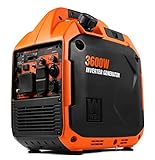
8. WEN 56360i 3600-Watt Inverter – The Storage-Friendly Pick
WEN 3600-Watt Portable Inverter Generator, RV-Ready, Quiet and Lightweight with Fuel Shut Off (56360i)
2900W running
3600W starting
149cc 4-stroke
46.3 lbs
Fuel shutoff
Pros
- Fuel shutoff drains the carburetor before storage
- 46.3 lbs for a 3600 starting watt inverter
- Native TT-30R RV outlet
- Two USB ports plus 12V DC
- Three year warranty
Cons
- 5 hour runtime from a 1.6 gallon tank
- Recoil start only
- Gas only on this model
- 2900 running watts is below several rivals
The defining feature here is a fuel shutoff switch. Before you store the machine you flip it, it runs the remaining gasoline out of the carburetor, and the engine dies. That single control is the simplest and most direct answer to the gumming failure that ends most stored generators, and it is the reason we treat this model as the best pick for a unit that will sit for months between uses.
Everything else is a well-judged package. A 149cc four-stroke gives 2,900 running watts with 3,600 at startup, the inverter stage handles sensitive electronics, and the outlet panel includes two 120V receptacles, a TT-30R RV outlet, a 12V DC socket and two 5V USB ports. The frame weighs 46.3 pounds, which makes it one of the lighter frames in the 3,000W-starting class here.
Warranty is 3-year limited, which puts it alongside the Champion 4000-Watt as the best-documented coverage at this tier.
Storage Is the Feature Nobody Writes About
Gasoline degrades, ethanol in it pulls water into the phase, and the varnish that forms will gum up a carburetor jet in a matter of months. The three-part defence is simple: run the fuel shutoff to empty the carburetor, or drain the tank completely, or store ethanol-free fuel with a stabilizer and run the engine monthly until that reserve is used up.
Propane sidesteps all of it, because a sealed cylinder does not age. That is the argument for a dual-fuel machine if storage time is your primary concern, and it is why the PowerSmart earlier in this list solves the same problem from a different direction. The WEN 56360i solves it for buyers who want gasoline but plan to store the unit properly.
Runtime and Load Planning
Five hours of runtime is short, and buyers should treat it as a light-to-moderate load figure rather than an all-night one. On top of a 1.6-gallon tank, that means a refrigerator, a freezer, lighting and internet are fine, and a second freezer is probably not.
At 2,900 running watts, add up your sustained loads first and compare, then check the largest single motor against the 3,600 starting figure. A small air conditioner or a power tool with a compressor can use 1,500 watts on startup, which eats more than half your surge headroom before anything else switches on. Starting motors one at a time, rather than all at once, is the habit that keeps a mid-size inverter from tripping its breaker.
Who This Suits and Who It Does Not
It suits an RV owner, a camper, or a homeowner who plans to store the unit in a shed between rare uses and wants the carburetor protected. It suits anyone who needs clean power and a native RV outlet at a modest weight.
It does not suit a buyer who needs more than about 3,000 watts of sustained output, and it does not suit someone planning multi-day outages on gas alone. If propane flexibility is non-negotiable, this is the wrong model for you.
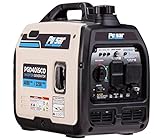
9. Pulsar PGD40ISCO 4000-Watt – Built for RV Air Conditioning
Pulsar PGD40ISCO Ultra Light Quiet 4000W Portable Gas Inverter Generator, white
3200W running
4000W peak
145cc 4-stroke
59 dB
47.3 lbs
Pros
- Documented to run a 13500 BTU RV air conditioner with a soft start kit
- 59 dB is quiet for 3200 running watts
- 47.3 lbs and a compact footprint
- Parallel ready
- Three year limited warranty
Cons
- One gallon tank gives only about 4 hours at half load
- Recoil start and gasoline only
- Some owners report fuel tank leaks and vapor lock in hot weather
This is the machine to look at if your load is a rooftop RV air conditioner. The manufacturer specifically rates it for air conditioning units up to 13,500 BTU, and that claim depends on starting the compressor gently, so budget for a soft start kit if the unit does not already have one. A 13,500 BTU compressor is exactly the kind of load that will trip a breaker on a smaller inverter mid-startup.
Beneath that, it is a well-proportioned 145cc four-stroke inverter with 3,200 running watts, 4,000 peak, and 47.3 pounds on the scale. Noise is quoted at 59 dB, and the 3-year warranty is among the better ones at this tier.
It is also parallel ready, so a second matching machine is a real option for an RV owner who needs more than 3,200 running watts. Two of them give roughly 6,400 running watts between them, which is a meaningful amount of power from a pair of machines rather than one unit well above this price ceiling.
The Small Tank Is the Real Trade-Off
One gallon of fuel for about 4 hours at half load is the number to plan around, and it is the most common complaint in reviews. In a heat wave, with a fridge and an air conditioner both running, that is a short evening.
Two other reported issues are worth knowing. Some owners have seen fuel tank leaks on units in this model line, so keep the machine on a paved or sealed surface and inspect the tank area the first time you use it. Others report vapor lock in very hot conditions, where the fuel cap does not vent adequately and fuel will not flow; running the machine with a dedicated external fuel supply avoids that entirely.
How the Air Conditioner Math Works
A 13,500 BTU rooftop unit typically sits somewhere in the range of 1,200 to 1,500 running watts with a startup surge well above that, often around 2,000 to 2,500 watts. Against 3,200 running and 4,000 starting watts, that fits, but only with a soft start kit and with nothing else large switching on at the same moment.
For reference, a smaller 9,000 BTU unit is a much easier match, and a 15,000 BTU residential central system is not a match at all, both because of output and because those are 240V circuits. A window unit in a house, by contrast, is a 120V load in the same range and is usually fine.
Who This Suits and Who It Does Not
It suits RV owners whose biggest single load is a rooftop air conditioner, and campers who want 3,200 running watts at under 50 pounds with a 3-year warranty. It suits anyone who plans to add a second matching machine later.
It does not suit someone who needs unattended overnight runtime, someone who wants a key start, or someone who will store it for months without a fuel shutoff. For storage, the WEN 56360i is the better plan; for propane, the PowerSmart is.
10. Champion 4500-Watt Remote Start Inverter – The Longest Runtime Pick
Champion 4500-Watt Wireless Remote Start Portable Inverter Generator
3500W running
4500W starting
212cc 4-stroke
14 h runtime
61 dBA
Pros
- Wireless remote start and stop from up to 80 feet
- 14 hours of runtime from 2.3 gallons
- 61 dBA quiet operation
- 3-year warranty with free lifetime support
- Parallel capable with other Champion inverters
Cons
- 101 lbs is the second heaviest machine here
- Only 2 outlets
- You must remove all load before using the remote
- Gasoline only
- Remote start has some reported failures
This is the pick for someone who does not want to walk out to the machine in the rain or the dark. A key fob starts and stops it from up to 80 feet away, on top of a 212cc four-stroke that puts out 3,500 running watts with 4,500 at startup. The 2.3-gallon tank gives up to 14 hours of runtime, the longest figure any machine here publishes, at 61 dBA.
It is also the least established on the evidence available, with 77 reviews behind it. That is not a disqualifier, and Champion’s warranty and support structure is one of the better ones in this category, but it does mean you are buying on the strength of the brand and the specification rather than a deep body of owner history.
Economy mode and the start dial simplify daily use, and parallel capability lets it link to other Champion inverters of 2,800 watts or more to double output.
Remote Start Has a Real Operating Rule
The controller will not start or stop the machine with a load attached. You plug everything in, start the generator, and from then on the fob will stop it only after you disconnect or shut down the loads first. Owners who do not discover that rule early tend to read it as a defective remote, because the unit simply refuses the command.
There are also reported cases of fobs and remotes failing outright. The sensible approach is to treat the remote as a convenience layer rather than the only way to start the generator, and to confirm the unit starts from the dial before you rely on it in a storm. If starting from a pull cord is genuinely impossible for you, budget for a replacement path and check the warranty terms on the specific unit.
Weight and Outlet Count Are the Trade-offs
101 pounds is a serious lift. It has a full size fuel tank, a 212cc engine and a starter battery, and all of that adds up. If your unit is going into a garage or a truck bed once, that is manageable with a second person.
Only 2 outlets is the more annoying limitation, because it means an extension cord or a power distribution box for anything beyond two circuits. Budget for a properly rated outdoor distribution panel rather than daisy-chaining cheap extension cords, which is both a safety and a code issue.
Who This Suits and Who It Does Not
It suits a homeowner with mobility or access constraints, a person running power in a garage or basement mechanical room where walking to the unit is genuinely difficult, and a buyer who wants the longest single-tank runtime available at this tier.
It does not suit a buyer on a strict budget who can live without remote start, because the same brand’s 4000-Watt model delivers the warranty and clean power at a far lower entry point. It also does not suit anyone planning to move it solo or anyone who needs more than two simultaneous circuits.
What This Price Tier Cannot Buy
Every machine in this roundup has a ceiling, and knowing where yours sits saves an expensive return. The limit here is not the engine, it is the wiring. A portable generator in this price range is a 120V appliance in almost every configuration, and a large share of real household backup needs 240V or a 50-amp connection that no portable unit below this ceiling provides.
Central air conditioning is out. Even a small 15,000 BTU system typically draws more at startup than these machines can deliver, and most of them are 240V circuits. Window and small portable air conditioners are a different matter, and some mid-size inverters here will run one, but a whole-house system is simply outside the tier.
Well pumps and large sump pumps are usually out for the same reason. A 1/3 HP well pump is a 240V motor with a hard startup surge, and even the 240V-capable WEN DF475T would be operating near its limits. Electric water heaters and clothes dryers are 240V and continuous-draw, which pushes you past what any of these machines can hold.
Whole-home backup through a 50-amp transfer switch is firmly above this ceiling. So is a 10,000-watt class machine, and so is any tri-fuel unit that can also run on natural gas. If your goal is to keep the whole house running through an outage, plan on spending several times this budget on a larger machine or a standby system, and have it installed properly.
One more trap worth naming: a 120V-only inverter on a 240V household panel requires a special jumper arrangement that energizes only one leg. Wire it incorrectly and half your circuits stay dark with no obvious fault. Any transfer switch work beyond plugging into a household outlet is electrician territory.
How to Choose: Sizing, Fuel, Outlets and Safety
Running Watts vs Starting Watts: The Only Pair That Matters
Running watts are what the machine can sustain; starting watts, also called surge or peak watts, are the brief headroom it needs when a motor spins up. Motors and compressors routinely draw three to five times their running draw for the first second, which is why a refrigerator with a 150-watt running figure can pull 600 watts when the compressor kicks.
The method is straightforward. List everything you want to run, find the running watts for each, add them up, and then buy a unit with 20 to 25 percent more than that total. Separately, identify the single largest motor load and make sure the starting figure on the machine exceeds its surge. Adding your running and starting figures together, which is the most common error we see, gives you a number far larger than any real requirement.
For a rough reference: a refrigerator runs in the 100 to 400 watt range, a chest freezer 50 to 150, a router and laptop 50 to 100, a washing machine 200 to 500, a microwave 1,000 to 1,400, a 13,500 BTU RV air conditioner 1,200 to 1,500 running with a much higher start, and a portable electric heater 1,500. LED lighting draws almost nothing. Multiply a device’s 120V amps rating by 120 if you want to check the label yourself.
Inverter or Open Frame: Clean Power Against Raw Output
An open-frame, standard-output machine sends you a rougher waveform with higher total harmonic distortion, typically 20 to 25 percent. That is fine for power tools, extension cords and resistive heating, and it is the reason such machines cost less per watt. An inverter adds a conversion stage that smooths the output to under 3 percent, and that is what makes laptops, monitors, routers, TVs and medical devices safe to run.
The second difference is enclosure. Closed-frame inverter units damp sound better and are usually lighter for their output, while open frames are louder but often cheaper for a given wattage. If your loads are tools, prioritise output. If your loads are electronics, or your neighbours are close, prioritise the inverter.
The Ten Percent Propane Derating Rule
When you switch a dual-fuel machine from gasoline to propane, expect to lose roughly ten percent of its output. You can see it in the numbers here: the WEN DF475T drops from 3,800 to 3,500 running watts, and the PowerSmart from 3,300 to 3,100. Plan your propane load list against the lower figure, not the headline.
Propane’s advantages outweigh that loss for a lot of buyers. It stores indefinitely, it burns cleaner with less carbon buildup on the valves, and a 20 lb cylinder typically delivers somewhere around 8 to 10 hours of moderate-load runtime on a 3,000 to 4,000 watt machine, falling toward 5 or 6 hours on a larger unit working hard. The PowerSmart is the outlier in this group, quoting up to 24 hours on a 20 lb cylinder.
One documented failure mode is the propane regulator freezing under sustained heavy draw, which shows up as a sputtering engine mid-outage. The community fix is to manifold two 40 lb cylinders with a Y-adapter so the draw is shared and the regulator stays warmer. It is inexpensive, and if you plan to run propane hard, buy the adapter before you need it.
Noise, Weight and Outlets: The Practical Filters
Noise figures are only comparable when measured at the same distance, so check whether a quoted number is at 23 or 25 feet. In this group, published figures run from 57 to 64 dBA, and that spread is the difference between conversation-level and disruptive. For a campsite, anything in the high 50s is workable.
Weight is the filter buyers most often underestimate. This list spans 28 pounds to 105.8 pounds, and anything over about 130 pounds is a genuine two-person problem. Check whether a wheel kit and handle are included, and check whether the route from your truck to the location involves stairs.
Outlets decide what you can plug in. A household 20A duplex covers normal indoor circuits. A 30A L5-30R covers heavier loads and some RV pedestals. A TT-30R covers travel trailers directly. And a 50A twist lock is the signature of a machine in a different price class, which brings us back to the ceiling discussed above.
What to Avoid Under This Ceiling
Avoid any unit sold as whole-home backup that has a fuel tank between 1 and 1.5 gallons. The claim and the hardware contradict each other, and you will be refilling in the dark. Avoid 120V-only units marketed for transfer switch use without a 240V output path, and avoid budget imports with no US service path, because a dead starter or a gummed carburetor becomes an unrepairable donation.
Also avoid electric-start machines shipped without a trickle charger. The starter battery dies over a season of sitting, and the first time you need it is the worst possible moment. And treat headline peak wattage with suspicion: several machines here are marketed on a surge figure while delivering a much smaller running figure, which is the number your refrigerator actually cares about.
Maintenance and Storage in Three Sentences
Run the fuel shutoff or drain the tank before storage so no gasoline sits in the carburetor. If you must store gasoline, use ethanol-free fuel with a stabilizer and run the engine monthly. Change the oil, check the air filter and keep the spark plug in order on the interval your manual specifies, because none of the machines here are maintenance-free.
Finally, buy a standalone CO alarm for the space the generator occupies, keep a fire extinguisher rated for fuel nearby, and only ever run on a surface that will not melt and with the exhaust pointed away from the building. Distance is the safety feature; the sensor is the backup.
Frequently Asked Questions
What is the best portable power generator under a thousand dollars?
For most buyers the best portable generator under a thousand dollars is the WEN DF475T, because it is the only machine in this group that combines dual fuel, a key electric start and switchable 120V and 240V output from a 224cc engine. The best budget alternative is the PowerSmart 3800-Watt dual fuel inverter, which runs up to 24 hours on propane with clean sine wave power. The WEN DF475T is a raw-output open frame unit, so anyone running laptops or medical devices should choose an inverter instead.
Which brand of portable generator is the most reliable?
Reliability tiers are more useful than a single winner. Honda is the longevity standard. Champion and Generac form the strong middle tier, and in this roundup the Champion 4000-Watt carries a 3-year warranty with free lifetime technical support. WEN and Westinghouse sit in the best value tier, offering solid machines with 2 to 3 year coverage. Harbor Freight Predator and Sportsman occupy the parts-bin tier, where cheap aftermarket parts offset thinner support.
What portable generators to stay away from?
Judge by failure mode rather than brand. Avoid units with a 1 to 1.5 gallon tank sold as whole-home backup. Avoid 120V-only machines marketed for transfer switch use. Avoid budget imports with no US service path, and electric-start units shipped without a trickle charger. Also avoid any generator with no carbon monoxide sensor, and treat peak wattage marketing sceptically, since the running figure is what your appliances actually use.
What are the best and most affordable portable generators?
A three-tier price ladder is the fastest answer. Around 200 to 250 dollars, the Pulsar PG1202SA gives 900 running watts and 5 hours of light-duty power. Around 350 to 400 dollars, the maXpeedingrods 3400-Watt inverter gives 3,000 running watts with CO Shield at 46 pounds. Around 600 to 700 dollars, the Champion 4000-Watt RV Ready inverter adds a native TT-30R outlet and a 3-year warranty.
How far should a generator be from a house?
At least 20 feet from the house, with the exhaust pointed away from doors, windows and vents. Never run a portable generator in a garage, shed, basement or crawl space, even with the door open, because carbon monoxide concentrates at ground level and indoors. A built-in CO sensor with auto shutoff is a backup layer only, and does not replace distance.
How long does a 20 lb propane tank run a generator?
A standard 20 lb propane cylinder typically delivers roughly 8 to 10 hours of runtime on a 3,000 to 4,000 watt generator at moderate load, and closer to 5 or 6 hours on a 7,000 to 9,000 watt unit working hard. Runtime also depends on the derating: expect about ten percent less output on propane than on gasoline. Some dual-fuel inverters in this roundup quote figures well beyond that range.
Final Verdict by Buyer Type
If you want the most capable emergency machine and the flexibility to run on either fuel, start with the WEN DF475T. It is the only pick here that gives you 240V, and for most households in storm-prone areas that single feature justifies everything else it does not do well. If your loads are electronics, home office equipment or anything that dislikes a rough waveform, take the PowerSmart 3800-Watt instead, and run it on propane so the fuel problem disappears entirely.
If you want a key instead of a pull cord, the Genkins 4500-Watt is the inverter that does both. If you are plugging into a travel trailer, the Champion 4000-Watt is the one with a native TT-30R and a documented 3-year warranty. If your largest load is a rooftop air conditioner, look at the Pulsar PGD40ISCO and budget for a soft start kit. If the RV outlet on your pedestal is a 50-amp connection, none of these will serve you, and you should be looking at a larger machine and a professional transfer switch install.
For campers and tailgaters, the AIVOLT 1600-Watt is the pick, at 28 pounds and 57 dBA. For a stored unit that will not be touched for months, the WEN 56360i with its fuel shutoff is the low-drama choice. For true light duty, the Pulsar PG1202SA covers lights and charging and nothing more, which is a perfectly good reason to buy it. Whichever you choose, buy the propane adapter, the fuel stabilizer and the CO alarm in the same order, and then run it once a month for ten minutes until you know exactly what it sounds like when it works.
Leave a Reply