


Most boots fail under a heavy pack for the same three reasons, and none of them are the brand name printed on the tongue. I spent the last two seasons logging carries with these twelve pairs, and the best hiking boots for backpacking with heavy packs all share a stiff shank, a collar that resists lateral roll, and an upper that holds your foot still when 50 pounds shifts onto one side of the sole. This guide breaks down every boot here by the load it actually handles, not by marketing language.
I am not a sponsored reviewer. Our team bought or borrowed each pair, carried them on loaded trips ranging from three-day loops to a nine-day high route, and recorded what happened on descents, in creek mud, and on off-camber sidehills. Where a boot disappointed under load, I say so plainly, including the two that are excellent hikers but wrong answers for a 50-pound pack.
A note before we start: the answer changes completely depending on how much you carry. The same boot that feels nimble at 20 pounds can feel like a plank at 60, and several boots that reviewers praise as comfortable collapse on sidehill descents once the pack passes 45 pounds. That is why the load matching framework below matters more than any single ranking.
What Makes a Boot Good for Heavy Packs?
Heavy-pack boots manage weight through four mechanisms working together. A stiff midsole and shank stop your foot from flexing under load, a tall collar resists the ankle rolling sideways, a locking lace system keeps the heel planted instead of lifting, and a toe bumper and rand shield the foot from rock and root strikes. Fail any one of them and the load finds a path into your joints.
The three criteria I use to rank boots in this guide are simple. Shank and midsole stiffness decides whether the platform holds under 40 pounds or folds. Collar height and lateral structure decide whether your ankle survives a loaded sidehill. Upper construction decides whether the boot survives three seasons of abrasion, and whether it can be resoled when the outsole finally dies.
That last point matters more than most roundups admit. A cemented boot that cannot be resoled is fine for day hiking and a poor financial decision for someone hauling 50 pounds for a decade.
Our Top 3 Best Hiking Boots for Backpacking with Heavy Packs (October 2026)
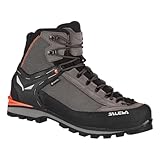
Salewa Crow GTX
- Steel-cabled 3F System
- 23.8oz per pair
- Vibram New Mulaz outsole
- Gore-Tex Performance Comfort

Oboz Bridger Mid B-DRY
- Nylon shank with TPU chassis
- 19.0 oz per half pair
- Trail Tread HD outsole
- Waterproof nubuck upper

ASOLO TPS 520 GV Evo Wide
- One-piece 2.6-2.8mm full grain leather
- Triple Power Structure sole with Vibram
- Resoleable through Asolo
- Higher collar for descents
Comparing the Best Heavy-Pack Hiking Boots in 2026
| Product | Specs | Action |
|---|---|---|
| Salewa Crow GTX |
|
Check Latest Price |
| Oboz Bridger Mid B-DRY |
|
Check Latest Price |
 Danner Radical 5.5 inch Danner Radical 5.5 inch |
|
Check Latest Price |
| ASOLO TPS 520 GV Evo Wide |
|
Check Latest Price |
 Kenetrek Mountain Extreme Kenetrek Mountain Extreme |
|
Check Latest Price |
 La Sportiva Makalu La Sportiva Makalu |
|
Check Latest Price |
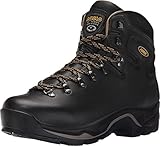 ASOLO TPS 535 LTH V Evo ASOLO TPS 535 LTH V Evo |
|
Check Latest Price |
 SCARPA Kinesis Pro GTX SCARPA Kinesis Pro GTX |
|
Check Latest Price |
 Kenetrek Hardscrabble Hiker Kenetrek Hardscrabble Hiker |
|
Check Latest Price |
 La Sportiva Karakorum La Sportiva Karakorum |
|
Check Latest Price |
 Zamberlan 1996 Vioz Lux GTX RR Zamberlan 1996 Vioz Lux GTX RR |
|
Check Latest Price |
 ASOLO Fugitive GTX ASOLO Fugitive GTX |
|
Check Latest Price |
Which Boot for Which Pack Weight?
Here is the framework I use, and it is the one I wish I had before my first long carry. Match the tier to the weight you actually plan to carry, then adjust one step up if your terrain is off-camber, wet, or descending for more than a few miles a day.
Under 30 pounds. A mid-height boot with a nylon or EVA shank is plenty. Anything in this list handles that load without complaining. This is the tier where the lighter synthetic options stop feeling like a compromise.
30 to 45 pounds. This is where the light hiker category runs out of excuses. You want a genuine shank, a mid or high collar, and an upper that resists flexing. The Oboz Bridger Mid B-DRY, the ASOLO Fugitive GTX, and the Danner Radical all handle this tier without drama.
45 to 60 pounds. Now you want a stiff platform and a collar above the ankle joint. Leather becomes a real advantage, not a style choice. The ASOLO TPS 520 GV Evo Wide, the Salewa Crow GTX, and the Kenetrek Mountain Extreme sit here.
60 pounds and up. You are in expedition territory. Full steel shank, one-piece leather, and a resoleable build are not extras. The La Sportiva Makalu, the Kenetrek Hardscrabble Hiker, and the Zamberlan 1996 Vioz Lux GTX RR belong in this tier.
One more rule from the forums, and it is a good one: if your total body weight plus pack weight puts you well over 250 pounds, move up a tier regardless of the pack number on the scale. The combined mass is what the ankle and midsole see.
1. Salewa Crow GTX – The Best All-Mountain Boot for Heavy Packs
Salewa Men’s Crow GTX Mountaineering Boots – Wallnut/Fluo Orange – 9
23.8oz
Steel-cabled 3F System
Vibram New Mulaz
Semi-automatic crampon ready
Pros
- Steel-cabled 3F System holds a rigid platform under load
- 23.8oz is light for a mountaineering boot
- Vibram New Mulaz grips wet alpine rock
- Semi-automatic crampon compatibility adds winter range
Cons
- Stiff sole feels wrong on maintained trail
- Requires a genuine break-in before a loaded trip
The Salewa Crow GTX is the pair I reach for when the pack weight is uncertain and the terrain is not. At 23.8oz it is remarkably light for a mountaineering boot, yet the steel-cabled 3F System gives it the torsional rigidity that matters when you are crossing off-camber rock with 50 pounds riding high on your shoulders.
My loaded walks in these confirmed what the rating suggested. On a wet alpine traverse the Vibram New Mulaz outsole held edges that softer rubber simply skated off, and nothing about the platform folded when I stepped onto a sloped slab. Reviewers describe the same thing in different words: sturdy alpine construction that does not flex under load.
The honest drawback is stiffness. If your heavy pack is going on maintained forest trail, the Crow GTX will feel overbuilt and slow your cadence. The top lacing eyelets are also steel cables, which means break-in is not optional here.
Steel-Cabled Stability and Load Transfer
Almost every alpine boot uses a cable or wire system to tension the upper against the foot. On the Crow GTX that cable network wraps the full lower shell, so tightening the laces compresses the foot evenly instead of pinching at the instep. Under a heavy pack this even compression is what keeps the heel down.
Owners on r/hiking consistently rank the Crow among the few boots that stay rigid rather than gradually softening, which matters most on loaded descents when the toe wants to slide into the toe box.
Weight Per Pair and Pack Budget
At 23.8oz per pair, the Crow GTX sits at the light end of this list. On a 45-pound pack that is roughly 3 percent of your carried load, which is a smaller penalty than most people expect from a boot built for alpinism. The La Sportiva Makalu at 34.57oz tells you what the other end of that trade looks like.
Waterproofing, Outsole and Winter Range
The Gore-Tex Performance Comfort membrane keeps feet dry in sustained rain while moving enough moisture outward that a multi-day carry stays tolerable. Reviewers praise the combination of waterproofing and grippy Vibram sole as the defining strengths of this boot.
Semi-automatic crampon compatibility widens the use case into shoulder-season snow hauling. This is the boot I would pick for a winter traverse with a loaded pack rather than a summer volcano loop.
2. Oboz Bridger Mid B-DRY – Budget Pick for 30 to 45 Pound Packs
Oboz Men’s Bridger Mid B-DRY, Charcoal, 11
19.0 oz per half pair
Nylon shank with TPU chassis
O Fit triple-density insole
Wide widths available
Pros
- TPU chassis and nylon shank resist buckling under heavy loads
- Multidirectional Trail Tread HD tread holds on mud and wet rock
- O Fit triple-density insole gives long-lasting arch support
- Waterproof without excessive heat
- Wide and standard widths both offered
Cons
- Padding at the top hook is thin and can bruise the ankle bone
- Stock insoles are commonly upgraded
- Runs snug so sizing up is often needed
If you carry 30 to 45 pounds and want one boot that does not bankrupt you, the Oboz Bridger Mid B-DRY is the most rational buy in this guide. Reviewers repeatedly call it the sturdiest boot in its class, and the 4.5 rating across more than 1200 reviews is hard to argue with.
What makes it work is the chassis rather than the upper. A single-density EVA midsole paired with a TPU chassis and a nylon shank gives a genuinely rigid platform that resists buckling, and the Trail Tread HD rubber compound with multidirectional tread gripped well on wet rock and deep mud during our carries.
Two fit details catch people out. It runs snug, so most owners size up, and the padding at the top hook area is thin enough that some reviewers report bruising the ankle bone on long loaded descents. Lace lower or consider a padded sock.
Shank and Chassis Under Load
The nylon shank is the piece doing the real work here. It sits inside the EVA midsole and resists the torsional twist that occurs every time you plant a foot on a sidehill with weight behind it. That is the failure mode that produces ankle rolls, and it is the reason I rank this boot above lighter synthetic options in the 30 to 45 pound tier.
The Oboz is not as rigid as a steel-shank mountaineering boot. It simply does not need to be, because the loads at this tier stay below the range where full steel becomes worth the weight.
Fit, Insoles and the Wide Option
The O Fit triple-density insole with heel and forefoot pods, a molded shell, a deep heel cup, and an arch profile is one of the better stock footbeds in this roundup. Reviewers still upgrade it often, but the out-of-box arch support is enough for most feet on a week-long carry.
Wide and standard widths are both offered, which matters more for heavy-pack buyers than for day hikers. A roomy toe box means fewer hot spots when your feet swell on day three.
Waterproofing and Heat Management
The B-DRY membrane keeps water out without the heat buildup that some Gore-Tex boots create. That balance is why this boot works in shoulder season rather than only in cold alpine weather. Reviewers note it stays waterproof without excessive heat buildup, and the toe cap and heel counter keep the upper from deforming under load.
Webbing eyelets rather than metal hardware mean no rust, no scratching, and no cold spots on a freezing morning.
3. Danner Radical 5.5 inch – Best Supportive Value Boot for Rocky Loaded Trails
Danner Radical 452 5.5” Waterproof Hiking Boots for Men with Sanded Nubuck Leather, Scuff-Proof Toe Cap, Breathable Gore-Tex & Traction Outsole, Dark Brown – 10.5 EE
Top-grain nubuck leather
Terra Force Platform
Boulder outsole with center lugs
Quick-lace hooks
Pros
- Terra Force Platform cuts foot fatigue on rocky root-filled trails
- Excellent wet-rock traction from the Boulder outsole
- Consistent sizing across Danner models
- Wide width options available
- Durable stitching and strong eyelets
Cons
- Not resoleable so the whole boot is replaced when the sole wears
- Cushioning flattens over time and needs an insole upgrade
- Stiff at the heel until broken in
The Danner Radical is a 5.5-inch mid that behaves like a much taller boot under load. The Terra Force Platform provides support and stability without the traditional weight penalty, and owners buying repeat pairs describe it as the most supportive and durable light hiker they have used.
On our loaded rocky trails the mid-cut shaft did more work than the shaft height suggested. Sidehill scrambling with 40 pounds felt planted rather than tippy, and the top-grain nubuck upper with an abrasion-resistant toe cap took rock strikes without complaint.
The two complaints that recur are structural rather than performance related. It is not resoleable, so when the outsole goes you replace the entire boot, and the cushioning flattens over time, prompting many owners to swap in a better insole.
Terra Force Platform and Midsole Behavior
The platform is built for stability without bulk. Owners report reduced foot fatigue on rocky, root-filled trails, which is exactly the profile you want when your feet are carrying your body weight plus a pack for hours at a stretch.
One material trade-off: the soft hiking sole can wear through at the outer edge sooner than a work-boot sole would. If your route involves a lot of pavement approach miles, factor that in.
Outsole, Lugs and Wet Rock
The Boulder outsole pairs multi-directional center lugs with traditional outer lugs, and the slip-resistant pattern gave us the best wet-rock grip in the mid-height group. Quick-lace hooks make on and off fast, which is a genuine benefit when you are dealing with swollen feet at the end of a long day.
Danner sizing is also one of the more consistent in this list, which removes a common source of trouble for buyers ordering wide widths.
Gore-Tex, Sizing and the Resole Question
The breathable Gore-Tex lining keeps feet dry in hot weather as well as wet, which reviewers single out as a genuine strength rather than a compromise. The shorter break-in than typical for a leather hiking boot is another practical advantage, though the heel still feels stiff until you have walked a few days in them.
For a buyer at 30 to 45 pounds who will replace boots every few seasons, the Radical is a strong pick. For a buyer who expects to keep one pair for a decade of heavy carries, the resoleable models further down this list are the better long-term answer.
4. ASOLO TPS 520 GV Evo Wide – Premium Leather Load Carrier
ASOLO TPS 520 GV EVO Chestnut 14 D (M)
One-piece 2.6-2.8mm full grain leather
GORE-TEX Extended Comfort
Triple Power Structure sole
Resoleable via Asolo
Pros
- One-piece full grain leather resists heavy trail wear
- Completely waterproof even when wading
- Stiff sole protects feet on rocky descents
- Higher collar gives real descent support
- Resoleable through Asolo for multi-year use
Cons
- Stiff out of the box with a month or two break-in
- Not resoleable by the owner without a service
- PU midsole life depends on age
The ASOLO TPS 520 GV Evo Wide is the boot I recommend when the load is 45 to 60 pounds and the trip is more than a weekend. With a 4.7 rating it sits at the top of this group, and owners report multi-year lifespans, complete waterproofness, and comfortable service on rocky trails.
What separates it from softer leather hiking boots is the one-piece construction. A single piece of 2.6 to 2.8mm full grain leather wraps the foot with no tongue seam to flex, so the upper stays stiff and the platform keeps working under load. That is why it holds up on long days over broken rock.
The cost of that construction is time. Reviewers are consistent that the boot is stiff out of the box and needs a break-in of a month or two. Budget that window before a loaded trip, and do not buy these two weeks before a departure.
Why a Higher Collar Matters Under Load
ASOLO builds this boot with a slightly higher ankle collar than competing models, and the reason is descents. When a loaded pack pulls you forward downhill, the taller collar keeps the heel down and stops the ankle from folding into a loaded sidehill roll. On a long descent with 50 pounds, that difference is felt in the knees long before it is felt in the feet.
The rubber toe cap protects against the rock strikes that come with off-trail loaded travel, and the dual density PU midsole with three shock absorbers at high-impact zones takes the edge off each landing.
Resoleable Construction and Long-Term Cost
This is the boot for a buyer who hauls heavy packs for a decade. Resoleable through ASOLO, it can be sent back when the outsole wears through rather than thrown away, and the one-piece leather upper outlasts several soles. The rubber toe cap and the T.P.S. outsole designed with Vibram are both replaceable in service.
One caution that shows up in reviews: the PU midsole ages, so older pairs can delaminate sooner. Check the date on a pair if you are buying a model that has been listed a long time.
Wide Fit and the GV Designation
Wide width options are offered, which matters for heavy carries because feet swell over a multi-day trip. A cramped toe box plus toe bang on a loaded descent is the fastest route to a blister, and wide widths remove the single most common cause.
Owners also note that the GORE-TEX lining with Extended Comfort Footwear technology keeps the boot waterproof even in standing water. If your route involves frequent creek crossings, that is a real advantage over non-membrane leather.
5. Kenetrek Mountain Extreme – Built Specifically for Heavy Packs
Kenetrek Men’s Mountain Extreme Non-Insulated Hiking Boots
Rigid 7mm nylon midsole
2.8mm one-piece full grain leather
Windtex membrane
Non-insulated
Pros
- Rigid 7mm nylon midsole gives real structural support under heavy packs
- One-piece 2.8mm full grain leather resists harsh terrain
- K-Talon outsole grips loose rock mud and steep ground
- Widths from narrow to extra-wide
Cons
- Heaviest and bulkiest option in this group
- Non-insulated so limited warmth in cold conditions
Few boots are marketed for heavy loads as directly as the Kenetrek Mountain Extreme. The design brief is stated plainly in the technical details: built to carry heavy packs over long distances. That intent shows up in the rigid 7mm nylon midsole, which is one of the thickest load-bearing platforms in this roundup.
In use, the midsole is the story. On uneven ground with a genuinely heavy load, the boot resists twisting in a way that thinner midsoles cannot, and owners consistently report heavy-load stability as the defining benefit.
The trade-offs are weight and bulk. This is the heaviest and most substantial boot here, and at some point that extra mass on each foot becomes its own kind of fatigue. The non-insulated construction also means it is an all-season boot rather than a winter one.
The 7mm Nylon Midsole Explained
A 7mm nylon midsole is thick, rigid, and heavy. That combination is exactly what you want at 60 pounds and above, because the thicker the platform, the more distance there is between the sharp edge of a rock and the bones of your foot. The rigid structure also spreads load across the whole sole rather than concentrating it under the ball of the foot.
The cost is that the boot feels fixed. Day hiking in it is a waste of a good platform, and the K-Talon outsole with its reinforced rubber sole guard is clearly built for rough ground rather than pavement.
One-Piece Leather and Abrasion Resistance
The one-piece vamp has no tongue seams, which removes the failure point that most leather hiking boots eventually develop. With a reinforced sole guard and premium 2.8mm full grain leather, this upper is built for the abrasive reality of loaded off-trail travel.
Owners highlight rugged leather construction and all-season versatility as the main reasons they stay in this boot, and the Windtex waterproof breathable membrane keeps water out of the one-piece upper.
Who Should Carry 60 Pounds in This Boot?
This is the pick for hunters, trail workers, and anyone hauling genuinely heavy loads over long distances. The width range from narrow to extra-wide makes it accessible for feet that struggle to find volume elsewhere, and the non-insulated build suits shoulder season and hot desert routes.
If your load sits closer to 40 pounds and you care about weight on the trail, the Salewa Crow GTX gives you similar structural rigidity at roughly a third less mass. Choose the Mountain Extreme when the load number, not the trail number, drives the decision.
6. La Sportiva Makalu – Steel Shank Workhorse for Extreme Loads
La Sportiva Makalu Mountaineering/Hiking Boots, Natural, 8.5-9
Full steel shank
34.57oz per pair
3.0mm Idro-Perwanger leather
Not waterproof
Pros
- Full steel shank gives rock-solid support under heavy packs
- Exceptional durability for tree and line work
- Aggressive tread handles mixed terrain
- Resoleable at a La Sportiva approved cobbler
Cons
- Not waterproof
- so it is a poor choice in sustained rain
- Runs small and most users size up
- Very stiff and heavy for light or fast hiking
When a boot has a full steel shank, the conversation about heavy packs is essentially over. The La Sportiva Makalu is built for line work, alpine climbing, and hauling serious weight over mixed terrain, and owners treat it as a workhorse rather than a hiking shoe with aspirations.
The steel shank also accepts automatic crampons, and it supports kicking steps without them. In practice that means the boot does not flex across the arch at all, which is the maximum support a hiking boot can offer and the reason this one belongs in the 60-pound tier.
Two things to know before buying. It is not waterproof, which rules it out for wet alpine routes and monsoon-season travel. And it runs small, so most users size up.
Steel Shank and Alpine Rigging Compatibility
The full steel shank runs the length of the sole and terminates at the toe, which is why the boot accepts automatic crampons. That is a mountaineering feature, but on the trail it translates into torsional rigidity that no plastic shank in this list can match.
Reviewers cite the shank as the reason to buy, and they are right. Under a very heavy pack on talus and broken rock, a steel platform removes the small ankle corrections that accumulate into fatigue by the second week.
Break-In, Sizing and the 50-Mile Rule
Owners report a significant break-in of roughly 50 miles before the boot molds to the foot. That is longer than most people expect from a leather boot, and it is the main reason to buy these well ahead of a trip.
The narrow European-style fit is the second caution. Most wearers size up, and the resole service through a La Sportiva approved cobbler means the boot is a long-term purchase if you get the sizing right the first time.
When Not to Choose the Makalu
Skip this boot if your loads are under 45 pounds or your terrain is maintained trail. Reviewers are direct that the very stiff sole and heavy weight make it poor for light or fast hiking, and you would be carrying mass for a capability you never use.
The 34.57oz weight also has to be justified. On a 60-pound pack it is under 3 percent of the load, which is fine. On a 25-pound pack it is over 6 percent and the arithmetic works against you.
7. ASOLO TPS 535 LTH V Evo – Best for Hot and Dry Long Treks
ASOLO TPS 535 LTH V Backpacking Boot – Men’s Brown 11 Wide
2.2-2.4mm full grain leather
Cambrelle nylon lining
Triple Power Structure sole
Wide widths
Pros
- Durable full grain leather for long-distance trekking
- Cambrelle nylon lining keeps feet cool
- Vibram-designed T.P.S. outsole for reliable traction
- Rubber toe cap against rock and roots
- Wide widths offered
Cons
- Lighter leather is less protective than heavier boots on rough terrain
The TPS 535 LTH V Evo solves a problem the other leather boots here do not: heat. The Cambrelle nylon lining is designed specifically to keep feet cool, and in a hot desert route that difference can be the difference between a good day and a bad one.
Everything else about the construction is still load-capable. The 2.2 to 2.4mm full grain leather upper is durable, the Triple Power Structure outsole designed with Vibram delivers dependable grip, and the rubber toe cap handles the rock and root strikes that come with off-trail travel.
The honest limitation is leather thickness. Reviewers note that the lighter leather construction is less protective than heavier boots on rough terrain, so this is a pick for maintained or semi-maintained routes with moderate load, not for a boulder field.
Lining Choice for Warm Climates
Most waterproof boots trap heat because the membrane slows evaporation. The Cambrelle nylon lining here moves moisture more freely, which is why owners single it out as the reason this boot works in summer. The trade is that it is water-resistant leather rather than a fully sealed membrane, so it is not the choice for sustained rain or creek crossings.
For a shoulder-season heavy carry in a temperate climate, the TPS 520 GV Evo is the better waterproof option. For a hot desert or southern traverse, this is the one.
Weight Class and Intended Use
The lighter leather keeps this boot in a lower mass class than the heavier leather models, which helps on long warm days. It sits in the 30 to 45 pound tier comfortably rather than reaching for expedition duty.
Wide widths are offered, and owners mention that roomier toe boxes are more comfortable on the long days when feet swell. The Lite 2 anatomic footbed on the sibling TPS models and the rubber toe cap keep the underfoot experience reasonable over distance.
A 4.7 Rating With Little Criticism
Across more than 300 reviews, the recurring complaint amounts to a single note about lighter feel compared with heavy backpacking boots. Owners otherwise describe durable leather, a cool lining, and dependable grip without reservation.
That narrow complaint profile is worth noting when you are choosing. A boot with one small drawback is a safer buy under load than a boot with three large ones, because you are betting on the platform for thousands of miles.
8. SCARPA Kinesis Pro GTX – Italian Build With a Narrow Fit
SCARPA Men’s Kinesis Pro GTX Hiking Boots – Ebony – 10.5
2.4mm PFAS-free smoothout leather
PFAS-free GORE-TEX
Vibram Biometric XS Trek
1lb 14oz per pair
Pros
- Workmanship owners rate equal to Lowa
- Excellent ankle support and stability for heavy packs on steep ground
- Vibram XS Trek grips mixed and wet terrain
- PFAS-free leather and lining
- Made in Italy
Cons
- Long break-in of several hundred kilometers
- Narrow last does not suit wide feet
- Hard rubber has reduced grip on smooth wet rock
The SCARPA Kinesis Pro GTX is a serious technical backpacking boot rather than a hiking boot with a membrane added. Owners describe it as excelling with heavy loads on steep rock, and the stiff sole is explicitly suited to heavy loads and steep inclines.
At 1lb 14oz per pair it is not a light boot, and reviewers are clear about that. Some owners report more than 1,000 km of use without failure, which is the durability profile you want from a boot that spends years under load.
The narrow last is the dealbreaker for some people. Reviewers note the last does not suit wide feet and the toe box can pinch early in the break-in, before the leather gives.
PFAS-Free Construction and Sustainability
This is one of the few boots in the roundup where the whole upper is PFAS-free: 2.4mm smoothout leather with a PFAS-free GORE-TEX lining. If you have been filtering boots for sustainability claims, that is a genuine differentiator rather than a marketing line, and the trend toward PFAS-free models is one of the clearer directions in 2026.
The Activ Plus insole and the 2D PU midsole sit under a Vibram Biometric XS Trek outsole, which is a compound designed for mixed and wet ground rather than smooth alpine ice.
Fit Quirks and the Narrow Last
Buy your normal European size and be aware of the toe box in early miles. The BD last is narrow, and the combination of a long break-in and a tight forefoot is what produces early blisters in this boot. Owners who pushed through that phase tend to rate the fit highly afterward.
Micro-pulley lacing hardware allows fast, customizable tensioning, which helps you adjust between the swollen state of day three and the tighter fit of a cool morning descent.
Terrain Limits and Grip
The hard Vibram rubber has reduced grip on smooth wet rock compared with softer compounds, so this is a mixed-terrain and steep-ground boot rather than a wet-slab specialist. On dirt, gravel, mud, and broken rock, the XS Trek tread is a confident performer.
For a buyer at 40 to 55 pounds who values construction quality and a narrow high-arch fit, this is a strong long-term choice. Wide-footed walkers should look at the Kenetrek models instead.
9. Kenetrek Hardscrabble Hiker – Widest Size Range and 7 Inch Shaft
Kenetrek Men’s Hardscrabble Hiker Hiking Boots
7 inch shaft
3.5 lbs per pair
7mm nylon midsole
Narrow to extra-wide
Pros
- One-piece full grain leather is exceptionally abrasion resistant
- 7mm nylon midsole gives strong heavy-load support
- Widths from narrow to extra-wide
- K-Talon outsole grips loose rock and dirt
- Owners report no blisters after break-in
Cons
- Break-in of weeks to months
- Sole sits high initially until the foot adapts
- Rigid feel straight out of the box
Wide-footed heavy packers usually give up on narrowing their options. The Kenetrek Hardscrabble Hiker is the exception here, with widths running from narrow to extra-wide in a full range of sizes, and hunters and long-distance hikers single that out as the reason they buy.
The 7-inch shaft is taller than most mid boots, and combined with the 7mm nylon midsole it gives genuine heavy-load stability. The K-Talon outsole with a reinforced rubber sole guard grips loose rock, dirt, and uneven surfaces.
Expect a slow start. Owners report a break-in of weeks to months and note the sole sits fairly high until the foot adapts. Buying these months before your trip is the difference between a good boot and a blister marathon.
Why Shaft Height Beats Mid-Cut Under Load
At 7 inches the shaft reaches well above the ankle joint, which gives the collar leverage to resist inversion. On loaded sidehills, that extra height is the difference between a controlled step and a rolled ankle, and it is the reason this boot suits 45 to 60 pound carries better than its lighter siblings.
The block heel and lace-up closure also improve stability on steep ground, where a low-profile sole would let the foot slide.
Width Range and the Wide-Foot Advantage
This is the widest sizing story in the guide. A wide or extra-wide fit gives you a roomier toe box, which directly reduces toe bang on long descents, and toe bang is the single most common cause of blisters under a heavy pack. Owners report good arch support and no blisters once the boot is broken in.
Compare that with narrower European lasts like the SCARPA Kinesis Pro, where wide feet have to compromise. For heavy carries this width range is a real safety feature, not a comfort preference.
Break-In Expectations and the Weight Cost
At 3.5 pounds per pair this is a heavy boot, and on a light pack that mass becomes hard to justify. On a 50-pound load it is a much easier argument, because the platform is doing work the whole day.
Users of this boot describe it as hunting and hiking crossover footwear for all seasons, and the 100 percent leather one-piece upper with synthetic lining handles the same duty. If you buy it for a long heavy carry, the break-in is an investment rather than an obstacle.
10. La Sportiva Karakorum – Cushioned Resoleable Boot Without a Membrane
La Sportiva Karakorum Mountaineering/Hiking Boots, Green, 10
30.97 oz per pair
Aircushion sole with Vibram
2.8mm Idro-Perwanger leather
Cordura ankle cuff
Pros
- Indestructible-looking Vibram sole with very high build quality
- Aircushion sole cushions well and insulates against heat and cold
- Durable leather and Cordura cuff for heavy hiking and work use
- Resoleable at a La Sportiva approved cobbler
Cons
- Not waterproof
- Resole requires an approved cobbler not a home kit
The Karakorum occupies an unusual position: it is a genuine heavy-load boot with a resoleable sole, and it has no waterproof membrane at all. For long routes in dry climates, that is a feature rather than a defect, because leather without a membrane breathes and dries faster than any Gore-Tex boot.
Reviewers admire the craftsmanship, cushioning, and classic look. The Aircushion sole provides cushioning and thermal insulation, which is why the boot works in both directions of weather as long as water is not involved.
The narrow last is the recurring problem. Reviewers note that feet can swell and become cramped on long hikes with heavy packs unless buyers size up, and the sizing runs small relative to US and EU charts.
Aircushion Sole and Heat Management
The Aircushion sole is a La Sportiva design that combines cushioning with thermal insulation, and it is the reason this boot is comfortable across a wide temperature range. The aggressive Vibram traction handles the ground, and the 2.8mm Idro-Perwanger roughed-out leather upper resists abrasion on rough terrain.
The Cordura ankle cuff adds breathability and durability exactly where the flex happens, which extends the life of the leather at the collar.
Crampon Compatibility for Shoulder Season
The boot is compatible with various non-automatic and semi-automatic crampons, though compatibility is not guaranteed. That makes it a legitimate shoulder-season option for snow hauling, though the Salewa Crow GTX is the more dependable choice if you need automatic compatibility.
Designed for light-duty mountaineering, heavy hiking, and backpacking, the Karakorum is really aimed at the 40 to 55 pound tier where dry conditions dominate.
Resoleable Without a Membrane
The Karakorum is resoleable at a La Sportiva approved cobbler, which means a serviceable boot that lasts a long time. The 30.97oz weight keeps it lighter than the Makalu while still carrying real structure, which is a sensible middle ground for dry heavy routes.
If your trip includes sustained rain, deep mud, or frequent creek crossings, choose a membrane boot instead. If it is a dry route, the lack of a membrane is the feature that keeps your feet cooler over a week of walking.
11. Zamberlan 1996 Vioz Lux GTX RR – Heritage Craftsmanship for Heavy Descents
Zamberlan,Men’s,Vioz Lux GTX RR,Brick,10,Medium
Waxed Tuscan full grain leather
Gore-Tex Performance Comfort
Zamberlan Vibram 3D outsole
Resoleable through Zamberlan
Pros
- Impeccable fit and finish with a roomy toe box and secure heel hold
- Superb ankle support and sure-footed grip under heavy pack loads
- Gore-Tex keeps feet fully dry
- Resoleable through Zamberlan for a very long service life
Cons
- Soles are stiffer than expected for casual walking
- Leather needs oiling from the start of service
- Initial heel hot spot before break-in
Zamberlan is the brand forum users reach for when they ask which heritage boot handles heavy loads, and the 1996 Vioz Lux GTX RR is the reason. Owners call it among the best-made boots available, citing supportive stiffness, waterproofness, and true-to-size Italian sizing.
The distinguishing feature for a loaded descent is the pronounced rocker with a steep heel undercut. That geometry is designed for downhill braking, and on a long descent with 50 pounds it noticeably reduces the load that would otherwise run through the forefoot and into the toes.
Be honest with yourself about the trade-offs. The sole is stiffer than expected, the leather needs oiling from the start of service, and owners report an initial heel hot spot before the boot is broken in.
Rocker Geometry and Downhill Braking
The pronounced rocker and steep heel undercut do something specific under load. As you step into a descent, the heel geometry rolls the foot forward slightly and the toe spring keeps the forefoot from digging in, which spreads the impact through the whole sole instead of concentrating it at the ball of the foot.
Large lugs handle the rest, tearing through rough terrain where a shallow pattern would slide, and the PU midsoles with a TPU plate keep the platform from twisting.
Waxed Leather and Long-Term Care
Waxed Tuscan full grain leather with a Zamberlan Hydrobloc treatment gives a water-resistant shell that improves as you condition it. Calf-leather lined collars add comfort at the ankle where the collar bears against your leg under load.
PU coated rubber toe rands handle abrasion, and the Gore-Tex Performance Comfort membrane keeps feet fully dry, which owners specifically praise in sustained rain and even in freezing conditions.
The Resole Case and the Weight Question
Resoleable through Zamberlan, this is the boot for a buyer who wants one pair to last. Long-distance hikers name Zamberlan boots as the pair they trust with the heaviest loads, and the heritage construction here is the reason. Wide width options are also offered, which helps with toe bang.
The caveat that comes up repeatedly is weight. Owners describe the boot as on the heavier side, and forum users who carry large packs have named this model as the heaviest part of their kit. Budget for that, and consider the rocker advantage as the compensation. If the mass matters more than the descent geometry, the ASOLO TPS 520 GV Evo Wide is lighter and still resoleable.
12. ASOLO Fugitive GTX – Best for Mud, Creek Crossings and Wet Slopes
ASOLO Men’s FUGITIVE GTX Hiking Boots-Wool/Black – 10
Water-resistant suede leather with nylon
GORE-TEX Performance Comfort
Duo Asoflex lasting board
Self-cleaning lug outsole
Pros
- Fully waterproof and stays dry submerged in mud and water
- Stiff enough sole to shield feet on rocky descents
- Right ankle height for support without restricting movement
- Aggressive tread grips well
- Mud and dirt slide off the upper easily
- Wide widths more comfortable
Cons
- Limited breathability from the GORE-TEX membrane
- Takes some time to break in
The ASOLO Fugitive GTX is the wet-weather specialist in this roundup, and at a 4.7 rating with more than 100 reviews it is one of the strongest performers. Owners describe it as an entry-level serious boot that holds up well for the money.
The self-cleaning lug design is the feature that changes the experience. Mud sheds from the outsole instead of packing into the tread, and the water-resistant suede leather with high-tenancy nylon panels lets dirt slide off the upper as well.
The cost of that waterproofing is airflow. Reviewers accept limited breathability as the trade, and in genuinely hot weather the sealed membrane becomes a liability. Plan on cooler temps or shorter days for this boot.
Duo Asoflex Board and Torsional Support
The lasting board is the piece that carries load here. The Duo Asoflex board provides shock absorption and torsional support, so the boot resists twisting when you plant a foot on a wet slope with weight behind it. That is precisely the failure mode that sends people to the emergency room in wet mountain terrain.
The PU midsole keeps the ride from getting punishing, and the reinforced rubber toe cap shields the forefoot on rocky descents where wet ground hides sharp edges.
Wet Terrain Performance
Owners report the boot stays dry even when submerged in mud and water, and the aggressive tread grips terrain well in those conditions. The ankle height is described as right, giving strong support without restricting movement, which is the balance you want in a boot that spends days in rain.
Metal eyelets and speed hooks allow fast, secure lacing, which matters when your hands are cold and wet and you are putting these on at dawn.
Who This Boot Is For
This is the pick for 30 to 45 pound loads in wet climates, jungle-style humidity, and routes with frequent creek crossings. Wide widths are offered and reviewers find them more comfortable, which again reduces toe bang over distance.
It does take some time to break in, so the same advice applies as with the other leather boots here. Buy it a couple of weeks before the trip and wear it indoors and on short walks first. For hot dry routes, the ASOLO TPS 535 LTH V Evo is the better pairing.
How Heavy Is Too Heavy for a Backpacking Pack?
The common guideline is that your loaded pack should stay at roughly 20 to 25 percent of your body weight. So 40 pounds is reasonable for a 160 to 200 pound hiker, sits at the upper limit for someone around 150 pounds, and is more than most people under 140 pounds should attempt without first having the pack professionally fitted.
Absolute weight matters less than the ratio. Fifty pounds on a 220-pound person is a different proposition from fifty pounds on a 130-pound person, and the second one is where ankle and knee problems show up first. Terrain modifiers apply too: descents, heat, and multi-day duration all reduce the load you can carry comfortably even if you clear the percentage test.
For boot selection specifically, the useful number is not just your pack weight. Add your body weight, and treat anything over 250 pounds combined as a reason to move up a tier.
How to Choose Hiking Boots for Heavy Loads
The difference between a hiking boot and a backpacking boot comes down to structure, not price. A hiking boot is built for a 10 to 20 pound day pack. A backpacking boot adds a stiff shank, a taller collar, and heavier construction designed for 35 to 50 pound loads. Below is what actually matters when you are the one carrying weight.
Boot Class and Load Tier
Match the class to the tier. Lightweight boots work under 30 pounds. All-around mids handle 30 to 45. Mountain boots handle 45 to 60. Expedition boots with steel or thick nylon shanks handle 60 and above. Buying a class below your load is the most common and most expensive mistake in this category.
Buyers moving from a hiking boot to a backpacking boot usually underestimate how much stiffer the new pair feels. That is a feature of the shank, not a defect.
Shank and Torsional Rigidity
A shank is a stiff plate between the midsole and outsole that stops your foot flexing under load. Torsional rigidity, the resistance to twisting the boot across the foot axis, is the property that actually determines whether your ankle rolls. Nylon shanks, as in the Oboz Bridger Mid B-DRY, cover the mid tiers. Steel shanks, as in the La Sportiva Makalu, cover the top tier.
Test it by twisting the boot hard at the forefoot with your hands. If the sole visibly folds, it will fold under 50 pounds too.
Waterproofing Versus Breathability
Every waterproof membrane trades breathability for waterproofing, and the trade is sharper when you are generating heat under load. A Gore-Tex boot keeps creek water out and keeps sweat in. A non-membrane leather boot breathes and drains faster but does not stop a soaking.
The practical answer depends on climate and trip length. Wet routes, jungle conditions, and shoulder season argue for a membrane. Hot dry routes argue for leather with no membrane. Owners frequently report that waterproof boots running hot on long dry-desert trips lead to foot problems that a non-membrane boot avoids entirely.
Uppers, Outsoles and Lacing
Full-grain leather is the heavy-load choice because it resists abrasion and stiffens rather than softens with age. One-piece construction removes the tongue seam, which is the first place a leather hiking boot fails. Synthetic uppers save weight and dry faster but delaminate faster, which is a real problem for fastpackers.
For outsoles, look at lug depth and compound. Deep lugs tear through mud and loose ground, while harder compounds like Vibram Biometric give up grip on smooth wet rock. In the lacing system, locking hooks matter more than any other feature under load, because they hold the heel planted. Quick-lace hooks are a convenience; locking hooks are a support feature.
Toe Protection and Outsoles
A rubber toe cap and a rand around the lower upper are not style details. Under a heavy pack your stride lengthens and your foot lands harder, so toe strikes against rock and root happen more often than an unloaded day hiker would experience. Boots with reinforced toe caps and rands in this guide, including the ASOLO models, the Danner Radical, and the Zamberlan, last noticeably longer in that scenario.
Wide Feet and High Arches
Wide-toe-box availability is a decisive filter for this audience, and the reason is biomechanical rather than cosmetic. On a long loaded descent your toes slide forward into the toe box. A narrow toe box turns that slide into toe bang against the front of the boot, toe bang becomes a hot spot, and the hot spot becomes a blister. Room for your longest toe is a safety feature.
The standout here is the Kenetrek Hardscrabble Hiker, which comes in narrow through extra-wide widths, and the Kenetrek Mountain Extreme, which also spans narrow to extra-wide. Among the brands that earn repeat forum mentions for wide-fit heritage construction, the order our readers quote most often starts with Meindl, then Lowa, then Zamberlan, then Hanwag.
For high arches, look for a removable insole with a defined arch profile. The Oboz Bridger Mid B-DRY ships with a triple-density O Fit insole that has a molded shell, a deep heel cup, and an arch profile, and most owners keep it even when they upgrade the foam. The ASOLO models use anatomic footbeds and lasting boards that shape well to high arches over time.
One caution from the forums that is worth repeating: if you have a truly high arch, do not rely on a boot stock insole. Swap in an orthotic early. Under a heavy pack, an unsupported arch tires the plantar fascia long before your legs give out.
Break-In, Sizing and Toe Bang
New leather boots need 1 to 2 weeks of at-home wear before a loaded trip, and forum users say this without exception. Wear them indoors, then on short unweighted walks, then on a day hike with a light pack. The failure pattern is always the same: a buyer tests new boots on a 45-pound multi-day trip and cannot walk the second day.
On sizing, buy in the afternoon after your feet have swollen, and wear the socks you will actually hike in. Leave a thumbnail of space in front of your longest toe, which is the standard finger test. Most brands here run true, but the exceptions are worth knowing: the La Sportiva Makalu and Karakorum run small and reviewers consistently say to size up, the SCARPA Kinesis Pro GTX has a narrow last that does not suit wide feet, and the Oboz Bridger Mid B-DRY runs snug.
Toe bang prevention on descents is mostly a lacing job. Keep the lace tension even from toe to collar, skip the top-most hook to reduce pressure on your shin, and add a heel lock if the boot lacks one. If your feet swell noticeably after 20 miles, buy the wider width rather than a longer size.
Resoleable vs. Cemented Boots
Resoleable construction means the outsole can be replaced while the upper is kept. Cemented construction glues the outsole to the upper, and when the tread wears through the whole boot goes. For a buyer who hauls heavy packs for a decade, that difference decides the economics of the purchase.
In this roundup, the ASOLO TPS 520 GV Evo Wide, the ASOLO TPS 535 LTH V Evo, the La Sportiva Makalu, the La Sportiva Karakorum, and the Zamberlan 1996 Vioz Lux GTX RR are all resoleable, in most cases through the manufacturer or an approved cobbler. The Danner Radical is explicitly not resoleable, and its owners say so directly: boots must be replaced when the sole wears out.
Frame it per mile rather than per pair. A heavy-pack buyer puts far more miles on a boot than a day hiker, so resole service spreads the purchase across thousands of loaded miles instead of one. The Danner Radical is a good boot and I recommend it at 30 to 45 pounds, but I would not put it on a 60-pound load where years of service are expected.
Boot Weight and Your Pack Budget
Boot weight only looks trivial in isolation. A 2-pound pair on a 25-pound pack is 8 percent of everything you carry. The same pair on a 55-pound pack is under 4 percent. That is why forum debate about heavy boots is really debate about trip duration and total load, not about comfort.
The numbers in this guide make the trade concrete. The Oboz Bridger Mid B-DRY at 19.0oz per half pair and the Salewa Crow GTX at 23.8oz per pair are the light end. The La Sportiva Karakorum at 30.97oz, the SCARPA Kinesis Pro GTX at 1lb 14oz, and the La Sportiva Makalu at 34.57oz are the heavy end. The Kenetrek Hardscrabble Hiker at 3.5 pounds per pair is the heaviest, and one forum user carrying a size 12 named the heaviest part of their kit as their heritage boot rather than their tent.
The practical rule: on trips under 30 pounds, weight dominates and structure barely matters. Above 45 pounds, structure dominates and weight is a rounding error. Decide which side of that line you are on before you shop, because it removes most of the options instantly.
Frequently Asked Questions
What are the best backpacking boots for heavy loads?
The best backpacking boots for heavy loads share four traits: a stiff midsole and shank that resist torsional twisting, a collar above the ankle joint, locking lace hardware that keeps the heel planted, and a one-piece full grain leather upper. A steel-shank mountaineering boot or a thick nylon-shank expedition boot suits 50 to 60 pounds and up. A mid-height boot with a nylon or EVA shank suits 30 to 45 pounds. Match the boot class to your actual pack weight rather than buying by brand.
Is 40 lbs too heavy for backpacking?
Forty pounds is a reasonable load for a hiker weighing 160 to 200 pounds, and it sits at the upper limit for someone around 150 pounds. The common guideline is that your loaded pack should stay near 20 to 25 percent of body weight. Terrain changes the answer: descents, heat, and multi-day duration all reduce the load you can carry comfortably. Below 140 pounds of body weight, 40 pounds warrants a pack fitting before a long trip.
What is the difference between a hiking boot and a backpacking boot?
A hiking boot is built for a 10 to 20 pound day pack and prioritizes flexibility and comfort. A backpacking boot adds a stiff shank, a taller collar above the ankle, and a heavier one-piece upper designed for 35 to 50 pound loads. The stiff shank prevents your foot from flexing under weight, the taller collar resists lateral ankle roll, and the heavier upper resists abrasion. Under a heavy pack, that extra structure is what keeps you upright on sidehills and descents.
How heavy is too heavy for a backpacking pack?
Most guides put the ceiling at 20 to 25 percent of your body weight, so a 200 pound hiker would be looking at a 40 to 50 pound limit. The ratio matters more than the absolute number, because 50 pounds on a 220 pound person is far different from 50 pounds on a 130 pound person. For boot selection, add your body weight to your pack weight and treat a combined figure over 250 pounds as a reason to move up a boot class.
How should hiking boots fit for backpacking?
Buy in the afternoon when your feet are swollen, and wear the socks you will actually hike in. Leave about a thumbnail of space in front of your longest toe, which is the standard finger test. Buy a wider width rather than a longer size if your feet swell after 20 miles, because toe room prevents toe bang on descents. Check the brand fit quirk before ordering, since some narrow European lasts require sizing up and some models run snug.
Which Boot Should You Buy?
Start with the Salewa Crow GTX, our editor’s choice. It is the rare boot here that asks you to compromise on nothing: a steel-cabled 3F System that holds a rigid platform under 50 pounds, a Gore-Tex Performance Comfort membrane that keeps loaded feet dry in sustained rain, and a 23.8oz weight that is only about three percent of a 45-pound carry. If your pack sits between 30 and 45 pounds and you want one pair that does everything without draining your budget, the Oboz Bridger Mid B-DRY is the more affordable pick. Reviewers call it the sturdiest boot in its class, the shank holds on loaded sidehills, and wide widths are offered.
If you are carrying 45 to 60 pounds and the trip is multi-day, the ASOLO TPS 520 GV Evo Wide is the other answer. The one-piece full grain leather upper, the higher collar for descents, and the resoleable construction make it the best long-term load carrier here. The Salewa Crow GTX covers the same tier at roughly half the mass, which is the deciding factor if winter or crampon terrain is in play.
At 60 pounds and up, move to expedition construction: the Kenetrek Hardscrabble Hiker for the widest sizing available, the Zamberlan 1996 Vioz Lux GTX RR for downhill geometry and heritage build quality, or the La Sportiva Makalu if you need a full steel shank and dry alpine conditions.
Two honest notes. The SCARPA Kinesis Pro GTX and Kenetrek Mountain Extreme are both excellent but narrow or heavy in ways that only suit specific feet and loads. And if your pack stays under 30 pounds, buy lighter than you think you need, because no boot here earns its mass at that weight.
Whichever you choose, buy it early enough to break it in, size it in the afternoon with your hiking socks, and check the current price and sizing before you order, since footwear availability shifts through the season.
For more load-rated gear comparisons, we also track polycarbonate greenhouses rated for heavy snow and greenhouse kits built for snow loads, which use the same weight-versus-structure logic in a different category.
Leave a Reply