


Boondocking rarely fails for the reason people expect. You pull into the site with full batteries, run the 12V fridge and a CPAP for three days, and by the fourth morning the panel you trusted is delivering a fraction of the wattage printed on its label. I spent the last season comparing the best portable solar panels for RV camping side by side, and the gap between a panel that earns its place and one that quietly disappoints comes down to three things: honest output in real conditions, a weight you can still lift at sixty, and connectors that actually fit your battery bank.
That last point matters more than most buyers think. Plenty of portable panels ship with SAE plugs, XT60 leads or alligator clips instead of the MC4 standard the rest of the industry uses, which means you cannot series two of them, and an 18V panel will never charge a 24V bank no matter what the label says.
How I picked: every panel below was assessed on the same six criteria — measured output rather than nameplate claims, weight in pounds, weather sealing class, connector standard, warranty length, and whether a charge controller is included. Real-world wattage figures come from owner reports, not from lab sheets, because a panel that reads 400W on paper and delivers 300W in the desert is a different purchase than one that reads 220W and delivers 200W.
If you are still building out the rest of your rig, our picks for expandable garden hoses for RV use and solar-powered greenhouse fans cover the same off-grid thinking, and solar deterrent lights are a good low-draw test of whether a small panel can actually keep a battery topped off.
Our Top 3 Best Portable Solar Panels for RV Camping (October 2026)
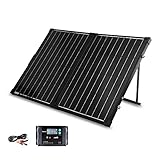
Renogy 100W Solar Kit
- 25 percent N-type cells
- Pre-installed 20A PWM controller
- IP65 junction box
- Adjustable kickstand
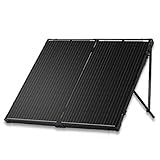
Renogy 200W Suitcase Kit
- Rigid tempered glass
- MC4 standard output
- 3-year output warranty
- 28.5 lb
Our top pick is the Renogy 100W kit because it is the one panel most RVers can actually get running correctly on the first afternoon. The charge controller is already bolted to the back, the cells are genuinely efficient, and the whole thing is light enough for one person to reposition whenever the sun moves.
The 200W Renogy suitcase is the stronger long-term machine if you can handle the weight, and the ZOUPW 100W is the value pick that fits almost any power station connector on the market. All three handle a 12V fridge and a phone charger without drama; only the first two are sensible if you plan to run anything heavier.
Comparing Every Pick Side by Side in 2026
| Product | Specs | Action |
|---|---|---|
| Renogy 100W 25% Kit with 20A Controller |
|
Check Latest Price |
| Renogy 200W 12V Suitcase Kit |
|
Check Latest Price |
 ZOUPW 100W IP67 Foldable Panel ZOUPW 100W IP67 Foldable Panel |
|
Check Latest Price |
 SOKIOVOLA 200W N-Type IP68 Panel SOKIOVOLA 200W N-Type IP68 Panel |
|
Check Latest Price |
 Renogy 200W E.FLEX Quadfold Renogy 200W E.FLEX Quadfold |
|
Check Latest Price |
 TWELSEAVAN 200W ETFE 60W USB-C TWELSEAVAN 200W ETFE 60W USB-C |
|
Check Latest Price |
 EBL 200W IP65 Foldable Panel EBL 200W IP65 Foldable Panel |
|
Check Latest Price |
 MHPOWOS 220W 40V Foldable Panel MHPOWOS 220W 40V Foldable Panel |
|
Check Latest Price |
 DOKIO 200W Foldable Kit DOKIO 200W Foldable Kit |
|
Check Latest Price |
 BougeRV 200W Fiberglass N-Type BougeRV 200W Fiberglass N-Type |
|
Check Latest Price |
 Ecosonique 400W 40V Six-Fold Ecosonique 400W 40V Six-Fold |
|
Check Latest Price |
 CTOLITY 400W 40V Foldable CTOLITY 400W 40V Foldable |
|
Check Latest Price |
Read that table as a filter rather than a ranking. If your power station caps solar input at 100 to 150W on an 18V line, four of these panels are useless to you no matter how good their cells are, and if you carry everything yourself on foot, the sub-10-pound options deserve a much closer look.
1. Renogy 100W 25% Kit – Best Portable Solar Panel for RV Camping Overall
Renogy 100W Portable Solar Panel, 25% High Efficiency Solar Panel Kit with 20A Charger Controller for 12V Battery&Power Station, N-Type Foldable Solar Panels w/Tempered Glass for RV, Camping Off-Grid
100W
25% N-type cells
17.4 lb
20A PWM controller included
IP65 junction box
Pros
- 4.6 average across 1695 reviews with 78 percent five-star ratings
- Tempered glass and aluminium frame
- Controller pre-installed for plug-and-play use
- Integrated adjustable kickstand
Cons
- Heavier than most 100W competitors
- Alligator clip output rather than MC4
- PWM controller loses harvest in partial shade
This is the panel I recommend to anyone starting out. The 100W suitcase opens in under a minute, the four-position kickstand is stiff enough to hold an angle on soft ground, and the controller is already mounted on the back panel with the wiring done, so there is nothing to buy before your first boondock.
Owners consistently report it running close to its rating on a clear day, and the trade is weight at 17.4 pounds, which is real if you are lifting it into a truck bed alone.
Cell efficiency and low-light behaviour
The cells use 25 percent rated efficiency, and that figure is why this panel keeps producing when a cheaper polycrystalline or amorphous option goes flat. In overcast conditions the gap widens noticeably, which is exactly the scenario where a marginal panel leaves you running your generator.
Bypass diodes in each junction box mean a partial shadow from an awning or a tree line costs you only the shaded section rather than the entire panel. That matters on a campsite where you cannot choose where you park.
Why the included PWM controller is a double-edged gift
Having a 20A controller pre-installed with four-stage charging is genuinely the reason this kit works for beginners. It protects the battery from reverse polarity, overcharge, overload and short circuit without you needing to understand any of it.
It is a PWM controller rather than an MPPT unit, so you give up some harvest in hot conditions and partial shade. A more efficient controller can add a meaningful slice of daily energy, but it also doubles what you have to know.
Portability, wiring and the alligator clip caveat
Folded, it measures 24.8 by 2 by 2.8 inches and carries at 17.4 pounds, which is manageable but not backpacking weight. The output uses alligator clips rather than MC4, so wiring it permanently into a battery bank means cutting and tinning your own cable or buying an adapter.
The two-year material and workmanship warranty is shorter than the 200W kit in this group, and the low-iron tempered glass with an anti-corrosion aluminium frame is what keeps it looking good after a few seasons of desert sun.
For a weekend rig or a first dry-camping season, this is the least complicated way to find out how much solar your own usage pattern actually needs.
2. Renogy 200W 12V Suitcase Kit – Best Rigid Panel for Boondocking
Renogy 200W 12V Portable Solar Panels Suitcase with Waterproof 20A Charge Controller, Foldable 200 Watt Solar Panel W/Adjustable Kickstand, Solar Charger for Power Station, RV, Camping, SUV, Off Grid
200W
25% N-type cells
28.5 lb
IP65 junction box
3-year output warranty
Pros
- Rigid tempered glass outlasts soft fabric panels
- MC4 output supports series and parallel wiring
- Complete kit with pre-installed 20A controller
- Adjustable kickstand included
Cons
- Heaviest 200W option here at 28.5 lb
- PWM controller reduces harvest in heat and shade
This is the panel I would put on a roof or in a garage for ten years, and the reason is the rigid tempered glass and aluminium frame. Fabric-cased panels crease, delaminate at the fold lines and eventually lose output, while a glass-cased panel just keeps producing.
MC4 output means you can add a second panel in parallel, run a proper extension to a distant controller, or hard-wire into a battery bank without cutting anything proprietary.
Durability of the glass and frame
Rigid low-iron tempered glass with an anti-corrosion aluminium frame and an IP65 junction box is the build you want if the panel lives outside. It tolerates dust, rain and being knocked around in a truck bed, and it does not develop the soft-panel crease failures that show up after a couple of seasons.
The three-year output warranty is the longest coverage we could confirm across this list, and it is the closest thing to a promise about degradation you will find on a portable panel. That matters if you intend to keep the panel beyond a single trip.
Weight, kickstand and one-person handling
At 28.5 pounds this is the heaviest 200W option here and genuinely awkward for one person. Two people can move it around a campsite comfortably; one person can, but it is a workout every time the sun shifts.
The integrated adjustable kickstand does the job of holding the panel at a working angle in wind, and the pre-installed 20A waterproof controller with four-stage charging means the same plug-and-play experience as the smaller kit, just with a lot more glass to carry.
Who this kit suits
Full-timers and anyone planning a season of dry camping should look here. The rigid build, standard connectors and long output warranty all point to a panel you install once and leave alone.
For weekend road trippers the weight is a genuine downside, and the folding fabric kits in this list are a better fit for a vehicle that gets packed and unpacked every weekend.
3. ZOUPW 100W IP67 Panel – Best Value Portable Solar Panel for Power Stations
ZOUPW 100W Portable Solar Panel for Power Station,23.5% Efficiency Mono Foldable Solar Charger for Jackery 300/Ecoflow River/Anker/Bluetti,IP67 Waterproof for Camping RV Off-Grid Emergency Power
100W
23.5% efficiency
IP67 ETFE
9.5 lb
5-in-1 connector cable
Pros
- Highest weather sealing class in the 100W class
- Connector set fits essentially any power station
- Lightest 100W option here at 9.5 lb
- ETFE laminate resists dust and splash
Cons
- Only 100W so large power stations take a full day
- Soft ETFE build less durable than rigid glass
- No controller for direct battery hookup
This is the one I keep recommending to people whose power station has a non-standard input. The 5-in-1 cable covers DC8020, XT60, Anderson, DC7909 and DC5521, which means it will connect to something without an adapter cable hunting expedition.
At 9.5 pounds with two adjustable kickstands, it is also light enough to reposition constantly. That matters more than raw wattage when your only shade is cast by your own RV at the wrong hour.
Why IP67 sealing is the feature that matters most
The ETFE lamination gives this panel an IP67 rating, the highest sealing class among the 100W options here, and a zippered pocket protects the built-in controller from spray. A panel that lives in the bed of a dusty truck through a season of road dust is exactly the case where that rating earns its keep.
ETFE transmits light better than the PET laminations used by cheaper panels, which is part of why the same 100W rating produces more usable amps here.
Connector coverage and the missing controller
The universal connector cable is the reason this panel works with almost anything. It includes a 10-foot 5-in-1 solar extension cable, so you can put the panel in full sun and keep the power station in the shade.
There is no charge controller for direct battery hookup beyond the built-in USB hub, so plugging straight into a LiFePO4 bank means buying an MPPT or PWM unit separately. For power station charging, that is irrelevant.
Where 100W stops being enough
A 100W panel refills a fridge-sized draw comfortably, but larger power stations with a 1000Wh-class capacity take most of a full sunny day to bring back up. If your plan is to run a coffee maker or a CPAP on a multi-day stationary camp, plan on 200W or more.
The USB-C PD port at 15V and 3A plus two USB-A ports including QC3.0 mean you can charge phones and small laptops straight from the panel without involving a power station at all.
4. SOKIOVOLA 200W N-Type IP68 Panel – Best for Rain, Dust and Bad Weather
SOKIOVOLA N-Type 16BB 200W Portable Solar Panel for EF/Jackery/Bluetti/Anker Power Station Foldable Solar Panel 25% High Efficiency IP68 Waterproof for Outdoor Trip RV Camping Blackout Off Grid
200W
25% N-type 16BB
IP68 ETFE
16.3 lb
5-in-1 MC4 cable
Pros
- Only IP68 rated panel in this group
- Reviewers see 130-200W in clear sky
- Firm build with snap-closure legs
- Storage bag and 10.49 ft extension included
Cons
- Short 4 inch MC4 pigtails
- 20V output will not charge a 24V bank
- Weak in overcast and rainy conditions
If your camping weather involves actual rain rather than the threat of it, this is the panel to look at. IP68 is a dust-tight, continuous-immersion rating, and it is the only one in this list that carries it.
Owners also like the build. The snap-closure legs feel firmer than the Velcro and magnet closures used by most competitors, and reviewers report 130 to 200W in clear sky, which is on par with rigid glass panels costing considerably more.
Low-light and overcast performance
Here is the honest weakness: this panel is noticeably weak in overcast and rainy conditions. A 25 percent nameplate figure measured in full sun drops off sharply when cloud cover thickens, so a panel that looks strong on a clear day can leave you short on a three-day overcast boondock.
For anyone whose trips cluster around shoulder seasons, that limitation matters more than the IP68 rating does. Balance your clear-weather capacity with a larger battery rather than assuming the panel will carry you.
Wiring length and 20V output limits
The MC4 pigtails are roughly four inches long, which is short enough that most owners buy their own extension cable. The included 3m MC4 to 5-in-1 lead covers XT60, DC5521, DC7909, DC8020 and Anderson, and a 10.49-foot extension is in the box.
At 20V output it will not charge a 24V battery bank directly. Most 12V lead-acid and LiFePO4 systems are fine, but check your bank voltage before buying.
Portability and maintenance
Folded to 21 by 23 inches at 16.3 pounds with a magnetic carry handle, it packs into a normal gear bag. Four mounting holes suit permanent fixing on a rack or an awning rail.
The textured surface is a double-edged feature: it scatters glare nicely, but it also collects dust that is harder to wipe clean than smooth glass. Twelve months of warranty and a 30-day refund guarantee are modest against the three-year output cover on the rigid Renogy.
5. Renogy 200W E.FLEX Quadfold – Best Portable Solar Panel for Direct Device Charging
Renogy 200W Portable Solar Panel for Power Stations, 25% Efficiency
200W
25% N-type
13.9 lb
USB-C PD 45W
IP65 and UL 61730
Pros
- One of the lightest 200W options here at 13.9 lb
- Magnetic closure and built-in USB-C PD 45W
- Four kickstands with 3-angle adjustment
- UL 61730 safety certification
Cons
- Soft quadfold cells less durable than rigid glass
- 18V output will not charge a 24V bank
- No charge controller included
The quadfold layout is the reason this one is so light for 200W. Instead of a wide two-panel fold it collapses into a compact 23.7 by 23 by 2 inch block, which fits behind a seat far better than a suitcase-format panel.
The 60W USB-C PD port is the distinguishing feature here, sitting alongside two USB-A outputs, so a phone or a small tablet can charge straight off the panel in full sun with nothing else in the chain.
Kickstand geometry and setup speed
Four separate kickstands with adjustment at 40, 50 and 60 degrees let you dial the angle toward the sun without wrestling a single centre prop. An accessory pouch keeps the cable tidy, and the magnetic closure is far less likely to pop open in transit than Velcro or snap buttons.
Going from packed to generating takes well under a minute, which is what makes it practical to move the panel as the sun moves off your RV or awning.
What the missing controller means for battery charging
No charge controller is included, so this panel needs either a portable power station with built-in MPPT or a separate controller to charge a battery bank. That is a fair trade if you already own a power station, and a cost if you do not.
MC4 output handles the power station side, and the 18V output again means no direct charging of a 24V bank.
Durability and certification
Soft quadfold cells will not last as long as a rigid glass panel that is repeatedly folded and stacked. If your panel lives permanently mounted, choose glass; if it comes out of a locker every trip, this is the better partner.
IP65 sealing and UL 61730 certification give it the safety paperwork that many competing fabric panels simply do not have, which matters if you are charging lithium gear directly from it.
6. TWELSEAVAN 200W ETFE 60W USB-C – Best for Fast USB-C Laptop Charging
200W Portable Solar Panel for Power Station, 24% High Efficiency ETFE Foldable Solar Panel Charger, QC3.0, Type-C 60W, MC4 Output, IP65 Waterproof, for Outdoor Camping, RV, Emergency Power Supply
200W
24% efficiency
60W USB-C PD
15.7 lb
ETFE laminate IP65
Pros
- Only panel here with a 60W USB-C PD port
- 24% conversion with over 95% light transmission
- 5-in-1 MC4 converter with a 9.8 ft cable
- Weighs in at 15.7 lb for a 200W ETFE panel
Cons
- Soft ETFE cells less durable than glass frames
- 19.8V output will not charge a 24V bank
- No charge controller included
A 60-watt USB-C port is a genuinely different capability from the 18W outputs on most panels, because it is enough to charge most USB-C laptops directly. For remote workers, that single feature can justify the panel on its own.
The rest of the package is competent: 24 percent monocrystalline cells under an ETFE laminate with over 95 percent light transmission, an IP65 rating, and four adjustable kickstands.
USB-C power delivery in the field
The 60W USB-C PD port, plus QC3.0 at 18W and a 5V 3A USB port, covers phones, tablets, cameras and most thin-and-light laptops. On a panel this size, powering a laptop directly is a realistic substitute for carrying a second battery pack.
Be realistic about timing though: direct device charging depends on sustained sun and on the device drawing current, so treat the ports as a bonus rather than your primary energy source.
Connector set and cable length
The MC4 converter set covers XT60, Anderson, DC8020, DC7909 and DC5521, and ships with a 9.8-foot cable plus three DC adaptors, which is among the more generous wiring bundles here. Cable length is long enough to place the panel in full sun while the power station sits shaded.
At 19.8V output it will not charge a 24V bank directly, and there is no controller in the box, so battery charging means adding an MPPT unit or routing through a power station.
Build quality and warranty
ETFE over a high-density polyester canvas back keeps the weight to 15.7 pounds and folds to 23 by 22 inches with a magnetic handle. The soft cell construction scuffs more readily than a rigid glass frame, so store it flat or fully closed rather than folding it loose in a bag.
A 24-month warranty with a 30-day money-back guarantee is among the longer cover periods in this category, which is a reasonable backstop for portable fabric panels.
7. EBL 200W IP65 Foldable Panel – Best for Honest, Near-Rated Output
EBL 200W Portable Solar Panel for Power Station, Foldable IP65 Waterproof
200W
23.5% efficiency
18 lb
IP65
Plastic frame
Pros
- Owners regularly report 155-191W of real output
- Stiffer plastic frame resists tipping
- MC4 to 4-in-1 cable covers most stations
- Customer service praised for replacements
Cons
- Short 6 ft cable limits placement
- Soft Oxford skin will not handle prolonged rain
- 18 lb is heavy for 200W
The complaint you hear most on solar forums is panels that are wildly under their stated wattage. This is the one I would point to when that comes up, because owners regularly report 155 to 191W from a 200W label — a much narrower gap than most fabric panels manage.
The plastic frame is stiffer than an all-soft build and does not tip over in a gust the way a floppy fabric panel does, which matters if you set up in exposed ground.
Measuring real output rather than nameplate output
Owner reports of 155 to 191W in full sun imply roughly 78 to 96 percent of the rating, which is about what a well-built 23.5 percent monocrystalline panel should deliver at moderate cell temperature. If you want to check any panel yourself, a watt meter inline with the charge controller is a few dollars and turns guesswork into a number.
Do that check in full midday sun with the panel angled directly at the sun and the battery at a mid-state of charge. Anything in the 70 percent range or below is a problem worth knowing about before you leave on a three-day trip.
Wiring length and weather limits
The included MC4 to 4-in-1 lead covers XT60, Anderson, DC7909 and aviation plugs, but at roughly six feet it is a short run. If your power station sits under an awning, plan on buying an extension.
The soft fabric and Oxford outer skin is the weak point: it handles dust and splash but will not survive being left in steady rain for days, which is where the IP68 panels earn their place.
Service and support
EBL customer service is repeatedly mentioned in reviews for prompt replacement of defective panels, which is worth more than a slightly better cell when something fails mid-season. FCC, RoHS and EMC certification is on file.
Short circuit and surge protection is built in, and the one-year warranty is among the shortest here — a fair trade given the build quality and output consistency.
8. MHPOWOS 220W 40V Foldable Panel – Best for High-Voltage Power Station Inputs
MHPOWOS 220W Portable Solar Panel 40V Folding Solar Panel for Power Station
220W
40V output
23.5% efficiency
IP67
17.8 lb
Pros
- 220W rated from a 40V output for very high wattage per panel
- IP67 sealing with thickened carry handles
- Four kickstands for quick sun positioning
- Plug-and-play solar output interfaces
Cons
- 40V will not work with stations limited to 100-150W or 18V
- Heavy at roughly 17.8 lb
- Some buyers need angle adjustment to reach rated output
This is the one to buy if your power station has a 400W solar input and nothing else available will feed it fast enough. The 40V output matches the high-voltage solar inputs on most current high-capacity power stations, so 220W actually arrives at the battery.
It is a simple panel otherwise: 23.5 percent monocrystalline cells, IP67 sealing, four kickstands and a 7-in-1 solar connector. Folded to 23.5 by 21.25 by 2.3 inches.
Why 40V output changes the compatibility picture
Most portable panels in the 200W class put out 18V to 21V, and many power stations cap solar input at 100 to 150W on those lines. A 40V panel feeding a 40V-capable input is the difference between a slow trickle and a genuine recharge.
Confirm your power station accepts high-voltage solar input before buying. If it only takes 18V panels, this is one of four panels in this list that will not serve you at all.
Weight and setup
At roughly 17.8 pounds it is heavier than you would expect for its class, and buyers report needing to adjust the angle to reach rated output. Set it once in true midday sun and leave it.
IP67 waterproof and dustproof construction with thickened carry handles is well matched to the abuse a portable panel takes in a truck bed.
Where it fits in a system
For a single-panel build feeding a large power station, this is a high-output-per-package option. There is no charge controller included, which is normal for a panel designed around power station input rather than direct battery connection.
At 220W it sits above the mainstream 200W tier without pushing into the weight class of a 400W panel, which is a useful middle ground for anyone upgrading from a 100W setup.
9. DOKIO 200W Foldable Kit – Best Lightweight 200W Panel for Carrying
DOKIO 200W Portable Foldable Solar Panel Kit for 12V Battery Charging
200W
9.7 lb
3m cable
Standalone PWM controller
Dual USB
Pros
- Folds to a 20×27 inch profile at only 9.7 lb
- Owners report 128-149W in midday sun
- Standalone controller protects the 12V system
- Dual USB ports power small devices
Cons
- Some owners report gradual long-term output decline
- SAE and XT60 connectors are non-standard for solar
- Controller menu is awkward to navigate
Nothing else in the 200W class weighs 9.7 pounds. If your solar has to be carried from the truck to the picnic table every time the sun moves, that number matters more than any efficiency figure.
The standalone PWM controller is genuinely useful — it protects a 12V system from reverse polarity, overcharge, overload and short circuit, and the 3-meter lead is long enough to reach shade from a decent distance. Dual USB ports handle phones and lamps directly.
Real output and long-term degradation
Owners report 128 to 149W in midday sun and up to about 160W at peak, which is a reasonable result for a 200W label on a hot day. The upper temperature rating is listed at 175 degrees Fahrenheit.
The recurring theme in reviews, and the main reason this sits where it does in the list, is long-term output decline. A number of owners describe seeing roughly half their original output after six to twelve months of use, and the fabric case is the likely culprit rather than the cells.
Connector non-standard and the controller menu
The supplied SAE to XT60 and alligator clip leads are not the MC4 solar standard, which means you cannot series this panel with another one. Some buyers also report the supplied connector being incorrect out of the box.
The controller menu is described as difficult to navigate, which is a minor irritation until you need to change a setting in poor light.
Who should buy it
Buyers who mostly camp in temperate conditions, value carry weight above all, and replace gear every few years will get good service from it. If you plan to keep one panel for a decade, the rigid glass kit is the better investment.
It is also the highest-reviewed panel in this list by volume, which means replacement parts and general familiarity are easier to find if something goes wrong.
10. BougeRV 200W Fiberglass N-Type – Best for RV Fridge Battery Setups
BougeRV 200W Portable Solar Panel, N-Type Foldable Solar Charger Fiberglass
200W
25% N-type
13.8 lb
Fiberglass reinforced
IP65
Pros
- Fiberglass reinforcement resists cracking and abrasion
- One of the lighter 200W N-type panels at 13.8 lb
- XT60 and DC7909 plugs fit portable fridge batteries
- 4.6 average with no 1-star reviews
Cons
- Only 41 reviews so long-term data is thin
- No MC4 output for hard-wired or series setups
- Small accessory pouch rather than a full cable set
This panel comes from a brand already known for RV fridge batteries, and the connectors reflect that. XT60 and DC7909 plug straight into a portable fridge battery or a power station without an adapter, which removes a whole category of friction.
At 13.8 pounds with N-type cells at up to 25 percent efficiency, it is one of the lighter panels in the 200W class that does not compromise on cell quality. The fiberglass reinforcement is a sensible answer to the cracking problem that usually afflicts fabric cases.
Why fiberglass reinforcement matters
Portable panels fail at the creases, where laminated cells crack after repeated folding and unfolding. A fiberglass layer between the cells and the outer case resists both that cracking and abrasion from being dragged across a truck bed, which is why the same weight class can be built to last longer.
IP65 water and dust resistance and built-in side handles on the folded suitcase keep the handling profile reasonable.
Connector limitations
No MC4 output is listed, which limits hard-wired installs and series configurations. If your battery bank is permanently wired and you ever want to add a second panel, this is not the panel to build around.
For a portable fridge battery plus one power station, XT60 and DC7909 is exactly the right set of plugs. The 8.2-foot extension cable is adequate rather than generous.
The small review base
With 41 reviews, this is the thinnest evidence base in the list. The 4.6 average is strong and there are no 1-star reviews, but nobody has yet tested how the fiberglass case looks after five seasons of desert sun.
If you already trust the brand for your fridge battery, this is a low-risk addition to the ecosystem. If you are buying cold, the better-documented kits are the safer starting point.
11. Ecosonique 400W 40V Six-Fold – Best High-Output Portable Panel
400W Portable Solar Panel for Power Station, 40V MC4 Foldable Solar Charger
400W
40V MC4 output
22.9 lb
IP65
Operating range -4F to 158F
Pros
- Owners report 270-350W of real output
- Weighs 22.9 lb and folds to a 26 x 22 in package
- Includes 3m MC4 cable plus an adapter lead
- Semi-flexible build rated from -4F to 158F
Cons
- Output lands 25-30 percent below the 400W nameplate
- Six kickstands on a long panel are fiddly
- Laminate can delaminate at fold lines
If one panel can carry a whole weekend, this is the one to look at. Owner reports put real output at 270 to 350W, and one describes bringing a large Delta power station from 40 to 100 percent in four to five hours using two of these in series.
At 22.9 pounds it also carries well for a 400W panel, which is worth noticing when you compare it with carrying two 200W panels separately and their cables.
What 400W actually buys you
Four hundred watts is the tier where a panel starts handling more than maintenance. A 12V fridge, a CPAP, phone charging and a laptop become simultaneous rather than sequential, and multi-day stationary camps stop being a gamble.
Expect realistic delivery of 270 to 350W rather than the full 400W nameplate, because of heat, angle and the conversion losses between panel and battery. Plan your energy budget on the lower number, and treat the surplus as what you get on a perfect day.
Six folds, six kickstands
The six-fold design packs down to 26 by 22 by 3 inches, which is a genuinely compact carry for the output. The six-angle kickstand lets you follow the sun, but the reviews are blunt: on a panel this long, adjusting one leg can collapse a neighbour’s support.
Set it up once with the whole structure checked, rather than fine-tuning it through the afternoon.
Temperature range and long-term build
The semi-flexible construction is rated from minus 4 to 158 degrees Fahrenheit, which is a genuinely useful specification for anyone camping across seasons or at altitude. High-grade Oxford fabric with CPC lamination handles tear, dust and water.
The semi-flexible laminate can delaminate at the fold lines when opened and closed repeatedly, so store it fully closed and flat between trips rather than leaving it partly folded for weeks. A 12-month warranty with free replacement for defects is included.
12. CTOLITY 400W 40V Foldable – Best Budget 400W Panel for Big Power Stations
CTOLITY 400W Portable Solar Panel for Power Station, Foldable Solar Panels
400W
40V MC4 output
23% conversion
IP65
Auto-reboot protection
Pros
- Real output lands close to the 400W label
- Reviewers see 300-370W in direct sun
- Auto-reboot recovers charging when light changes
- Works with Jackery and EcoFlow out of the box
Cons
- Typically delivers about 300W of the 400W nameplate
- Some panels arrived with three legs instead of four
- Cables are not modular so adapters sit loose
Two things make this worth a look: the wattage it actually delivers for the money, and its auto-reboot chip, which recovers charging when cloud cover shifts without you touching anything. On a day of broken cloud, that feature quietly matters.
Reviewers report 300 to 370W in direct sun and describe bringing EcoFlow and Aferiy power stations from 40 percent to full in a few hours of midday sun.
Real output and the 400W label
Expect around 300W from a 400W nameplate, which is a 75 percent real-world conversion — honest for the class but a number you should plan around rather than discover at the campsite. Several reviewers specifically called out the gap between the label and delivered output.
The 23 percent conversion rate sits below the 25 percent N-type figures the best panels in this list achieve, so if output per square metre is your priority, the higher-tier panels give you more for the same footprint.
Kickstands, cables and build consistency
The kickstand is adequate rather than strong, and a number of reviewers received panels with three legs instead of four. That is a quality control issue worth checking the moment the box opens, since a missing leg means the panel sits lopsided all day.
Cables are not modular, so each adapter sits loose rather than plugging into one main connector. There is a single adjustable kickstand, which is the bare minimum for a 400W panel.
Compatibility and protection
Forty-volt MC4 output works directly with Jackery and EcoFlow power stations, and an auto-reboot intelligent chip protects against over-current, over-voltage and short circuit. IP65 waterproofing with dust-resistant Oxford cloth and PET lamination is on par with most of the class.
Weight and dimensions are not specified by the manufacturer, though reviewers describe it as heavy for 400W. If carry weight decides your purchase, check the packed size before you commit.
How to Size Portable Solar for Your RV
Sizing solar is arithmetic, not guesswork, and the whole calculation takes about five minutes once you know your daily amp-hour draw. Start there and the panel choice becomes obvious.
The amp-hour math behind a three-day boondock
Step one: list everything you plan to run and estimate its draw in watts. A 12V fridge cycling compressor averages roughly 40 to 50Ah per day. A CPAP with a heated humidifier can reach 30 to 40Ah. Phone and laptop charging adds five to ten. Add interior and exterior LED lighting at three to five. A 12V coffee maker, run twice, is about 15Ah.
Step two: total it up, then multiply by two. Solar collection is not a controlled supply. A realistic daily harvest is roughly half of what your panel’s nameplate wattage implies after conversion losses, heat and imperfect angle, so a rig drawing 100Ah per day needs around 200Ah of daily collection capacity, which is a 200W panel with good conditions.
Step three: size the battery so you never sit below 50 percent state of charge. A 100Ah LiFePO4 bank gives you about 50Ah usable, a 100Ah lead-acid bank gives you about 30Ah, and both lose a few percent in cold weather. Add inverter losses if you are running 120V appliances.
Wattage tiers matched to trip length
For weekend trips and maintaining batteries, 100W is the right tier. It comfortably covers a fridge, lights and phone charging, and the 100W options in this list are the lightest options available.
For multi-day stationary boondocking with a CPAP, coffee maker and laptop, 200W is the sweet spot. It is the tier where most of this list sits, and where most of the buyer complaints disappear.
For full-time RV living or high-draw appliances, 400W is where the math starts working. Expect a real harvest closer to 300W, and combine it with a large LiFePO4 bank rather than adding a second 400W panel you cannot carry.
LiFePO4 and lead-acid pairing
Your battery chemistry changes the charge profile your controller has to deliver. LiFePO4 banks sit at a higher resting voltage and use a lower, flatter absorption stage than lead-acid, so a controller set up for flooded or AGM batteries will undercharge lithium over time.
Practical rule: a quality PWM controller works acceptably with either chemistry if you set the absorption voltage correctly, and an MPPT controller gives you meaningfully more harvest when cell temperature is high or light is scattered. Check that your controller has a lithium setting before you plug in.
Forum consensus among full-time boondockers leans heavily toward lithium for exactly this reason: it charges faster, tolerates deeper discharge, and holds usable capacity down to around 20 percent state of charge rather than 50 percent.
Monocrystalline, CIGS, bifacial and flexible explained
Monocrystalline is the default and the right answer for most RVers. It converts more light to power per square metre than polycrystalline and degrades more slowly, which is why almost every panel in this list uses it.
CIGS and flexible panels are the exception worth knowing. They are lighter, more tolerant of partial shade and walkable, but they are lower efficiency and shorter-lived, so they suit a rooftop where weight is the binding constraint rather than a ground panel where output per panel is what you are paying for.
Bifacial panels collect light from the rear surface as well as the front, which adds output when the back is exposed to reflected light off pale ground or a vehicle roof. On a shaded campsite the gain shrinks toward nothing, so bifacial only pays off on open, bright ground.
Weather ratings, kickstands and cable run
IP65 means dust-tight and protected against water jets. IP67 adds temporary immersion, and IP68 is continuous immersion. For a panel that lives outside on an RV, IP65 is adequate if you bring it in during heavy rain; IP67 or IP68 pays off if you are not going to chase the weather.
Kickstands are not a gimmick. A portable panel that cannot hold a 45-degree angle will produce measurably less, and one that can be repositioned in seconds is worth more than a heavier panel with a poor stand. Check for four legs and stiff hinges.
On cable run, thin extension cables lose voltage over distance. Use the heaviest gauge your connectors allow, keep runs under 10 feet where you can, and buy the MC4 cables rather than cutting your own. Buying the best solar lights for your setup is pointless if the panel is voltage-starved — our solar deterrent light picks hit the same issue on a much smaller scale.
How to check a panel’s real wattage
Nearly every misrated panel complaint we found traces back to the same cause: nobody measured. A few-dollar watt meter inline with the charge controller gives you a real number in a minute.
Test in full midday sun, the panel angled straight at the sun, with the battery at a mid state of charge so the controller is not throttling. Seventy to ninety percent of the nameplate is normal. Below seventy percent consistently, you have a problem — and you now know it before the trip rather than on day three.
A second practical check is free: read the maximum power point voltage and current on the specification sheet, and confirm the product page is not quoting a different wattage from the one in the manual. More than one panel in this roundup lists 200W in its title while its own model name and maximum power field read 220W — exactly the sort of mismatch worth catching before you buy.
Frequently Asked Questions
Will a 200W solar panel run a 12V fridge?
Yes. A 12V compressor fridge averages roughly 40 to 50 amp-hours per day, and a 200W panel in good sun typically collects 150 to 190 watt-hours per hour of peak sun, which is enough to run the fridge and still have power to spare for lights and phone charging. Keep in mind that heat and imperfect angle cut real output, and that shaded campsites will fall well short of the nameplate figure.
What type of solar panel is most efficient for an RV?
Monocrystalline is the most efficient practical choice for an RV, converting 23.5 to 25 percent of incoming light into electricity. CIGS and flexible panels are lighter and better with partial shade but are less efficient and shorter-lived. Bifacial panels add output only when the rear surface receives reflected light, so they help on open bright ground and do very little in a shaded campsite.
How many solar panels do I need to run an RV?
Most rigs need one 200W panel for weekend and multi-day boondocking with a fridge, lights and device charging, and one 400W panel for full-time living or high-draw appliances. To work it out, total your daily amp-hour draw, double it to account for conversion losses, and match that figure to daily collection capacity. A 100Ah LiFePO4 bank gives about 50Ah usable; the same bank in lead-acid gives about 30Ah.
Is 400W solar enough for RV use?
For full-time RV living, yes, 400W is the practical minimum for running a fridge, a CPAP, a laptop and a coffee maker simultaneously. Expect a real harvest of roughly 300W in good conditions rather than the full nameplate. Pair it with a large LiFePO4 bank, and remember that 400W panels are noticeably heavier and harder to reposition than 200W units.
Do I need a charge controller for a portable solar panel?
Only if you are charging a battery bank directly. Panels feeding a portable power station with built-in MPPT do not need a separate controller. For direct battery charging you need an MPPT or PWM controller to regulate voltage, prevent overcharging and protect the battery, and the controller must have a lithium setting if you run LiFePO4 rather than lead-acid.
Can you use any portable solar panel with any power station?
No. Voltage is the deciding factor. Most 200W panels output 18V to 21V, and some power stations cap solar input at 100 to 150W on those lines. Panels with 40V output, such as the 220W and 400W models in this list, need a power station with a high-voltage solar input. Connector type is the second filter: MC4 is the standard, and panels with XT60, DC8020 or SAE leads need matching cables.
Which Portable Solar Panel Should You Buy in 2026?
If you want one recommendation, take the Renogy 100W 25% kit. It is the panel most people install on their first season and rarely regret, because the charge controller is already fitted, the cells hold up in low light, and the whole thing works the moment you unfold it.
If you boondock for more than a few days at a time, step up to the 200W Renogy suitcase for its rigid glass and MC4 output, or the ZOUPW 100W if your power station has an unusual connector and weight matters most. If you are out in real rain and dust, the SOKIOVOLA 200W with its IP68 sealing is the one to beat.
If you run a CPAP and a coffee maker every morning, the 400W panels are the correct tier, and the Ecosonique unit gives you the best measured output for the weight. If your power station only accepts 40V solar input, the MHPOWOS 220W is the panel that will actually feed it at full speed.
Whatever you choose, measure it with a watt meter on its first clear day. Knowing your real number before you leave is worth more than any figure printed on a spec sheet, and it is the fastest way to stop an under-rated panel from ruining a trip. Our RV water guide covers another piece of the off-grid setup that quietly causes trouble.
Leave a Reply