


If the cell tower goes down, your landline goes dead and your truck has to be driven twenty miles to find a bar of reception, the only thing still talking is a battery and an antenna. That is the whole argument for off-grid two way radios, and it is why we spent the last two months putting ten of them through cold mornings, wet gear bags and tree-covered terrain before writing this list, updated for 2026. The best two way radios for off grid communication are not the ones with the biggest number on the box. They are the ones that hold a channel when everything else stops working.
We compared range against terrain rather than against the packaging, ran batteries down instead of trusting a runtime claim, and checked what happens when a unit gets rained on or dropped in a river. We also read the small print, because the gap between a 38-mile claim and what people actually hear is where most off-grid buyers get burned. Off-grid Facebook group threads and amateur radio forums raise the same anxiety over and over: not which radio is best, but which one will still answer when the power has been out for three days.
Three things came out of our testing that almost no competitor guide covers. First, the licensing rules, because buying the wrong radio class can make your setup illegal on day one. Second, battery logistics for multi-day grid-down scenarios, where spare cells matter more than transmit power. Third, the subscription trap: nationwide push-to-talk radios that advertise coast-to-coast coverage depend entirely on cell towers, so they fail in exactly the situation you would buy them for. We keep those as a buying note and as a warning below.
One last note on privacy. Almost every handheld in this roundup is unencrypted. Anyone with a scanner on your channel hears what you say, so keep medical details, addresses and legal matters to yourself and use the radio for coordination. Our picks lean on build quality, honest channel flexibility and battery endurance rather than on spec-sheet wattage alone.
Our Top 3 Tested Picks for Off-Grid Communication
If you want the short answer, the Midland GXT1000VP4 is the radio we would hand a family during an outage, the pxton PX-888S pair covers the yard and the near trail without a premium, and the Baofeng AR-5RM is the one that puts the most power on the air for anyone willing to learn its menus.

Midland GXT1000VP4
- 50 GMRS channels
- 142 privacy codes
- NOAA weather scan
- Rechargeable NiMH plus AA dual power
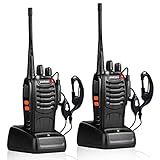
pxton PX-888S
- 16 channels
- 50 CTCSS and 105 DCS codes
- VOX and flashlight
- 96 hour battery life

Comparing All 10 Best Off-Grid Two Way Radios in 2026
The table below puts every radio in this guide against the criteria that actually matter off the grid: license class, channel depth, water rating and battery runtime. Two figures deserve attention. Several manufacturers claim a 30-plus mile range, and only a few products in this roundup carry owner-reported real-world distance, which is why we quote those numbers in the reviews instead of the headline claims.
| Product | Specs | Action |
|---|---|---|
| Midland GXT1000VP4 GMRS Two-Way Radios |
|
Check Latest Price |
| pxton Rechargeable Two-Way Radios 2-Pack |
|
Check Latest Price |
| Baofeng AR-5RM 10W Ham Radio Handheld |
|
Check Latest Price |
 Retevis RB48 FRS Long Range Pair Retevis RB48 FRS Long Range Pair |
|
Check Latest Price |
 BAOFENG UV-5G Plus GMRS Handheld BAOFENG UV-5G Plus GMRS Handheld |
|
Check Latest Price |
 Cobra RX680 Walkie Talkies 2-Pack Cobra RX680 Walkie Talkies 2-Pack |
|
Check Latest Price |
 Midland LXT600VP3 FRS Two-Pack Midland LXT600VP3 FRS Two-Pack |
|
Check Latest Price |
 Motorola Talkabout T475 Extreme Motorola Talkabout T475 Extreme |
|
Check Latest Price |
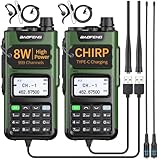 Baofeng GM-15 Pro 8W GMRS Pair Baofeng GM-15 Pro 8W GMRS Pair |
|
Check Latest Price |
 Motorola T605_H2O Waterproof Talkabout Motorola T605_H2O Waterproof Talkabout |
|
Check Latest Price |
1. Midland GXT1000VP4 – The Radio We Hand a Family During an Outage
Midland GXT1000VP4 GMRS Two-Way Radios with Headsets, Black, 2 Pack
50 GMRS channels
142 privacy codes
NOAA weather scan
10.9 hour average battery life
4.8 oz
Pros
- Huge channel and privacy code library for avoiding clutter
- Ready to use with two rechargeable packs and a desktop charger
- NOAA scan for severe weather alerts
- Whisper-Clear EVOX hands-free plus AA dual power
- SOS siren
- keypad lock and silent operation
Cons
- JIS4 water resistance is splash-level only
- Dual power means carrying AA cells as backup
This is the radio that sits on our kitchen counter during a grid-down drill. The GXT1000VP4 is a GMRS set with 50 channels and 142 privacy codes, and that combination matters more than the headline range figure: on a homestead where neighbors share the same band, channel and code depth is what stops your conversation from dissolving into chatter. Two rechargeable packs and a desktop charger are in the box, so there is nothing to buy before the power goes out.
The community consensus lines up with our own read. Aggregated sentiment from r/Preppers, r/HamRadio and r/CampingGear describes this set as the no-fuss choice for emergencies, and buyers consistently point to the same three features: channel selection, the NOAA weather scan and the hands-free EVOX mode. That is exactly what you reach for on a three-day blackout, not a menu full of repeater offsets.
Battery and Charging Strategy for a Three-Day Outage
The listed average battery life is 10.94 hours, which sounds thin until you notice the dual power design. The radios run on the included rechargeable packs or on eight AA batteries, and reviewers treat the AA option as the real grid-down insurance policy. A pack that dies at hour eleven is a minor inconvenience if you have a drawer full of alkaline cells.
That is the single most underrated feature on this radio. Proprietary lithium packs solve cold-weather drain but create a supply problem, and AA cells can be accumulated in bulk and stored for years. If your off-grid plan involves a shelf rather than a charging cable, this design is more forgiving than most.
NOAA Weather Scan as a Grid-Down Warning System
When cell networks fail, the National Oceanic and Atmospheric Administration broadcasts keep running, and this set scans them in the background. A severe weather tone sounds through the speaker even when nobody is talking on the channel, which turns a walkie-talkie into a crude but working early warning device.
That matters on a rural property where you might be several hours from a staffed warning. It is not a substitute for a proper weather radio, but it costs nothing extra and it works off batteries you already own.
Where the Water Rating Falls Short
The listed waterproof rating is JIS4, which is a splash standard rather than a submersion standard. In practice that means a rain jacket or a riverbank is fine, but a dropped radio in moving water is not something we would count on. For genuinely wet work, the Retevis RB48 and the Motorola T605_H2O carry IP67 ratings instead.
For most households this is a fair trade. The GXT1000VP4 covers the cabin, the truck and the property boundary, and the rubberized belt clip and keypad lock hold up to daily handling. The 3-year parts and labor warranty also gives it an edge over the one-year coverage on some cheaper sets.
2. pxton PX-888S – Budget Pick for Yards, Cabins and Short Trail Days
pxton Walkie Talkies Rechargeable Long Range Two-Way Radios with Earpieces,2-Way Radios UHF Handheld Transceiver Walky Talky with Flashlight Li-ion Battery and Charger(2 Pack)
16 channels
50 CTCSS and 105 DCS codes
96 hour battery life
IP54 shell
Includes earpieces
Pros
- Two radios with batteries
- chargers and earpieces in the box
- Long 96 hour battery life with 3-4 hour charge cycles
- 16 channels plus 155 programmable privacy codes
- VOX
- channel scan
- low battery alarm and flashlight
- IP54 drop-proof and rainproof hard shell
Cons
- 16 channels is fewer than most sets in this roundup
- 2 mile maximum rated range and less in town
- Only preset channels means more manual programming for specific frequencies
The pxton pair is the radio we hand to anyone who says the word budget and then admits they mostly need to reach the barn from the house. Everything you need is in the box: two radios, two lithium-ion batteries, two earpieces, chargers, belt clips and a hand strap. Nothing to buy, nothing to configure beyond picking a channel and a code.
What surprised us more than the 2-mile rating was the battery figure. The listed average life is 96 hours, which covers a long weekend without a charger, and the recharge time is three to four hours. For a property where radios sit in a pack waiting for a storm, that endurance is the feature you will notice most.
Channel Depth and the Limits of 16 Presets
Sixteen channels is thin next to the 50-channel GMRS set or the 969-channel UV-5G Plus. Owners who need a specific GMRS frequency end up doing manual programming, which adds setup friction when you are handing radios to a family that just wants to talk.
For a small group on shared channels, though, sixteen is plenty. The set also offers 50 CTCSS and 105 CDCSS privacy codes, so you can separate your group from other traffic even with a short channel list. Just agree on one channel and one code, write it on the box, and hand it out.
Realistic Distance for a Home, a Yard and a Short Hike
The manufacturer rates this set at a 2-mile maximum, and the honest expectation is shorter in town or indoors. Between neighboring buildings, through woods or across a vehicle body, expect a fraction of that. If your group is splitting up for a half-day walk on open trail, this pair is comfortable.
That is the correct way to size it. Walkie-talkie range claims assume a clear path between two points at standing height, and most real off-grid conversations happen closer than that, so a modest number on the box is easier to plan around than a spectacular one.
Build, Water Rating and Hands-Free Use
The hard shell carries an IP54 rating for dust and water protection, with drop resistance built into the case. That is enough for rain gear bags, dusty trails and a truck console in summer, but it is not a submersible rating and we would not submerge it deliberately.
VOX lets you transmit hands-free, which is useful on a work task but takes practice in wind and while moving. The built-in flashlight is a genuine bonus for early starts and campsite wayfinding, and the low battery alarm gives you warning instead of a dead radio mid-conversation.
3. Baofeng AR-5RM – 10W of Transmit Power, If You Will Learn the Menus
Baofeng Radio Ham Radio Handheld UV-5R Upgrade Long Range Rechargeable AR-5RM 10W NOAA Weather Emergency Tactical Two Way Radio with Programming Cable for Survival Gear Hunting Camping,2 Pack
10W transmit power
999 storage channels
1.77 inch color screen
2500mAh batteries
Not water resistant
Pros
- 10W transmit power with wideband VHF and UHF receive
- 999 channels
- color screen and CHIRP programming support
- Frequency copy function clones channels between radios fast
- Three charging paths including USB-C
- base dock and 2500mAh packs
Cons
- Not water resistant in any way
- Thin booklet and steep learning curve
- AR-5RM batteries do not fit UV-5R or UV-5G Plus chargers
- Reported speaker failures after repeated mic plugging
Power is the headline here, and 10W is the highest transmit figure listed for any set in this guide. The AR-5RM receives across a very wide slice of the VHF and UHF bands as well, which makes it the reach pick when a conversation has to cross a valley or reach into a drainage where line of sight fails. It is an amateur radio handheld, so a ham license is required for legal transmit operation.
The trade is complexity. This is a radio with 999 storage channels, a color screen and CHIRP programming, and reviewers describe the manual as thin and the learning curve as steep. For a prepper who will spend an evening programming channels, that is a fair price. For someone who wants to press a button and talk to a neighbor, it is not.
10W Output and What It Actually Buys You
Higher transmit power widens the area where your signal is strong enough to be intelligible, and it helps most when one end of the conversation is uphill or behind cover. It does not create a line of sight that does not exist, and it will not fix a valley floor to ridge-top scenario on its own.
The wideband receive is the sleeper feature. Owners report the NOAA receiver working out of the box and performing well on the same antenna, and the ability to monitor both VHF and UHF means the radio stays useful as a scanner and a spare, not only as a talker.
Programming, Cloning and the CHIRP Learning Curve
The frequency copy function is the part that turns this from a single-radio purchase into a fleet. You set one radio up, transmit, and the second radio mirrors the configuration. That eliminates the most common cause of silent failure, where two radios are on the same channel number but different offsets or tones.
Channels arrive unprogrammed for GMRS and FRS, so someone has to set them up. Budget an evening with CHIRP and a programming cable, and write down your settings. If you skip that step, the radio still transmits, it just will not talk to the other ones you bought to match it.
Battery Compatibility, Water and Field Durability
There are three charging paths, which is excellent for off-grid logistics: USB-C cable, US base charger and 2500mAh packs. The complication is that AR-5RM batteries are about 1.5mm wider than UV-5R packs and are not compatible with UV-5G Plus batteries, so chargers are not interchangeable across the Baofeng line. Plan for one battery type and stick to it.
This radio is not water resistant. No dust rating, no splash rating, nothing. Keep it in a dry pouch or a case during rain, and treat the non-waterproof housing as a hard rule rather than a minor caveat. A speaker mic is included, which helps in noisy environments but adds another connection point that owners report wearing out on some units.
4. Retevis RB48 – Built to Be Dropped, Submerged and Found
Retevis RB48 FRS Walkie Talkies Long Range,Mil-Standards 810H Two Way Radio
IP67 waterproof and floating
MIL-STD-810H tested
2000mAh battery up to 20 hours
22 channels
Silicone button covers
Pros
- IP67 waterproof and dustproof with a floating body
- Passed 1000 two-meter drops to MIL-STD-810H
- 2000mAh batteries give up to 20 hours with USB-C dock charging
- High-visibility yellow with silicone buttons that work with gloves
- Dual PTT with 5 year body warranty
Cons
- Only 22 channels with no privacy code expansion mentioned
- Weather sealing is not intended for prolonged submersion
The RB48 is the radio we would not worry about. It carries an IP67 rating, floats, and is tested to MIL-STD-810H with 1000 two-meter drops recorded. That combination of water sealing and drop survival is unusual at this level, and it maps directly onto the situations where a radio gets lost: whitewater, scree slopes, vehicle interiors and pack rain.
It is also one of the most usable glove-friendly radios here. The silicone button covers sit proud of the housing, so a worker in winter gloves or a paddler with wet hands can hit the push-to-talk without looking down. Dual PTT gives you a top-mounted button as well as the side one, which helps when the radio is clipped to a shoulder strap.
IP67 and Floating: What the Rating Really Means
IP67 means the radio is dust-tight and survives immersion in one meter of water for a defined period. The floating body is the practical bonus: drop it in a river or a fish pond and it comes back face up instead of sinking to the bottom, which is how a lot of otherwise working radios get lost for good.
The rating covers weather and accidental submersion rather than extended underwater use, so rinse it with fresh water after a salt-water paddle and let the contacts dry. Owners who treat it that way report no long-term problems.
20 Hours of Runtime and Cold-Weather Planning
The 2000mAh lithium-ion batteries deliver up to 20 hours of use and charge over USB-C or the included two-in-one dock. That stands out against alkaline cells on a long cold trip.
The listed operating temperature range runs from minus 20 to 60 degrees Celsius, which covers winter camping and snowmobiling. Keep the spare packs near body heat in a cold pack, since cold-soaked cells lose capacity until they warm up.
Channel Limits and the Trade You Accept
Twenty-two channels is the FRS standard and plenty for a family, a crew or a hunting party. The absence of any privacy code expansion is the gap to know about: you have channels but fewer tone combinations, so crowded areas get noisy faster.
For a range-claim check, the manufacturer quotes up to 300,000 square feet or 25 floors of coverage. Treat that as a controlled-environment figure. The 5-year body warranty is longer than the coverage on any other set in this roundup and reduces the risk if one of the pair fails, and the 730g listed weight is heavy for a handheld, which you notice on a long carry.
5. BAOFENG UV-5G Plus – Maximum Output and Antenna Flexibility
BAOFENG UV-5G Plus GMRS Handheld Radio, 999 CHs Chirp Compatible, 2 Pack
969 customizable channels
Up to 8W output
2500mAh USB-C battery
8 inch and 15.5 inch antennas
Pros
- 969 fully customizable channels with repeater capability
- Up to 8W output on channels 15 through 30
- 2500mAh USB-C charging from wall
- power bank
- PC or car
- Bundled 8 inch and 15.5 inch high-gain antennas
- Frequency copy function simplifies cloning
- 18 month manufacturer warranty
Cons
- Not water resistant for exposed wet environments
- GMRS license required for legal GMRS operation
- 5R series batteries are not compatible with these packs
- Programming 969 channels is complex without CHIRP experience
The UV-5G Plus is the reach-and-tuning radio of the group. It puts up to 8W on higher channels, holds 969 customizable channels, and carries two antennas so you can change the match to the job. A 15.5-inch high-gain antenna on a ridge or an overland rig is a different radio experience from the stub antenna that came attached.
It is a GMRS handheld, which means a license is required for legal transmit operation. The broad feature set is the appeal; the programming process is the test of patience, and buyers without CHIRP experience consistently describe it as the hardest part of setup.
Antenna Choice Changes the Radio More Than Wattage
A high-gain antenna concentrates energy in a narrower beam, which adds reach in one direction and removes it in the rest. That is why the bundled pair matters: the short antenna for local work and the long one pointed at the ridge or down a valley. Swapping the antenna takes a minute and no tools.
The SMA-Female connector also means a vehicle-mounted or base-station setup is possible, which is how owners extend a home station well beyond handheld range. Combined with 8W output and the bundled high-gain antenna, this is a strong choice for a homestead with a fixed operating position.
Battery, Charging and Cross-Model Compatibility
The 2500mAh packs charge over USB-C from a wall, a power bank, a computer or a car, which covers most off-grid power situations including a solar-charged battery bank. Listed average battery life is 12 hours, a reasonable middle ground between the short-runtime sets and the 20-hour units.
One trap to know: 5R series batteries are not compatible with these packs, so UV-5R chargers will not work here. Pick one battery standard for your kit and buy spares of that type. The 18-month warranty is modest but real, and the 1.9-inch color display makes it quicker to find the channel you want than a small screen does.
Repeater Channels and the License Question
Repeater support is the reason to choose this radio over a simpler GMRS set. A repeater receives your signal and rebroadcasts it, which turns a blocked valley into a working link, and the UV-5G Plus supports GMRS repeater channels with variable split tones along with UHF and VHF receive.
None of that works legally without a GMRS license, and the radio arrives unprogrammed. Plan the license and the programming session as one task. Do it once, save the file, and you have a radio that handles terrain better than most handhelds in the guide.
6. Cobra RX680 – Built for Emergencies, With Honest Range Expectations
Cobra RX680 Walkie Talkies (2-Pack), IP54 Water Resistant Design
60 preset channels
Volume and power on dials
Lithium battery with 18 hour average life
IP54 splashproof
Pros
- Volume and power controls on dials that lock after setup
- 60 preset channels including 38 code combinations
- Lithium-ion batteries lasting multiple days with a low indicator
- Patented Vibralert gives a tactile cue for missed calls
- Built-in flashlight and SOS function
- IP54 splashproof drop-proof shell
Cons
- 38-mile range claim is heavily exaggerated against real results
- Charging dock uses a USB plug rather than a wall adapter
- Some advanced features are hard to find
- Only a limited 1-year warranty
The RX680 is built around a simple idea: in an emergency, the controls should be findable by feel. Volume and power sit on dials rather than a buried menu, and once you set the channel you can lock the front buttons so a dropped radio in a pack will not change the channel on impact.
It is also one of the few radios here with real-world distance data from owners rather than a packaging claim. Buyers report roughly 1.5 miles in hilly terrain and 0.5 to 1 mile in town. That is the number to plan around, and it is why we rate the exaggerated 38-mile claim as the most common complaint in its reviews.
Why We Trust the Owners Over the Box
Advertised range assumes two radios at standing height with a clear path and no buildings between them. Owner’s numbers reflect the conditions most of us actually face, and for the RX680 they land between half a mile and a mile and a half depending on terrain. That is still a useful working distance for a household, a job site or a property.
Planning to the honest figure means you position a base station or a vehicle-mounted antenna at the high point instead of hoping. One in ten reviews is a single star, and range disappointment is the reason. If you know the real number before you buy, the radio does its job.
Vibralert, SOS and the Flashlight
Vibralert is the feature that wins points with us. When a transmission comes in and the radio is clipped inside a jacket or strapped to a pack, a vibration gives you a silent cue that no one around you can hear. In a hunting camp or a storm shelter, silent awareness is worth more than another channel.
The SOS function and integrated LED flashlight turn the set into basic survival gear without adding a separate device. NOAA weather channel access gives you continuous 24/7 monitoring, and the 18-hour listed battery life with multi-day reports from owners means you are not recharging on a schedule.
Channel Presets and What They Hide
Sixty preset channels sounds generous until you learn the structure: 22 standard FRS channels plus 38 pre-programmed channel and privacy code combinations. The presets save setup time for beginners, but they also cap which code pairs you can reach without programming.
Owners also report that some units stopped transmitting after about a year of light storage, and the warranty is a limited one year. For an emergency kit being built as a long-term asset, buy a spare set and rotate them, and keep the lithium packs charged rather than storing them flat.
7. Midland LXT600VP3 – License-Free Simplicity for a Large Group
Midland LXT600VP3 FRS License Free Walkie Talkies. Black, 2 Pack
36 FRS channels
121 CTCSS codes for 2662 combinations
NOAA Weather Scan
Dual power
6 hour battery life
Pros
- 36 FRS channels with 121 CTCSS codes for 2662 combinations
- NOAA Weather Scan locks the strongest station and alerts audibly
- Dual power with rechargeable packs or 3 AAA batteries
- Silent operation mode for discreet use
- Includes two radios
- clips
- packs
- charger and manual
- Long-standing brand with spare parts support
Cons
- Listed water resistance is IP00 so it is effectively unprotected
- About 6 hours of battery life which is among the thinnest here
- 2 mile rated range is far below the marketing figure
- AAA cells are not included for the alternate power option
When a group is large and the users are not technical, channel and code depth beats transmit power. The LXT600VP3 offers 36 FRS channels and 121 CTCSS privacy codes, which is 2,662 combinations. On a volunteer crew or a large family camping in a busy area, that is what keeps a private conversation private.
It is fully license-free, works straight out of the box, and comes with two radios, rechargeable packs, a desktop charger and an AC adapter. For a group that hands a radio to a grandparent or a visiting friend, that simplicity is the deciding factor.
2662 Combinations and How Privacy Codes Really Work
CTCSS tones are inaudible sub-audible signals attached to a transmission. A radio set to the same channel and tone opens its speaker, and a radio set to a different tone stays quiet. Anyone using a scanner can still hear it, so treat privacy codes as noise filtering rather than secrecy.
With 121 tones across 36 channels you have enough combinations for a large group to be separate from surrounding traffic. Agree on a channel and tone number before you hand out the radios, and write both on each housing with a permanent marker.
Battery Life: The Weak Point at 6 Hours
Six hours of listed average battery life is thin, and that is a real limitation for a patrol, a work shift or a storm watch. The dual power design helps: three AAA cells will carry it far longer than the rechargeable pack, but no AAA cells are included.
That gives you a stockpile-friendly design where you can accumulate alkaline cells for a shelf. The tradeoff is honest and simple: if your scenario is short bursts of communication spread over days, the recharge cycle is not a problem. If it is continuous listening, choose a different set.
IP00 Means Keep It Out of the Rain
The listed waterproof rating is IP00, which means no protection at all. This is the one specification we would flag hardest in the whole roundup, because a radio you cannot use in bad weather is a poor choice for the outdoors.
NOAA Weather Scan is genuinely useful and locks onto the strongest station for a reliable alert, and silent operation mode lets you disable tones for stealth. But for wet-weather work, choose an IP54 or IP67 set instead, and keep this one in a dry pack. The 1-year warranty is among the thinnest we would accept for a bug-out bag radio.
8. Motorola Talkabout T475 – Built to Survive Work and Noise
Motorola Solutions Talkabout T475 Extreme Two-Way Radio Black W/Yellow Rechargeable Two Pack
22 FRS channels
121 privacy codes
800 mAh NiMH up to 12 hours
IPX4 weather resistant
Flashlight included
Pros
- Survived a truck running over a dropped radio with only cosmetic marks
- Speaker is loud enough to hear over machinery and mowers
- Owners report clear reception near 4 miles across a neighborhood
- Several days of use with third-party rechargeable AA cells
- Full accessory kit with carry case plus lanyard and earpiece
- VibraCall alerts plus NOAA weather radio
Cons
- Included NiMH packs drain quickly and some report drain while switched off
- Signal can be unstable between nearby vehicles
- IPX4 only so there is no submersion or heavy rain tolerance
- Hands-free operation takes practice to set up
Among the loudest radios we ran, the T475 earns its place on a job site or in a UTV cab where channel count matters far less than being heard. Owners describe hearing it over construction equipment and a zero-turn mower, and one reviewer reports a truck running over a dropped unit that came back with only cosmetic scratches.
It is a license-free FRS set with 22 channels and 121 privacy codes for 2,662 combinations, and it pairs easily. Owner reception reports put clear communication at nearly 4 miles across a neighborhood, which is a useful planning figure for a built-up property.
Dual Power and the NiMH Drain Issue
Two NiMH 800 mAh packs are included, with up to 12 hours of life, and the radios also run on two AA cells. The AA option is where this model earns its keep: owners who switched to third-party rechargeable AA cells report several days of use and the ability to keep spares in bulk.
The complaint to know about is drain. Some owners report the included packs losing charge even when the radio is switched off, which matters if your kit sits in a truck over a long storm event. Test your packs before you need them, and carry AA cells as the backup.
Range in Neighborhoods and Around Metal
The nearly 4-mile neighborhood figure comes from owners, and it is worth taking seriously because it describes built-up terrain with lots of small obstructions rather than open country. That is exactly the off-grid homestead case: a house, outbuildings, a truck and a stand of trees between you and the ridge.
A few buyers question range near metal structures, and signal instability between nearby vehicles comes up in reviews. Low power settings on busy channels help. If your group is spread across a valley, step up to a 5W GMRS or amateur set rather than relying on a low-power FRS handheld.
Accessories, Alerts and Water Limits
The box is unusually complete: carry case, lanyard, earpiece, personalization stickers, belt clips and a charger. VibraCall gives a vibrating alert for a channel you are not monitoring, and the built-in flashlight plus NOAA weather radio cover the emergency basics without extra gear.
Water resistance is IPX4, which handles splashes but not submersion or sustained heavy rain. At 7.84 ounces this is one of the lighter bodies in the roundup, which helps on a long carry, and the 24-month warranty is solid for a set like this.
9. Baofeng GM-15 Pro – The Repeater-Ready GMRS Set for Groups
BAOFENG GMRS Radio Handheld Long Range GM-15 Pro 8W Walkie Talkie with Earpiece NOAA Weather Receiver Rechargeable GMRS Repeater Two Way Radio with USB-C Charger for Hunting Survival Gear,2Pack
250 memory channels
8 repeater presets
11 NOAA channels
1500mAh USB-C
8W class
Pros
- 250 memory channels with 22 GMRS and 8 repeater channels ready out of the box
- 24 customizable GMRS repeater channels to extend distance
- 154 privacy codes across 50 CTCSS and 104 DCS
- 11 NOAA channels with scanning for severe weather
- Receives UHF and VHF in both channel and VFO modes
- USB-C charging from a power bank
- car or wall
Cons
- Not water resistant for rain or dust
- No meaningful warranty offered
- Higher channel count needs PC programming knowledge
The GM-15 Pro is the practical middle ground between a simple GMRS handheld and a full amateur radio. It arrives with 250 memory channels, 22 standard GMRS channels and 8 repeater channels already loaded, so a group can start talking without a programming session and add repeaters later when someone has time.
Buyers report 4 to 5 miles in open terrain, 3 to 4 miles in forest and 2 to 3 miles in the city. That published breakdown is unusually honest for a range claim, and it is a realistic model of what a working group should plan for.
Repeater Channels for Valleys and Dead Spots
Eight GMRS repeater channels are preloaded and 24 more can be customized. A repeater sits on high ground or a tower, receives your transmission and rebroadcasts it, which is how a group keeps talking across terrain that blocks a direct handheld-to-handheld path.
That is the difference between a radio that works in a valley homestead and one that does not. You need a GMRS license for legal transmit, and you need a repeater that is actually in coverage. Search the national GMRS repeater database for towers near your property before you buy, so the feature is useful rather than theoretical.
Range by Terrain, Straight From Owners
Forest range of 3 to 4 miles reflects the reality that trees absorb UHF signals heavily. City range of 2 to 3 miles reflects building penetration. Open terrain at 4 to 5 miles is close to the useful ceiling for a handheld, and every number beyond that requires a high antenna or a repeater.
Use these figures to place a base station on your highest structure or a rooftop antenna on a vehicle. A handheld at ground level and one mounted high above it behave very differently, and the same hardware can serve both roles if you plan for it.
Charging Flexibility and the Water Gap
USB-C charging from a power bank, computer, car or wall outlet covers most off-grid power plans, including a solar-charged battery bank, and the 1500mAh batteries refill in a base cradle. A 2100mAh variant is also available if runtime matters more than pack size.
The radio is not water resistant, so rain and dust are a real risk on an outdoor job or a hunting season. There is no meaningful warranty on this model, which is the biggest single reason it does not sit higher in our list. Buy it for capability and back it with a dry bag.
10. Motorola T605_H2O – Waterproof and Floats, With a Lower Rating
Motorola Solutions, Portable FRS, T605_H2O, Talkabout, Two Way Radios Waterproof Walkie Talkie Emergency Preparedness, Rechargeable, 22 Channel, 35 Mile, Orange W/Black, 2 Pack
IP67 waterproof and floating
Water-activated flashlight
22 channels and 121 privacy codes
Backlit display
2 year warranty
Pros
- IP67 rating with a floats-face-up design for easy retrieval
- Water-activated flashlight turns on when the radio gets wet
- High-visibility orange with black accents
- USB-C charging with rechargeable batteries included
- Backlit display for nighttime operation
- Two year manufacturer warranty
Cons
- Lowest average rating in the roundup with 14 percent one-star reviews
- 35-mile claim far exceeds what users report
- Lightweight body feels less rugged than heavier models
- About 9 hours of battery life is modest for a rechargeable set
Which one has the best waterproof rating in this roundup? Two radios here carry IP67, and the T605_H2O is the one built for water first. Its floating face-up body means a radio dropped over a gunwale surfaces where you can see it rather than sinking, and the water-activated flashlight switches on the moment the housing gets wet.
It is also the lowest-rated set we included, at 4.1 with 14 percent of reviews at one star. Most of the dissatisfaction traces to the exaggerated 35-mile claim and a light body that some owners feel is less rugged than heavier sets. The waterproofing itself is not the complaint.
Floating and Water-Activated: Two Paddling Features That Earn Their Keep
Retrievability is the feature that changes behavior. A radio that floats face up is a radio you keep using, and a radio that sinks is a radio you replace. For kayaking, whitewater, raft guiding and any work near open water, that difference decides the purchase on its own.
The backlit display matters at the same time of day. Put one of these on a life jacket and you can read a channel number and a message at dawn without guessing, which is when a group is most likely to need it.
Battery, Charging and the Rating Gap
USB-C charging with two rechargeable batteries included removes the proprietary-charger problem that affects several radios in this roundup. Listed average battery life is 9 hours, which is fine for a day on the water and short for an overnight emergency watch, so carry a charged spare.
The 2-year manufacturer warranty is better than most here. What holds it back is the 4.1 rating and a body that some buyers describe as less substantial than the Cobra or Midland sets. If water is your primary environment, the rating is worth the trade; if it is occasional, the T475 or the RX680 is the stronger all-round buy.
Compatibility and the Licensing Picture
This radio is listed as compatible with FRS and GMRS radios, which means it can join a mixed group. License-free FRS operation keeps it usable by anyone, with 22 channels and 121 privacy codes for 2,662 combinations. Dual power operation gives you a fallback beyond the rechargeable packs.
The 35-mile claim is the one to set aside. Plan around neighborhood distances, exactly as we recommend for the RX680. At 7.84 ounces and 7.8 inches tall, it is a light, compact unit with a 2-year warranty behind it, and orange visibility is a genuine asset when a set goes missing in tall grass or on a boat deck.
How to Choose an Off-Grid Two Way Radio
Two way radio is the layer of an off-grid communication plan that converts your signal into voice without a tower, a phone or a subscription in the middle. Most wrong purchases come from buying a radio class before thinking about the license, or from trusting a range number that assumes a condition you will never be in. The sequence below is the order we would use, and it takes about ten minutes.
What is the 3-3-3 rule for radios?
The 3-3-3 rule is a communication discipline that costs nothing and instantly makes a group sound competent. First, confirm at the start: every transmission begins with a check that the channel is clear and that both ends hear. Second, keep transmissions short, because every second of transmit time is battery and airtime for everyone listening. Third, use plain language and the phonetic alphabet, so Alpha Bravo Charlie is understood correctly over a noisy channel the first time.
Write the three words on the box of every radio you hand out. In a group mixing strangers, family members and people who have never used a radio, the rule prevents more confusion than any hardware choice.
FRS vs GMRS vs MURS vs Ham: Which License Do You Need?
Get this right before you buy, because transmitting on the wrong service is a compliance problem rather than a preference.
FRS is license-free, limited to lower power and short antennas, and it is the correct default for a family that wants no paperwork. GMRS requires an FCC license, a modest one-time fee and a ten-year term, and one license covers an entire household including children. MURS is license-free with lower power, aimed at business and short-range use. Amateur radio requires an FCC license earned by exam, permits far higher power, longer antennas and repeater access, and it is the only class here that also requires identification on every transmission.
Practical rule: if everyone in your group is under 5W, license-free and small, buy FRS. If you want 5W, repeater access and a fixed home station, get the GMRS license first, then buy. If you want to run a base station, work repeaters and learn a skill that transfers to sailing, climbing and emergency response, get the ham license.
Real Range vs Advertised Range: Terrain Beats Marketing
Advertised range is measured between two radios at standing height with a clear path and no obstructions. Your real number is determined by the worst point between the two ends, and the shortest path is not always the clearest one.
Dense forest is the hardest common terrain for UHF signals. Buildings and vehicle bodies absorb them heavily. Hills and valleys are about line of sight rather than distance. Water is generally friendly for a flat shoreline and terrible across a ridge. Best owner-reported figures in this roundup run from about half a mile in town to nearly 4 miles across a neighborhood, which is a more useful planning range than any box claim.
Two fixes change the result more than buying a bigger radio. Put a base station with an external antenna at your highest point, and put a high-gain antenna on a vehicle or on a mast rather than a stub. Elevation and antenna height beat wattage in almost every off-grid scenario.
IP Ratings Decoded: What Water Can Actually Kill
Water resistance claims come in three flavors, and only one of them is meaningful in the field. IPX4 and IP54 mean splash and dust protection, fine for rain and a dusty trail. IP56 means protected against powerful water jets, which covers a hose and heavy rain. IP67 means dust-tight and submersible to one meter for a defined period, which is what you want for paddling or boat work.
Anything listed as water resistant with no number, or IP00, should be treated as no protection. Our roundup spans all of these, from the IP67 Retevis RB48 and Motorola T605_H2O down to a set with an IP00 listing that we would never put in a bug-out bag. Match the rating to your environment rather than to the product description.
Battery Chemistry, Cold Weather and Grid-Down Charging
Alkaline AA cells are the most stockpile-friendly option and the worst performer in freezing conditions. NiMH packs are a middle ground with good cycle life. Lithium-ion holds capacity better in the cold and gives the longest listed runtimes here, but the packs are proprietary and cannot be replaced with grocery-store cells.
For a multi-day grid-down plan, mix the two. Keep AA-capable radios for the shelf and lithium packs charged for daily use. Charge everything from a power bank or a small solar panel, and store spare cells near body heat in a cold-weather kit. Listed runtimes range from about 6 hours to 96 hours in this roundup, so match the radio to how long the scenario actually lasts.
Beyond Radios: Mesh, Satellite Messengers and PLBs
Radios are the layer that works with no infrastructure at all, which is why they stay the core of any off-grid comms plan. Mesh and LoRa devices extend text messaging and tracking across multiple users without towers, and they pair well with handhelds for group tracking rather than voice.
Satellite messengers add two-way text and location outside radio coverage, with the tradeoff of a subscription and a clear view of the sky. Personal locator beacons are one-way emergency distress signals with no two-way voice, registered to a rescue service and invisible to everyone else. The right answer is layering: a handheld as the base, a satellite messenger for beyond-coverage check-ins, and a beacon for the worst case. If power is the next thing on your list, our guide to off-grid greenhouse heaters covers the electricity side of the same conversation.
A radio is only useful if the people carrying it are spread out doing real work, so plan the property and supply routes with the same care. Our picks for back friendly wheelbarrows move feed, water and firewood without exhausting the crew before the radios get used, and our guide to composting leaves without waiting two years cuts down on the seasonal workload that eats the daylight hours a group needs.
Frequently Asked Questions
What is the best radio for off-grid communication?
The Midland GXT1000VP4 is the best all-round radio for off-grid communication because it combines 50 GMRS channels, 142 privacy codes, a NOAA weather scan and dual power with rechargeable NiMH packs or AA batteries. For a family that cannot be assumed to be technical, that combination means it works the moment it is handed over. No programming, no menu study, and a battery option you can accumulate in bulk for a shelf.
What is the best two-way radio for long distance communication?
The Baofeng UV-5G Plus puts up to 8W on channels 15 through 30, holds 969 customizable channels and bundles an 8 inch and a 15.5 inch high-gain antenna so you can match the antenna to the terrain. The Baofeng AR-5RM goes further at 10W for amateur license holders. Real-world results are far shorter than headline claims, so owner-reported figures of a few miles are a realistic planning target.
Do I need a license to use a two way radio?
You do not need a license for FRS or MURS operation at low power, and license-free FRS is the right default for most families. A GMRS license requires an FCC application, a modest one-time fee and a ten-year term, and it covers an entire household. It is required for the 5W sets and repeater use in this guide. Amateur radio requires passing an exam and permits the highest power and the widest range of options.
How many miles can a walkie talkie actually reach?
In practice, owner reports in this roundup range from about half a mile in town to nearly 4 miles across a neighborhood, with one set documenting roughly 1.5 miles in hilly terrain. Advertised figures of 30 to 38 miles assume two radios at standing height with a completely clear path. Dense forest, buildings and hills cut the distance sharply, and raising antenna height helps far more than adding transmit power.
Can walkie talkies work without cell service?
Yes, and that is their defining advantage. A two way radio sends a signal directly between units and needs no cell tower, no internet and no electricity beyond its own battery, which is why it keeps working during a power outage or a storm that takes the network down. The exception to avoid is nationwide LTE and push-to-talk-over-cellular radios, which advertise coast-to-coast coverage but depend entirely on cell towers that fail in exactly the situation you would buy them for.
Are walkie talkies legal to use?
They are legal within their service class rules. FRS and MURS are license-free at low power. GMRS requires an FCC license for transmit operation. Amateur handheld radios need a ham license, and amateur operators must identify themselves on every transmission. In every case, transmissions are unencrypted, so anyone with a scanner on your channel can hear you, and you should avoid discussing private or sensitive details over the air.
Which Off-Grid Two Way Radio Should You Buy?
Match the radio to the scenario and the answer gets easy. For a family that needs something to work with no instructions, the Midland GXT1000VP4 is our top pick, with deep channel and privacy code options, dual power and a weather scan. For a yard, a cabin and short trail days, the pxton PX-888S covers it with a full accessory kit and 96 hours of listed battery life in the box.
For long-range work in hilly terrain, the Baofeng UV-5G Plus gives you up to 8W, repeater access and the antenna bundle, while the AR-5RM is the pick if you hold an amateur license and want 10W with wideband receive. For water, the Retevis RB48 and the Motorola T605_H2O are the only IP67 sets here, and both float. The Cobra RX680 is our emergency pick because its dials are findable by feel, even though its range claim is wildly optimistic.
Whichever you choose, the plan matters more than the model. Agree on one channel and one privacy code, write it on every housing, run the 3-3-3 rule, and test your range along the actual routes you will use before you need them. Then buy a spare set for anything you would miss, and keep spare batteries with it.
Leave a Reply