


Last updated: October 2026 · Curated and compared across 10 under sink water filter systems
An under sink water filter is the single upgrade that changes how your kitchen water tastes, and it is also the upgrade most likely to disappoint people who buy the wrong technology for their water. I have read through the certification claims, replacement schedules, flow ratings and owner complaints on 10 of the most-reviewed systems on the market, and what matters almost never shows up in the product photography. It is the NSF/ANSI standard on the label, whether the cartridge is a 6-month throwaway or a 5-year part, and whether the unit treats everything the water actually contains.
To be straight with you about what this site is: we are a curation desk, not a lab. Other outlets run controlled contaminant testing on water filters. We do not, so we make no testing claims. What we do is read the specs and the owner feedback closely, then tell you which contaminant each technology actually targets, what it quietly leaves in the water, and what ownership costs you over five years. That framework is the reason the picks below are ordered the way they are.
One name leads the list. The iSpring RCC7AK-BN is the best under sink water filter for most households in 2026 because it is one of very few systems carrying whole-system NSF/ANSI 58 certification, ships with an alkaline remineralization stage so the water does not taste like nothing, and moves the faucet install entirely above the counter. It reduces TDS by 93-98%, PFAS by 96-99%, chlorine by 95-99%, lead by more than 98%, and fluoride by more than 97%, then puts minerals and balanced pH back. If you have never filtered tap water before and you want one product that covers every contaminant category, that is the one to start with.
What we found across the 10 systems: only five carry a health-contaminant standard such as NSF/ANSI 53 or 58, and every single one of them is a reverse osmosis or ultrafiltration design. The cheap direct-connect carbon filters remove chlorine taste and odor very well and leave lead, PFAS and dissolved solids exactly where they were. If you have older plumbing, a chloramine system, or any concern about PFAS, taste-and-odor filtering is not the same job.
Two installation formats dominate, and the choice matters more than most buyers expect. A direct-connect system tees into your existing cold tap, so there is no drilling and no new faucet, and the whole job takes under half an hour. A dedicated faucet system adds a second tap, which is cleaner if you use the filter for ice and coffee only, but it needs a countertop hole and it filters every glass you pour. A reverse osmosis system also needs a drain line for the reject water and, in these tankless designs, an electrical outlet under the sink. Renters should default to direct-connect. Everyone else should decide based on cabinet space first and water taste second.
To narrow this down for your own kitchen, answer three questions before you shop. Which contaminant are you chasing: lead and metals, PFAS, fluoride, sediment and chlorine, or total dissolved solids? Second, do you have a free faucet hole in the sink deck, or must this install without drilling? Third, how much cabinet room is really free once the garbage disposal and the plumbing are accounted for? Every recommendation below maps to at least one of those answers.
Our Top 3 Best Under Sink Water Filters (October 2026)

iSpring RCC7AK-BN Alkaline RO
- Whole-system NSF/ANSI 58 certification
- 75 GPD reverse osmosis capacity
- Alkaline remineralization stage for balanced pH
- Reduces PFAS
- lead
- fluoride and TDS
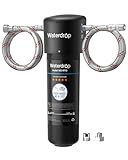
Waterdrop 10UA Carbon Filter
- NSF/ANSI 42 and 372 certified
- 11000 gallon rated capacity
- Direct-connect with no countertop drilling
- Twist-and-lock 3-second filter changes

CuZn UC-200 5-Year Filter
- Five-year filter life and 5-year spare part availability
- Inline direct-connect install with no drilling
- Independently tested for lead and PFAS reduction
- Retains naturally occurring minerals
Those three cover most of the realistic use cases. The iSpring RCC7AK-BN is the all-rounder that removes the widest range of dissolved contaminants and still tastes like water. The Waterdrop 10UA is the cheap, fast-installing upgrade for someone whose only real complaint is chlorine smell and who rents. The CuZn UC-200 is the ownership answer: a five-year cartridge that quietly outperforms systems costing several times more on cost per gallon.
Comparing 10 Under Sink Water Filter Systems Side by Side
| Product | Specs | Action |
|---|---|---|
| iSpring RCC7AK-BN Alkaline 6-Stage RO |
|
Check Latest Price |
| Waterdrop 10UA 1-Year Carbon Filter |
|
Check Latest Price |
 APEC ROES-50 5-Stage RO 50 GPD APEC ROES-50 5-Stage RO 50 GPD |
|
Check Latest Price |
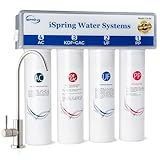 iSpring CU-A4 0.01 Micron Ultrafiltration iSpring CU-A4 0.01 Micron Ultrafiltration |
|
Check Latest Price |
| CuZn UC-200 5-Year Inline Filter |
|
Check Latest Price |
 Frizzlife SP99 8-Layer 0.5 Micron Filter Frizzlife SP99 8-Layer 0.5 Micron Filter |
|
Check Latest Price |
 Waterdrop TSU 0.01 Micron Tankless UF Waterdrop TSU 0.01 Micron Tankless UF |
|
Check Latest Price |
 Waterdrop G3P600 Tankless RO 600 GPD Waterdrop G3P600 Tankless RO 600 GPD |
|
Check Latest Price |
 Frizzlife PD600 Alkaline Tankless RO Frizzlife PD600 Alkaline Tankless RO |
|
Check Latest Price |
 ICEPURE WFS5300A 22,000 Gallon Filter ICEPURE WFS5300A 22,000 Gallon Filter |
|
Check Latest Price |
1. iSpring RCC7AK-BN Alkaline 6-Stage RO — Best Overall for the Widest Range of Contaminants
iSpring RCC7AK-BN NSF Certified, 75 GPD, Alkaline 6-Stage Reverse Osmosis System, pH+ Remineralization RO Water Filter System Under Sink Patented Top-Mounted Faucet Design for Easy Installation
75 GPD capacity
6-month filter set
TDS 93-98% reduction
PFAS 96-99% reduction
70 psi operating
Pros
- Whole-system NSF/ANSI 58 certification
- Alkaline stage balances pH and restores minerals
- Transparent first-stage housing shows clogging
- Top-mounted faucet fastener installs from above the counter
- Runs silently on line pressure with no power
Cons
- Supplied tubing can be short in deep cabinets
- Long initial flush and tank fill
- Overtightening the tank valve can crack parts
This is the highest-volume reviewed system in the group, with 21427 owner ratings at 4.6 stars and 84% of those ratings sitting at five stars. Owners keep naming the same three things: the taste, the certification, and the fact that they installed it themselves.
What separates it from a standard reverse osmosis kit is the sixth stage. The patent-pending alkaline filter raises the pH and puts natural minerals back into the water after the membrane strips them out, which is exactly the step that makes people decide reverse osmosis tastes bad and then never touch it again.
What the 6 stages actually remove
The published reduction figures are unusually specific: TDS 93-98%, PFAS 96-99%, chlorine 95-99%, asbestos above 99.7%, barium above 98.4%, cadmium above 98.8%, chromium above 99.2%, copper above 97.8%, fluoride above 97.4%, lead above 98.9% and selenium above 99.0%. Input water up to 750 ppm TDS is within spec, and the membrane handles 40-100 °F at 70 psi.
Installation is easier than a normal RO kit
The patented top-mounted faucet fastener is the quiet engineering win here. Instead of trying to reach up under the sink deck with a wrench and a flashlight, you set the faucet from above the counter and tighten it from the cabinet side, which is the step that trips up most first-time installers on competing systems.
Where owners report problems
The complaints cluster around setup rather than performance. The supplied tubing runs short in some cabinets, the initial tank fill and multi-stage flush takes hours, and the drain saddle placement guidance is vague enough that people get it wrong. One recurring piece of advice from owners is to flush each pre-filter stage separately before you connect the membrane, because skipping that step clogs the membrane early.
What it will not do for you
It will not soften hard water, and it will not treat well water with a coliform or bacteria problem. It is also a thirsty design: reverse osmosis sends two to three gallons down the drain for every gallon you drink, and the 75-gallon tank needs time to refill. Households that also want to reuse that reject water on plants can pick up the technique in our guide to watering established shrubs during drought restrictions.
2. Waterdrop 10UA Carbon Filter — Budget Pick for Renters Who Want Chlorine Gone Today
Waterdrop 10UA Under Sink Water Filter System, NSF/ANSI 42 Certified 1 Year
11000 gallon capacity
1-year filter life
2.5 gpm max flow
0.75 gpm tested at 60 psi
Coconut shell carbon
Pros
- Direct-connect design needs no drilling at all
- Three-minute install and three-second filter swaps
- Retains minerals while cutting chlorine taste
- Very low cost per gallon against bottled water
- Compact body fits small cabinets
Cons
- TDS readings will not drop by design
- Slightly reduces cold line pressure
- Stiff and overlong supplied tubing
This is the renter pick. It is 3.9 by 3.6 by 12.3 inches and 1.31 kg, which means it installs behind a trap in a cabinet that has no room for anything else. There is no dedicated faucet, no countertop hole and no drain line, because the filtered water returns through your existing cold tap.
Owners describe it as the point where they stopped hauling five-gallon jugs. Several say the water tastes better than the bottled water they were buying, which is a low bar that most carbon filters in this category still fail.
Certification is aesthetic, not health
The system carries NSF/ANSI 42 and NSF/ANSI 372 certification. That is the taste-and-odor standard, so the honest description is chlorine and sediment reduction with lead-free materials. It is not certified for lead, PFAS or any health contaminant, and the copy on the box can blur that line.
Flow and pressure are the trade
Maximum flow is rated 2.5 gpm, and the manufacturer tested a full flow rate of 0.75 gpm at 60 psi with an upgraded 3/8-inch outlet rated to 1.33 GPM. In practice, owners on already-low household pressure report a noticeable slowdown at the cold tap, and that is the most common reason people return one of these.
Why your TDS meter will not move
This is the number one confusion in the reviews and it is not a fault. The system is designed to keep minerals in the water, so a TDS reading stays flat. Buyers who were expecting reverse osmosis numbers sometimes interpret an unchanged reading as a failed install. The system is cold municipal water only, and it is not meant for well water or hot lines.
What it will not do for you
It will not lower TDS, it will not reduce fluoride, and it will not touch lead or PFAS. If any of those are the reason you are filtering, you need to move up to an ultrafiltration or reverse osmosis design. It can be upgraded later with UF or MZ cartridges, which makes it a reasonable first step rather than a dead end.
3. APEC ROES-50 5-Stage RO — Best Traditional Tanked RO With a Complete Install Kit
APEC Water ROES-50, 5-Stage Under Sink Reverse Osmosis System, 50 GPD
50 GPD capacity
6-month filter life
40-85 psi range
Handles up to 2000 ppm TDS
Storage tank included
Pros
- Long service life reported by owners over many years
- Quick-connect fittings are genuinely leak-free
- TDS drops to near zero on a meter
- Complete kit includes faucet
- tank and filter set
Cons
- Housing caps crack if overtightened
- Included faucet has no air gap
- 2-3 gallons of wastewater per gallon produced
- Tank delivers only 2-3 gallons at a time
The ROES-50 is what a conventional reverse osmosis system looks like when nothing has been added for marketing purposes: 50 gallons per day, a storage tank, a brushed nickel faucet and a filter set in one box. Owners with ten-plus years of continuous service on it are common, and plenty of them bought it to replace a twenty-year-old system that had already failed.
It is also the system in this list that handles the widest raw water: rated for input up to 2000 ppm TDS, with an operating range of 40-85 psi. That tolerance is useful in older homes with low pressure.
Quick-connect fittings are the real upgrade
The color-coded quick-connect tubing replaced the compression and threading approach used on older systems, and reviewers single it out as leak-free in long-term use. The dimensions are 15.5 by 5.25 by 17 inches at 11.3 kg, so measure your cabinet before you order.
The one leak pattern to avoid
The most repeated technical theme across the reviews is that the three large filter housing caps crack when owners overtighten them during a change. The fix is well documented by owners: hand-tight plus a quarter turn, and a light film of food-grade silicone grease on the threads. There is also one prominent report of a supply tube that would not lock and ejected under pressure, so seat the tube fully before turning the water on.
The tank, the air gap and the waste line
Two honest limitations. The five-gallon tank delivers roughly two to three gallons before it needs a refill, so a household filling a rice cooker and a kettle at once will wait. And the included faucet has no air gap, so backflow protection comes from the air gap on your sink or a separate air-gap faucet.
Water waste and certification
The reject ratio is 2-3 gallons per gallon produced, which adds up on a water bill and is the single biggest reason to look at a tankless design instead. Certification is NSF/ANSI 58 and 372, covering the whole system for contaminant reduction and material safety. The kit also includes a self-piercing feed adapter that does not suit plumbing outside US standards.
4. iSpring CU-A4 4-Stage Ultrafiltration — Best No-Waste Filter That Retains Minerals
iSpring CU-A4 4-Stage Ultra Filtration Under Sink Water Filter System
0.01 micron hollow fiber membrane
8000 gallon capacity
6-month filter life
No wastewater or tank
Pros
- Produces no wastewater and needs no storage tank
- Retains minerals while cutting chlorine and chloramine
- Twist-on filter changes without touching the hoses
- Compact 10.6 by 4.3 by 12.6 inch footprint
Cons
- Printed manual appears to describe a different product
- Needs a 1-1/8 inch countertop hole for the faucet
- Needs a 15 gallon plus flush after install
- Does not reduce TDS
This is the middle path most people never consider. Ultrafiltration runs water through a hollow fiber membrane at 0.01 micron, which is fine enough to catch sediment, rust, cysts and microplastics, and coarse enough to leave dissolved minerals in place. No tank, no drain line, no power, no wastewater.
Owners frequently describe it as the replacement for a leaky, space-hogging reverse osmosis unit. Installation takes under 20 minutes once the parts are laid out on a towel.
The four stages, and what each one does
It runs a 5 micron polypropylene sediment filter, then the 0.01 micron ultrafiltration membrane, then a KDF/GAC stage, then a fine activated carbon polish. Published claims are up to 99% removal of chlorine and chlorine treatment by-products, lead, chloramine, hydrogen sulfide and heavy metals. Rated capacity is 8000 gallons with a 6 to 12 month filter life depending on source water.
The documentation is the weak point
The single most repeated complaint is the printed manual, which owners consistently say appears to belong to a different model and does not accurately describe the included faucet or the water connections. Plan on working the plumbing out from the fittings themselves. The upside is that iSpring has rewritten instructions and will call you back, which is why the rating holds at 4.6 across 7224 ratings.
Drilling and flushing are the two install gotchas
The included brushed nickel faucet needs a 1-1/8 inch countertop hole, which is larger than the manual states. If you rent, this is the disqualifier. After install, run roughly 15 gallons before drinking, because the carbon polish stage tastes sharp until it is fully purged.
What it will not do for you
It does not reduce TDS, so if the goal is a very soft, mineral-free taste you still need reverse osmosis. It also will not remove hardness or treat well water. It is backed by a 30-day money-back guarantee and a 1-year manufacturer warranty, with lifetime support based in Atlanta.
5. CuZn UC-200 Inline Filter — Best for Five Years of Low-Maintenance Filtering
CuZn UC-200 Under Sink Water Filter, NSF/ANSI 42 & 372, 5-Year Filter Life
Five-year filter life
Inline direct-connect
Retains minerals
Reduces lead and PFAS
Pros
- Five-year cartridge life beats every 6-month rival on cost per gallon
- Flow reduction is barely noticeable
- Substantial inline body with braided stainless connector
- Water tastes crisp and clean
- Made in the USA with accommodating support
Cons
- Body is large and needs real cabinet space
- Cloudy dense-tasting water for the first several days
- Outside US plumbing needs thread adapters
- Does not lower TDS
The CuZn UC-200 is the durability benchmark in this group, and the reason is arithmetic rather than hype. A five-year cartridge changes the cost-per-gallon conversation completely, and owners report repeat purchases after five years of use rather than the annual swap most competitors push.
It also holds a 4.6-star average, with 84% of ratings at five stars and a taste outcome reviewers single out among the non-reverse-osmosis systems here. Reviewers compare it favorably to several higher-rated under-sink competitors on both flavor and flow.
Three stages that keep your minerals
Micro sediment membranes, KDF-55 media and coconut shell carbon, arranged inline. The manufacturer states it has been independently tested to reduce PFAs, PFOA and PFOS, lead and chlorine, and it purifies without stripping beneficial minerals. Certification is NSF/ANSI 42 and NSF/ANSI 372 for components and materials.
The flush period is the one real patience test
Owners consistently report that the water is cloudy and tastes heavy for up to about a week before it settles. This is media fines purging, not a fault, but it is the most common reason people abandon a system in the first five days. Run the cold tap for ten minutes a day for the first week.
Sizing and plumbing realities
The body measures 5.5 inches in diameter by 14 inches wide, so it needs genuine cabinet space and a corner to mount into. It includes a stainless steel braided connection hose, and outside US plumbing the common quarter-inch fittings need adapters. Spare parts are published as available for five years, which is rare in this category.
What it will not do for you
It does not reduce TDS, so it is not a reverse osmosis substitute for dissolved solids. It will not soften hard water, and it is certified for taste, odor and sediment rather than a full health-contaminant standard. If lead reduction at a certified level is your main reason to filter, read the certification carefully before you buy.
6. Frizzlife SP99 8-Layer Filter — Best Certified Carbon System for PFAS and Lead
Frizzlife Under Sink Water Filter System, NSF/ANSI 53&42&372 Certified, 8 Layer 0.5 Micron Water Filtration Reduces PFAS, PFOA/PFOS, Chloramine, Lead, Chlorine, with Brushed Nickel Faucet, SP99 New
0.5 micron accuracy
1.5 gpm max flow
20-80 psi range
8 layers of media
4-100 F operating range
Pros
- Fills a cup in about three seconds
- Upgrade includes a 600 psi rated water board
- Only inner cores are replaced
- Compact 15 by 5 by 14 inch body
- Lead-free brushed nickel faucet included
Cons
- Does not reduce TDS
- Requires drilling for the included faucet
- 0.5 micron is coarser than 0.01 micron rivals
The SP99 carries the broadest certification of the carbon systems on this list. It is IAMPO tested and certified to NSF/ANSI 42 and 53, which is the standard that covers lead, chlorine, chloramine, PFAS and PFOA/PFOS rather than taste and odor alone, and it carries a lead-free faucet as part of the package.
It also runs at 1.5 gpm with owners timing a filled cup at roughly three seconds. That matters more than it sounds in a busy kitchen, and it is well above the 1.05 gpm of the tankless ultrafiltration system in this roundup.
Eight layers, 0.5 micron
The eight compounded media layers deliver 0.5 micron purification accuracy, which the manufacturer positions as roughly ten times finer than typical competing carbon systems. It is still coarser than the 0.01 micron membranes used by the ultrafiltration models in this roundup, so it will not catch everything a UF membrane catches.
Replace the core, not the housing
The M3001, M3002 and M3003 cores are sold separately from the plastic housings, so long-term waste and long-term cost both stay down. The housing upgrade is the other headline improvement over earlier Frizzlife builds: stronger cases, stronger bottom caps and an integrated water board rated to resist 600 psi.
Installation and household range
Installation is a 15-minute DIY job with video instruction, but it does require drilling for the included faucet. Operating range is a wide 4-100 °F, and input up to 500 ppm TDS is within spec. An optional IMC-1 kit routes the same filtered line to a refrigerator ice maker, which is a genuine saving in a kitchen that runs its dispenser.
What it will not do for you
It retains beneficial minerals, so TDS does not move, and hard-water taste will remain. It is a filtration and taste system, not a softener. If you are chasing total dissolved solids specifically, this is the wrong purchase.
7. Waterdrop TSU 0.01 Micron Ultrafiltration — Best Tankless Filter With Filter-Life Alerts
Waterdrop TSU 0.01 Micron Ultra Filtration Under Sink Water Filter System
0.01 micron membrane
2200 gallon capacity
1.05 gpm flow
24-month UF filter life
Pros
- Tankless with no wastewater
- drain line or power
- 0.01 micron membrane keeps minerals in
- Steady 1.05 gpm with no noticeable pressure loss
- Alert panel tells you exactly when to change
Cons
- Requires drilling for the included faucet
- Does not reduce TDS
- Three filters expire on different schedules
- One owner reported a base leak after two years
The TSU is the one to buy if your main frustration is not knowing when a filter expired. Instead of guessing from taste, the smart panel tracks each stage with four indicator lights and an audible change alert, which is exactly the maintenance failure owners described when they said they forget filters until the sink goes off.
It is a three-stage tankless system rated 2200 gallons, with a 24-month ultrafiltration cartridge, a 12-month CT carbon filter and a 6-month PP sediment filter. Steady flow is 1.05 gpm with no noticeable pressure loss.
0.01 micron without reverse osmosis
The 0.01 micron ultrafiltration membrane combined with carbon block stages is advertised to reduce more than 30 substances while retaining essential minerals. Because it is not a membrane desalination system, there is no drain line, no storage tank and no electricity, and it handles up to 700 ppm input TDS.
Built for a small cabinet
The body measures 4.68 inches wide by 13.97 high by 14.81 long, a deliberate narrow profile that fits beside a large garbage disposal. It accepts both half-inch and three-eighth-inch under-sink pipes, and the materials are IAPMO NSF/ANSI 372 certified lead-free and BPA-free.
The maintenance trade: three different clocks
That alert panel only helps if you act on it, and the awkward part is that the three stages expire on different schedules. UF lasts 24 months, CT 12 months, PP 6 months, so a low-drinking household may get two PP changes for every CT change. Owners who value the alerts still flag this as a bookkeeping load rather than a single annual job.
What it will not do for you
It does not reduce TDS, so hard-water mineral taste can persist, and it requires drilling for the included brushed nickel faucet. One owner reported a base leak after two years of service and a unit that arrived damaged, so inspect the unit on arrival.
8. Waterdrop G3P600 Tankless RO — Best High-Capacity RO at a 2:1 Drain Ratio
Waterdrop G3P600 Tankless Reverse Osmosis Water Filter System, 600 GPD
600 GPD capacity
8 stages SGS tested
0.42 gpm flow
2:1 pure to drain
87 psi operating
Pros
- Tankless design frees about 70% of cabinet space
- Smart faucet shows live TDS and filter status
- 2:1 drain ratio beats conventional reverse osmosis
- Fills an 8 oz cup in about eight seconds
- Three-second tool-free filter swaps
Cons
- Requires an under-sink electrical outlet
- Pump hum and vibration are noticeable
- Replacement cartridges are expensive
- TDS creep after the unit sits unused
The G3P600 is the high-output option. At 600 gallons per day it fills an eight-ounce cup in about eight seconds, and the tankless layout frees roughly 70% of the cabinet space a conventional tanked system occupies. Owners upgrading from a tanked system usually name those two things as the reason they switched.
It is also the system that most directly answers the water-waste complaint. The 2:1 pure-to-drain ratio means two gallons of reject water per gallon produced, which is a large improvement over the 2 to 3 gallon ratios typical of tanked reverse osmosis.
Eight stages, third-party tested
The filtration is certified to NSF/ANSI 58, 42 and 372, and the eight-stage performance was tested by SGS for TDS, chromium, PFAS, radium, fluoride, arsenic, iron, calcium, particles, chloride and chlorine. Input up to 1500 ppm TDS is within spec, and it runs at 87 psi with corded electric power.
The smart faucet is the feature owners defend
The display faucet shows live TDS and a filter-life tracker, which reviewers describe as replacing guesswork on cartridge timing. Filters swap in about three seconds without moving the unit, which matters on something this size at 31 pounds and 18.12 by 5.67 by 17.72 inches.
Two real drawbacks
First, it needs an under-sink electrical outlet, and many kitchens do not have one. Second, the pump produces an audible hum and can vibrate against the cabinet wall, which several owners describe as a soft hum rather than intrusive, but it can amplify with a poor mounting. If your cabinet has no outlet, a non-electric system is the safer purchase.
TDS creep and tube routing
After hours of sitting, the first glass reads much higher until you flush, which surprises people who measure it. One reviewer also documents a significant leak from a partially seated supply tube, so push the line fully to the marker line before pressurizing. Replacement cartridges are the most expensive ongoing item in this roundup.
9. Frizzlife PD600 Alkaline Tankless RO — Best Mineral-Restored RO That Fixes Flat Taste
Frizzlife Reverse Osmosis Water Filter – Alkaline Mineral pH+, NSF/ANSI 58&53&42&372 Standard, 600GPD Tankless RO Reverse Osmosis System, Under Sink, 2:1 Pure to Drain, Reduce FPAS/PFOA, PD600-TAM3
600 GPD capacity
0.41 gpm flow
2:1 pure to drain
pH raised above 7.5
38-100 F range
Pros
- Alkaline stage counteracts acidic flat RO water
- Smart LED tracks TDS and each filter's life
- 2:1 drain ratio saves up to 450% of water
- Tankless design avoids a tank that can breed contamination
- Support has replaced pumps and faucets on four-year-old units
Cons
- Included faucet is wobbly where it swivels
- Pump hum and vibration shake the cabinet
- Needs a half-inch countertop hole
- Alkaline taste is not for everyone
Most of the reason people dislike reverse osmosis is one stage. This system puts a third-stage alkaline remineralization filter after the membrane, raising the pH above 7.5 and restoring essential minerals, which is the same fix the iSpring RCC7AK-BN uses and the reason both of those systems taste the way municipal spring water does.
Independent lab results cited in the reviews show 95% or better TDS reduction with microbiological results at zero. The rating is 4.6 across 2472 reviews, the highest average of the tankless reverse osmosis systems here.
600 GPD at 2:1
It fills a 330 ml cup in about 10 seconds, a little slower than the G3P600, and holds the same 2:1 pure-to-drain ratio with a manufacturer claim of up to 450% water savings versus conventional reverse osmosis. It is certified to NSF/ANSI 58, 53, 42 and 372, and rated for input up to its specified range across 38-100 °F.
Tankless plus a display that tracks each stage
The smart LED panel shows real-time TDS and remaining life for each filter with color-coded change reminders, and the tankless footprint at 14.7 by 5.3 by 15.5 inches keeps the cabinet usable. Owners also value that a tankless design avoids a storage tank that can harbor bacterial growth between uses.
Physical complaints and the alkaline taste
The most common complaint is the supplied faucet’s swivel, which owners describe as wobbly at the base, followed by pump hum and vibration that can shake the cabinet floor. It needs a half-inch countertop hole, and it must be installed vertically, so it will not fit beneath a low kickplate. Finally, the alkaline taste is genuinely polarizing, and the third stage needs flushing after it has been sitting.
Support that outlasts the warranty
Customer support has replaced pumps and faucets free of charge on units four years old, which is a meaningful signal in a category where cartridges are the real cost of ownership. The kit includes the CP filter, the 600 GPD membrane, the TAM3 alkaline filter and a brushed nickel faucet.
10. ICEPURE WFS5300A 22,000 Gallon Filter — Best Budget Step Up from a Pitcher
ICEPURE Under Sink Water Filter System, 3 Years or 22000 Gallons Ultra High Life NSF/ANSI 42 Certified, Removes Heavy Metals,Chlorine,Direct Connect Under Counter Drinking Water System, USA Tech
22000 gallon capacity
3-year rated life
2.5 gpm tested flow
NSF 42 and 372 certified
Pros
- Direct-connect with no countertop drilling
- Very fast 2.5 gpm most owners cannot feel
- 22000 gallon capacity far beyond 6-month cartridges
- Plug-and-play install in under three minutes
- Marked improvement in taste against bottled water
Cons
- One owner reported early clogging well short of the rating
- Needs a threaded 1/2 or 3/8 inch female NPT faucet
- Replacement filters hard to find outside the US
- Does not reduce TDS
This is a budget step up from a Brita-style pitcher, and reviewers price it against bottled water to make the case: several owners calculate meaningful monthly savings by the time they add up household drinking and cooking water.
The 22,000-gallon capacity rated at three years on municipal water is more than double the capacity of most carbon cartridges in this roundup, and the tested full flow rate of 2.5 gpm at 60 psi is among the fastest here.
What the 0.5 micron carbon block does
The outer layer is a 0.5 micron carbon block made from coconut shell carbon fiber, certified to reduce chlorine, taste and odor under NSF/ANSI 42, with NSF/ANSI 372 certification for lead-free, BPA-free materials. Heavy metals and sediment are tested for as well, but the certification itself is an aesthetic standard.
Installation is genuinely plug and play
It connects directly to the existing faucet, with no countertop hole, and fits half-inch or three-eighth-inch female NPT threaded faucets. Owners report installs under three minutes and two-second filter changes. The body measures 6.81 by 5.39 by 15.55 inches and includes a filter head, an inlet and outlet housing and an adapter.
Where the rating claim got challenged
One owner reports the carbon core clogging well before the advertised 22,000 gallons, at a low-volume household, and notes that the lifespan is not printed in the included instructions. The seller resolved that complaint promptly, which is why the overall rating holds at 4.5 across 3332 reviews. Spare part availability is published at three years.
What it will not do for you
It does not reduce TDS, does not soften water and is not certified for health contaminants such as lead or PFAS. It also needs a threaded female NPT faucet, and replacement filters are not readily available outside the US, which matters if you are not shopping on a US marketplace.
How to Choose the Right Under Sink Water Filter
The biggest buying mistake in this category is starting with a product page. Start with your water. Your municipal utility almost always publishes an annual water quality report, and the two numbers that decide your purchase are the contaminant list and the total dissolved solids figure. Lead, PFAS, chlorine or chloramine, fluoride and TDS each need a different technology, and no single cheap cartridge addresses all of them.
Match the contaminant to the technology
Chlorine taste and odor, plus sediment and rust: any certified carbon block will do it, and that is the cheapest job in the category. Cysts, cryptosporidium, giardia and microplastics: you need ultrafiltration at 0.01 micron or better, because carbon alone will not physically strain them out. Lead, mercury, chromium, PFAS and PFOA/PFOS: look for an NSF/ANSI 53 or 58 claim, and remember that NSF 42 alone certifies taste and odor only. Fluoride, nitrates and total dissolved solids: that is reverse osmosis territory, and only a semi-permeable membrane will move it. Hardness: no under-sink filter on this list softens water. A softener is a different product with ion exchange resin, and buying a filter hoping to fix scale is the most common wasted purchase in the category.
What NSF/ANSI 42, 53, 58 and 372 actually certify
NSF/ANSI 42 is the aesthetic standard: taste, odor and sediment reduction. NSF/ANSI 53 is the health-contaminant standard, covering lead, mercury, VOCs and cryptosporidium. NSF/ANSI 58 is the reverse osmosis standard for dissolved contaminants including TDS and fluoride. NSF/ANSI 372 covers lead-free and low-lead materials, which is a material-safety standard rather than a filtration claim. A system can be 372 certified and do almost nothing for contamination, so read the number that matches your problem.
Direct-connect or a dedicated faucet
A direct-connect system plumbs filtered water into your existing faucet, needs no drilling, installs in under 30 minutes and is the only realistic option in a rental. The trade is that you cannot use your unfiltered tap for anything, including rinsing produce and washing dishes, and a low-flow faucet can feel sluggish. A dedicated faucet gives you filtered and unfiltered water side by side, which matters if you cook and clean with the same sink, and the filtered side is the only one you should use for ice, coffee, formula and filling bottles. It costs a countertop hole, which is the one thing a renter cannot do.
Flow rate and cabinet space
Flow rate is the number most product pages bury, and it is the one you feel every day. Carbon and ultrafiltration systems here run from 1.05 to 2.5 gpm, which is fast enough that you will not notice it. Conventional reverse osmosis sits at 50 to 75 gallons per day of storage capacity, so the water arrives in a trickle and refills slowly. Only the tankless 600 GPD designs fill a glass in under ten seconds. On space, measure the cabinet with the disposal and the drain in place, and check whether the unit must be mounted vertically, because the Frizzlife PD600 will not fit under a low kickplate.
What an under sink filter will not fix
Three things. Hardness: carbon and ultrafiltration filters do nothing for scale, and you need a softener. Bacteria and coliform: if you are on a well with any positive test, an under-sink filter is not adequate treatment, and you need disinfection equipment or professional remediation. Total dissolved solids at extreme levels: a single membrane stage struggles, and treatment has to be staged. If your supply also comes from a surface source or a pond, the pumping side is a separate problem, and our picks for sprinkler pumps for lake water and water transfer pumps for ponds cover that end of the system.
Maintenance and the five-year cost question
Cartridge life ranges from six months to five years across these ten systems, and that spread is the whole ownership story. The five-year filters are the CuZn UC-200 and, on paper, the ICEPURE; the six-month filters are the two reverse osmosis kits. Multiply the cartridge interval by the number of stages before you buy, because a three-stage system on a six-month clock is six cartridge changes a year, not one. Two practical habits close most of the complaints in the reviews: flush a new system thoroughly before the first glass, and change on time rather than on taste. Owners who let a filter run past its interval report flow loss and cloudy water long before they report a taste problem. If you are routing reverse osmosis reject water to a garden bed rather than a drain, our piece on why mulch forms a water-repelling crust is worth a look, since that effect gets worse when the soil wets unevenly.
Frequently Asked Questions
Do under sink water filters actually work?
Yes, but only for the contaminants their certification covers. Carbon filters remove chlorine taste and odor and sediment effectively. Ultrafiltration at 0.01 micron physically strains out cysts and microplastics. Reverse osmosis reduces dissolved solids including lead, fluoride and PFAS. A unit certified only to NSF/ANSI 42 will improve taste without reducing lead or PFAS, which is the single most misunderstood point in the category.
What is the best under sink water filter for hard water?
None of them. Carbon and ultrafiltration filters do not reduce hardness, because hardness is dissolved calcium and magnesium rather than a particle. They can reduce the taste and sediment associated with hard water, but scale on glassware and appliances will continue. Treating hardness requires ion exchange, which means a water softener installed on the incoming line rather than an under-sink filter.
Why does my new RO filter taste bad?
Reverse osmosis strips dissolved minerals out along with the contaminants, and water without minerals tastes flat and slightly acidic. New carbon media can also add a plastic or bitter taste for the first days of flushing. Fix the second by flushing each pre-filter stage separately and running the system for hours before drinking. Fix the first with an alkaline remineralization cartridge, which restores minerals and raises the pH above 7.5.
What is the lifespan of an under sink water filter?
It depends entirely on the model, and published ranges run from six months to five years. Carbon and ultrafiltration cartridges in this roundup are rated from 8000 to 22000 gallons, while the CuZn UC-200 is rated for five years. Multi-stage systems expire on separate clocks, so a three-stage unit may need a sediment filter every six months and a carbon block every twelve. Change on time rather than on taste.
My under sink water filter is leaking. What should I do?
Shut off the cold supply valve under the sink before anything else, then check the joints in order. Push-to-connect fittings: fully seat the tube to the marker line, because a partially inserted line is the most common cause of a serious leak. Filter housings: hand-tight plus a quarter turn, since overtightening cracks the caps. Compression fittings: re-cut the tube square and re-seat the ferrule. New plastic taste and cloudy water are flushing, not leaking.
Which Under Sink Water Filter Should You Buy in 2026?
If you want one product that covers the widest range of contaminants and still tastes good, the iSpring RCC7AK-BN is the pick. Whole-system NSF/ANSI 58 certification, a 75 GPD capacity, an alkaline stage that fixes flat reverse osmosis taste, and a faucet install that happens from above the counter.
If you rent, or your sink has no usable faucet hole, or you only care about chlorine smell, the Waterdrop 10UA installs in three minutes with no drilling and keeps your minerals. If the long-term cartridge bill is what you care about most, the CuZn UC-200 runs five years between changes and costs less per gallon than anything else here. If you want a finer barrier against cysts, sediment and microplastics without reverse osmosis wasting water, the iSpring CU-A4 filters at 0.01 micron with no drain line and no tank. And if you need the highest throughput and a smart display, the Waterdrop G3P600 and Frizzlife PD600 both put 600 GPD tankless reverse osmosis in your cabinet, provided you have an outlet under the sink.
Whichever one you choose, start with your water report rather than a product page, and match the technology to the contaminant. The best under sink water filter is the one certified for the thing you are actually trying to remove, sized for the cabinet you actually have, and affordable to own for the five years you will use it.
Leave a Reply