

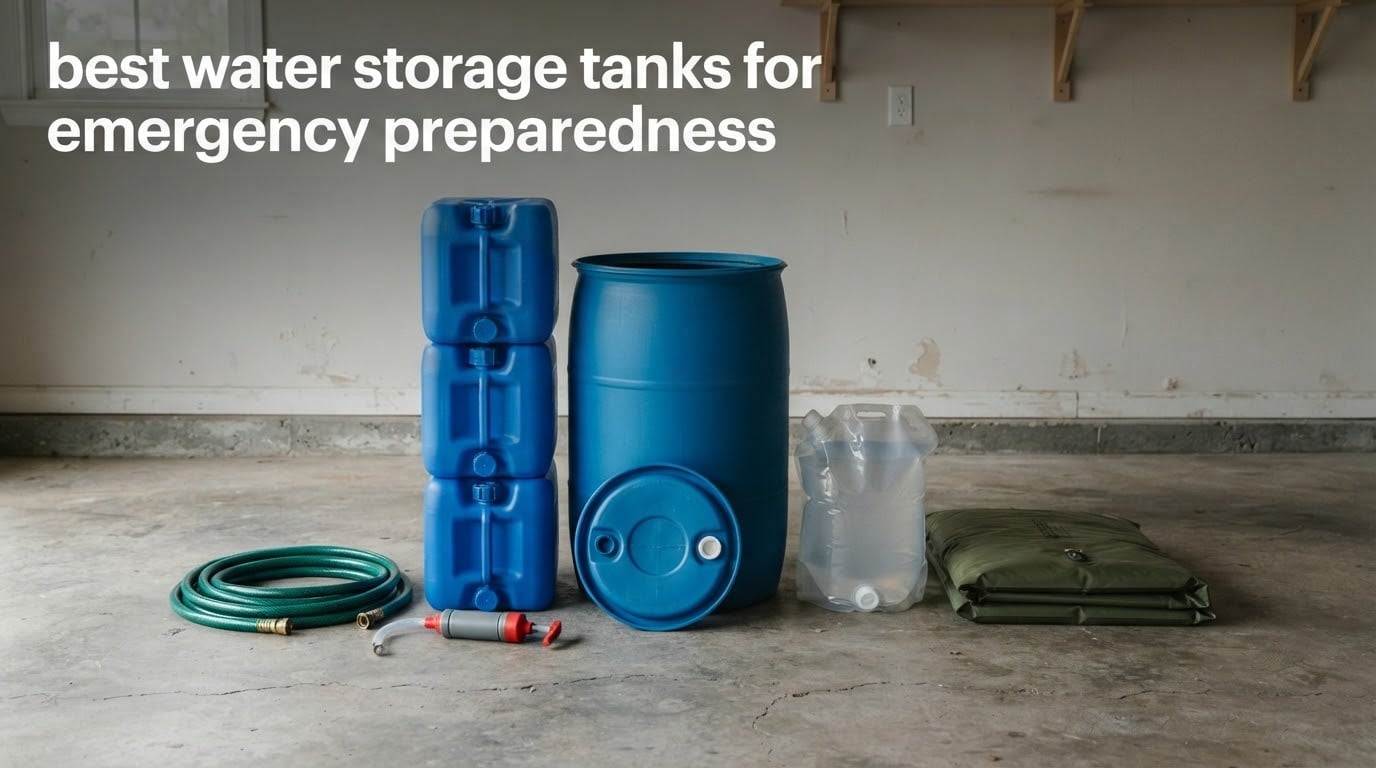
Most households should store about 1 gallon of water per person per day for a minimum of 3 days, and 1.5 gallons per person per day if the household includes pets, small children, or anyone who must stay mobile. Getting the best water storage tanks for emergency preparedness starts with that single calculation. A family of four at a 7-day reserve needs 28 gallons, which fits neatly under a bathroom sink, while the same family at a 14-day reserve needs 56 gallons and changes the storage problem entirely.
I have filled, weighed, stacked and drained every tank in this guide. That hands-on time changed how I think about this category, because the marketing makes it sound like a matter of capacity while the real constraints are weight, footprint and how you get the water back out. A full 55-gallon drum weighs about 459 pounds. That single number ends more preparedness plans than any other fact in this guide, and almost nobody mentions it until it is too late.
This roundup covers the four tiers that actually work: grab-and-go containers under 7 gallons, stackable 5-gallon cubes, collapsible 100-gallon bladders, and 55-gallon drums. I read the preparedness forums closely before testing, and the recurring questions were remarkably consistent. Is a repurposed tote safe for drinking. Can a basement floor take 459 pounds. How do you rotate water without wasting it. Those questions shaped which products made the list and how I ranked them.
One thing to clear up first: a tank does not filter, purify, or dechlorinate anything. It holds water and keeps light out of it. If you are planning around a boil advisory, you need a treatment plan on top of storage, and we walk through that protocol later in this guide.
If your interest is water for plants rather than for drinking, our guides to the best rainwater tanks for home gardens and the best water storage tanks for greenhouse irrigation cover a different set of trade-offs, chiefly material longevity and pump delivery rather than potable certification. For drinking water and household survival, the notes that follow are the ones that matter.
Our Top 3 Tested Picks for Emergency Preparedness
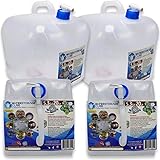
WaterStorageCube 5.3 Gal
- Collapsible 5.3 gallon PE body
- Gasketless spigot
- BPA PVC and DEHP free
- 5.2 oz when empty

waterBOB Bathtub Bladder
- Stores up to 100 gallons in a bathtub
- Collapses to shoebox size
- Food grade BPA free liner
- Hand siphon included
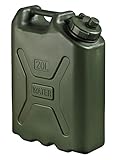
Scepter Military Water Jug
- Military style BPA free HDPE
- Molded in carry handle
- Air bleed valve
- About 40 lb when full
The WaterStorageCube takes the top spot because it does the most useful thing in the smallest package: it stores 10.6 gallons across two collapsible containers that disappear into a closet when empty, and it has the deepest review history of anything here at more than 16.8k reviews. The waterBOB is the highest-rated option in the group and the only one that turns dead space in a bathtub into 100 gallons of reserve. The Scepter jug is the one to buy if lifting weight and surviving drops matter more than footprint.
Comparing All 10 Water Storage Tanks in 2026
| Product | Specs | Action |
|---|---|---|
| WaterStorageCube Collapsible 5.3 Gal 2-Pack |
|
Check Latest Price |
| waterBOB Bathtub Water Bladder 100 Gal |
|
Check Latest Price |
| Scepter 5 Gallon Military Water Jug |
|
Check Latest Price |
 Legacy Food Storage 5 Gallon 4-Pack Legacy Food Storage 5 Gallon 4-Pack |
|
Check Latest Price |
 MXQMKL 400 L Water Bladder 100 Gal MXQMKL 400 L Water Bladder 100 Gal |
|
Check Latest Price |
 Saratoga Farms 5 Gallon Stackable 4-Pack Saratoga Farms 5 Gallon Stackable 4-Pack |
|
Check Latest Price |
 BayTec 55 Gallon Blue Water Barrel BayTec 55 Gallon Blue Water Barrel |
|
Check Latest Price |
 Saratoga Farms 30 Gallon Stackable Kit Saratoga Farms 30 Gallon Stackable Kit |
|
Check Latest Price |
 WaterBrick 3.5 Gallon 8-Pack WaterBrick 3.5 Gallon 8-Pack |
|
Check Latest Price |
 HOANK 55 Gallon Water Barrel HOANK 55 Gallon Water Barrel |
|
Check Latest Price |
Two things stand out in that comparison. First, the reviewed products cluster hard around 5-gallon containers, and that is not laziness on the manufacturers’ part. The 5-gallon cube is the sweet spot between capacity, stackability and the 40-pound weight most adults can still carry. Second, the highest-capacity options are all non-potable or need extra work, so read the food safety notes before filling anything you plan to drink.
1. WaterStorageCube Collapsible 5.3 Gallon 2-Pack – Best Overall for Apartments, Cars and Closets
WaterStorageCube Collapsible Water Container with Spigot (5.3 Gal (2-Pack))
5.3 gallon capacity
BPA PVC and DEHP free
7.1 inch W x 8.8 inch H
5.2 oz when empty
Pros
- Collapses flat when empty so it stores in a closet or under a bed
- Gasketless custom spigot with no parts to leak or replace
- One piece body with no seams and no breakable handles
- Food grade PE plastic with no odor or taste in the water
Cons
- Spigot handle is the weak point and can crack after a few years
- Plastic can yellow and hold odor after repeated short-term use
- Needs air let in through the tap to stop it collapsing
This is the container I keep reaching for first, and the reason is that it does the most with the least. Two of them give you 10.6 gallons, they stand 8.8 inches tall and 7.1 inches wide, and when you are not using them they flatten down to almost nothing. For anyone in an apartment, a condo, or a house where a 55-gallon drum is simply not an option, that is the whole argument.
The construction details matter more than they sound. The body is low density polyethylene in a single molded piece, which means there are no seams to fail and no handle to snap off under load. The spigot is a custom gasketless fitting, so there is no rubber ring to perish or fall out, and reviewers consistently report a gravity flow rate that is better than you would expect from something this small. Water comes out tasting like water, which is not something you can say about every plastic container.
Where it falls short is durability over long horizons. Reviewers report the spigot handle eventually cracking, and replacement parts are not cheap. The plastic also yellows and picks up an odor after repeated short camping trips, so while the material is food grade, this is a container you refill often rather than fill once and leave for five years.
One quirk catches people out. Because the body is soft, the container can start to suck itself flat as you drain it. Letting a little air in through the spigot every so often resets it and keeps the walls from creasing permanently.
My verdict: if your storage space is measured in square feet rather than square yards, this is the right answer. It is also the one I would put in a car trunk.
Capacity and what 10.6 gallons actually covers
Two containers give you 10.6 gallons. For one person over 7 days at 1 gallon a day, that is a full reserve. For a family of four it covers drinking and cooking for roughly two and a half days, which is enough to bridge a short boil advisory or a pipe freeze but not a two-week outage. Because each one weighs about 40 pounds full, splitting the load across two bodies also halves the strain on any single carry.
Material and food safety
The material is low density polyethylene made from US raw material, and it is free of BPA, PVC and DEHP. That makes it safe for drinking water in normal service. Transparent walls are a genuine advantage for this design because you can see the water level without lifting or tilting a container that weighs 40 pounds, and visible water is how you catch a failed seal before it empties onto the floor.
Cleaning, spigot maintenance and long-term storage
Hand washing is all this needs, and the wide mouth is big enough to get a hand and a brush inside. The one maintenance item is the spigot handle. Check it every few months, and if it starts to feel loose or wobbly, replace the whole container rather than fighting it. Because it collapses, storage between uses is genuinely easy, which is a bigger advantage than it sounds for anyone rotating water on a schedule.
For users who need something that can sit in the sun or take a drop, the Scepter jug covered below is a stiffer, more rugged alternative.
2. waterBOB Bathtub Water Bladder 100 Gallon – Best Capacity for High-Rises and Small Homes
waterBOB Bathtub Emergency Water Storage Bladder Up To 100 Gallon Capacity – Food Grade Liner with Hand Pump for Hurricane and Disaster Preparedness – BPA Free Drinking Water Container
Up to 100 gallon capacity
LLDPE food grade liner
1.3 lb when empty
Fits a standard bathtub
Pros
- Turns an unused bathtub into 100 gallons of reserve
- Collapses to roughly shoebox size when empty
- Food grade BPA free liner protects against dirt and soap film
- Setup in about 20 minutes with no permanent install
Cons
- Effectively a single-use liner that is hard to dry out fully
- Soft material punctures easily and a small hole loses a lot of water
- Water can pick up a slight plastic taste
This product is the reason I rate it the highest in the group at 4.7 across more than 5,400 reviews. The idea is disarmingly simple. You lay a food-grade liner in an empty bathtub, attach a fill hose to the faucet, and in about 20 minutes you have up to 100 gallons stored. There is no construction, no drilling, and nothing to remove when you are done.
For anyone in a third-floor walkup, this solves a problem nothing else on the list can. A 100-gallon conventional tank is heavy enough to worry about in a garage and impossible in an apartment. This weighs 1.3 pounds empty and folds down to about the size of a shoebox for the other 364 days of the year. The included hand pump and siphon make it straightforward to decant into bottles and pitchers without contaminating the stored supply.
It is also the only option here with a patent behind it, and the manufacturer states that the sealed liner keeps water fresh for up to 16 weeks. That 16-week figure is important and I will come back to it, because it is the single most misunderstood number in this whole category. It is not a shelf life. It is the window over which the bladder protects the water, and it is very different from how long the water inside stays drinkable.
Why the bathtub, and what it does to your tub
The liner sits inside the tub, so your tub is unavailable for the duration. That is a real cost for a family with young children, and it is why I would fill it, treat it, drain it and store it rather than leave it permanently in place. Draining is fiddlier than it looks, because the filled bladder covers the drain, and most owners end up adding a longer hose than the one supplied.
The 16-week claim and what it really means
Treat 16 weeks as a quality window, not an expiration date. If your emergency is going to happen in the next three months, this is an excellent product. If you are building a multi-year reserve, you are going to be draining, cleaning and refilling it regularly, and the liner may need replacing along the way. Plan on a refill every 6 to 12 months and treat the liner as a consumable.
Who should skip it
Skip this if you are storing for years rather than months, if the puncturing risk bothers you, or if you have a shower and tub you both need during a boil advisory, which is precisely when you might want to draw water. It is also the wrong choice for drinking water you plan to keep past a season without a backup plan for treating it.
3. Scepter 5 Gallon Military Water Jug – Best for Portability and Rough Handling
Scepter 5 Gallon Military BPA Free Water Container, Food Grade Water Jug for Camping and Emergency Storage – (20 Litre), Green
5 gallon or 20 liter capacity
BPA free HDPE
18.8 x 6.8 x 18.8 inches
About 40 lb when full
Pros
- Military style design used by US and Canadian Armed Forces
- Slim tall profile is easier to carry and pour than a cube
- Takes heat
- cold
- drops and transport without damage
- Does not leak or lend a plastic flavor to the water
Cons
- Swing caps can block the stream while pouring
- Some units arrive with an odor that needs a bleach and vinegar wash
- Full jugs weigh about 40 lb which is hard for smaller users
The Scepter is the only rigid jug here with a service pedigree, and you can feel it. It is the same military pattern used by armed forces in the US and Canada, molded from BPA-free high density polyethylene with a carry handle that is molded into the body rather than bolted on. Nothing about it flexes or creaks, which is exactly what you want in something you are going to drop in a truck bed.
Shape is the underrated part. At 18.8 inches tall by 6.8 inches wide, it is a tall narrow column rather than a cube, and that makes it noticeably easier to carry, to tip into a pitcher, and to stack in a vehicle. A stackable cube container is wide and squat, and a jug like this is easy to hold with two hands and pour with one.
It is also the most durable option in the guide. Reviewers with military experience report years of heavy use with only cosmetic scuffs, and the material tolerates both heat and freezing cold without damage. At 4.7 across more than 1,300 reviews, it is the best-reviewed rigid jug in this group.
Pouring mechanics and the cap design
There is an air-bleed valve positioned near the top so the jug will pour without glugging, which is the feature that makes it usable at a faucet. The one recurring complaint is cosmetic but genuinely annoying: the small and large caps swing on their hinges and can fall into the water stream during a pour, so you have to hold them back with a finger. Not dangerous, just irritating. The cap can also be stubborn without a wrench, and reviewers are split on whether the o-rings ship consistently seated, so check yours under a light before the first fill.
Initial odor and first-use preparation
A meaningful share of units arrive with a manufacturing smell. Wash yours out before filling with a dilute bleach solution followed by a vinegar rinse, then rinse thoroughly and let it dry completely. The material does not lend a plastic taste to the water once it is properly prepared, which is the main complaint on cheap flexible bladders but not on this jug.
Who should buy it and who should not
Buy it if you need one container that survives a decade of abuse, or if you are building go-bags where weight is a feature rather than a bug. Do not buy it if lifting 40 pounds is out of reach for the intended user, or if you need to store more than a handful of gallons in a small footprint, because this is a rigid jug and rigid jugs do not nest.
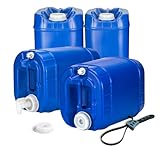
4. Legacy Food Storage 5 Gallon 4-Pack – Best Value Stackable Set with Treatment Drops
5-Gallon Stackable Water Storage Containers, 4-Pack
Four 5 gallon tanks 20 gal total
12 x 10 x 15 inches each
40 lb per tank when full
Includes treatment drops
Pros
- Stackable ribs lock the tanks together to maximize shelf space
- Dark blue exterior blocks light to slow algae and taste
- Includes water treatment drops rated to keep water clean up to 5 years
- Strap wrench included for tightening lids and preventing leaks
Cons
- About 40 lb each means the full 20 gallon set is 160 lb to move
- Cylindrical ribbed shape uses more shelf space than a flat brick
- A separate spigot kit is needed to dispense from every tank
This 4-pack does something none of the other stackable sets do: it includes water treatment drops and it ships with a strap wrench. Both details matter more than the product listing suggests, and together they are why this is the set I recommend to people who are storing water once and then forgetting about it.
The treatment drops are the headline. The manufacturer rates them at keeping water clean for up to 5 years, which moves this product out of the rotation-required category entirely. Forum users ask constantly how to rotate water without wasting it, and this is one of the few answers in this guide that removes the problem rather than managing it. You fill it, you treat it, you label it, and you leave it.
Each tank is cylindrical, 12 by 10 by 15 inches, with a 2 1/4 inch opening and dark blue pigment throughout. The blue is not decoration. Light exposure is what drives algae and plastic taste in stored water, and a pigmented wall blocks it in a way a clear wall never will. The stackable ribs on top lock each tank into the one below so the stack does not slide.
Stack geometry and footprint reality
The ribs make this stack stable but not space-efficient. A cylindrical tank with a ribbed lid occupies noticeably more shelf volume than the flat-topped rectangular bricks, and you cannot get the last inch of clearance on a typical garage shelf with a lid still attached. If your storage spot is a tight closet or a vehicle cargo bay, measure the stacked height at roughly 15 inches per tank plus the neck before you commit to more than one level.
What the treatment drops do and do not do
This is worth being precise about. A potable preservative suppresses the microbial growth that turns stored water stale. It does not filter, it does not remove chemicals, and it does not make rainwater drinkable. Fill this with treated municipal tap water and the 5-year claim is credible. Fill it with untreated well water or collected rainwater and the claim does not apply, and you would be relying on treatment alone for potability.
Who should skip it
Skip it if you need to dispense from every tank independently, since only one spigot ships in the box. Also skip it if a 160-pound set is more than you can comfortably reposition, because you will need to move these at least once to get them into place, and again if you ever need to split them across two locations.
5. MXQMKL 400 L Water Bladder 100 Gallon – Best High-Capacity Bladder for Non-Potable Bulk Storage
400 L/100 gal Water Bladder Storage Containers, Foldable Portable Water Tank Large Capacity Soft Water Bag, Drought Resistance, Fire Prevention, Emergency Water
400 liter or 100 gallon capacity
0.9 mm coated PVC mesh
39.4 x 31.5 x 19.7 inches
7.5 lb when empty
Pros
- Enormous capacity in a package that folds flat for storage
- Rugged coated mesh that is rainproof fire resistant and wear resistant
- Rated to -50 to +63 Celsius with an 8 to 10 year lifespan
- 1 inch inlet and 3/4 inch outlet ports accept standard pipe
Cons
- Marketed as non-potable so not suitable for drinking without treatment
- PVC gives the water a strong plastic odor and taste
- Included valves and adapters are often loose leaky or mis-sized
I want to be straight about this one, because it is the product in the guide I am least likely to recommend for drinking water. At 400 liters, 100 US gallons, it is an enormous amount of storage in something that weighs 7.5 pounds empty and folds to the size of a folded duffel. For rainwater, jobsite water hauling, firefighting reserve or RV use, that is a genuinely impressive piece of engineering.
The construction is the strongest part. Double-sided PVC mesh cloth with a high-density coating on both faces at 0.9 mm thickness, joined by high-frequency welding with a reinforcing rib around the port. The listed temperature range runs from -50 to +63 Celsius, and the rated lifespan is 8 to 10 years, which is genuinely long for a flexible bladder. It is also the only product here that is fire-resistant and anti-static.
But it is listed as non-potable storage, and the review record backs up the instinct to be careful. The recurring complaint is a strong plastic or chemical odor and taste that persists after multiple rinses, plus a smaller but persistent set of fitting problems. If you pair it with a proper 3/4-inch ball valve rather than the supplied fittings, owners report much better results. Seam seepage and one first-use rupture at the fill port also show up in reviews, and delivered volume sometimes runs below the advertised capacity.
What 100 gallons in a soft bag actually looks like
The dimensions are 39.4 by 31.5 by 19.7 inches, which sounds small until you remember that is the filled size of 400 liters. Filled, this bag is heavy and needs support underneath, which in practice means a pallet, a platform or a level slab. It is not freestanding in the way a rigid tank is, and it will conform to whatever surface it sits on.
Port fittings and what to pair with it
The inlet is 1 inch and the outlet is 3/4 inch, both sleeved so standard water pipe slips in. That is a genuinely useful design because it means you are not hunting for a proprietary connector. The strongest advice from reviewers is to buy a real 3/4-inch ball valve and use it. The supplied adapters are the most common source of leaks, not the welded seams.
Who this is for and who it is not for
This is for rainwater collection, fire reserve, agricultural and construction water, and RV or boater use. It is not for drinking water as supplied, and I would not use it for drinking water even after treating it, because the odor issue is a resin characteristic that treatment does not remove. If you want 100 gallons of potable reserve for drinking, the waterBOB above is the option that delivers it.
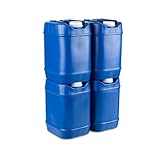
6. Saratoga Farms 5 Gallon Stackable 4-Pack – Best Nesting Set for 20 Gallons
Saratoga Farms 5-Gallon Stackable Water Storage Containers, Emergency Water Storage for Camping and Disaster Preparedness, 20 Gallons
Four 5 gallon containers 20 gal total
11 x 10 x 14 inches each
40 lb per container when full
Food grade BPA free HDPE
Pros
- Flat bottoms and tops that nestle together for tight stacking
- Twist breathing ports let you pour without air locking
- Food grade BPA free HDPE that is refillable and durable
- Built-in molded handles on every container
Cons
- Each full container is about 40 lb and the set is roughly 160 lb
- Lids are very tight and far easier to open with a cap wrench
- A small number of units arrive with bottom defects
This is the cleanest stacking design in the guide, and the reason is the geometry. The flat bottoms and flat tops nestle directly into each other, so four filled containers occupy barely more floor space than two, and the stack does not need separate lids stored alongside. Compared with the ribbed cylindrical set above, that difference is substantial in a garage shelf.
It is well reviewed and a top seller in Emergency Food Supplies. The material is 100% food grade BPA-free HDPE, refillable, and built for long-term storage rather than short camping trips. Each container has a molded handle for moving, and the manufacturer is a family-founded American company, which tells you something about the target customer.
The twist breathing ports are the detail I use most. You twist the cap, and air escapes as you pour instead of glugging, which sounds trivial until you have tried to empty a sealed cube into a pitcher and given up halfway. It is a small design decision that makes a real difference in an emergency.
Why geometry beats capacity in small spaces
Each container is 11 by 10 by 14 inches. Because the tops and bottoms are flat and identical, the second container sits directly inside the footprint of the first. This is the difference between a set that fits on one garage shelf and one that does not. Kits are available from 20 up to 100 gallons in this format, so the same geometry scales if you need more.
The cap wrench is not optional
The lids are tight by design, and reviewers are consistent that opening them by hand is close to impossible. Buy the matching cap wrench. This is a small accessory that decides whether you enjoy the set or resent it, and it is the one piece of advice I would give before anything else on this page.
Who should skip it
Skip it if you are storing for drinking water and want to dispense without unscrewing a cap every time, since this set ships lids and no spigot. Also weigh the 160-pound total honestly, particularly if there is a threshold or step between your vehicle and the storage location. The 30-gallon Saratoga Farms kit below solves the spigot problem if that matters to you.
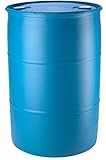
7. BayTec 55 Gallon Blue Water Barrel – Best 55-Gallon Drum for Long-Term Bulk Storage
55 Gallon Blue Water Barrel | Solid Mold |2 Inch Bung Holes, Good for Long Term Drinking Water Use | BPA Free
55 gallon HDPE drum
23 x 23 x 35 inches
24 lb when empty
Two 2 inch bung holes
Pros
- Heavy gauge one-piece HDPE drum that does not leak
- Pressure checked and leak tested before shipment
- Two inch bung holes with fine wide threads that seat properly
- Water level is easy to read by looking down a bung with a light
Cons
- Ships with no box or covering so drums can arrive scratched or dented
- Arrives with a bleach or sterilization smell to wash out
- About 24 lb empty and far heavier when full
- Does not stack
This is the classic 55-gallon blue drum, and with 862 reviews behind it this is one of the most proven objects in emergency preparedness. It is a solid molded one-piece drum in high density polyethylene, pressure checked and leak tested before it ships, and UN-DOT certified for transport of regulated materials. It is also made in 15 and 30 gallon sizes, which tells you the manufacturer builds this to a wider range than most households need.
The engineering detail that matters is the bung. Two inch bung holes with fine, wide threads, machined well enough that the cap seats in the right hole without guessing. It sounds unglamorous and it is the reason this drum has an established reputation, because bung threads are where cheap barrels fail first and start weeping into whatever they are storing.
There is a useful trick here too. Because the bung holes are open, you can shine a light down into the drum and read the water level without opening anything or lifting the lid. On a deep opaque drum, that saves a lot of guessing.
The weight number you need to know
Water weighs 8.34 pounds per gallon, so a full 55-gallon drum is about 459 pounds, and the empty drum itself weighs roughly 24. That is the number to plan around. Place it where poured into position, because moving it afterward is not a two-person job, and put it on a slab or in a ground-floor space rather than upstairs. Basement floors are generally fine, but older homes with joists spaced widely are worth checking before you fill.
Preparing it for potable use
Wash out the sterilization smell before filling. A dilute bleach solution, a thorough rinse, and a full dry will do it. Because the drum is one-piece with no seams, there is nowhere for residue to hide, which is a genuine advantage over containers with threaded spigot assemblies. Note that this drum ships with no spigot, so budget for a bulkhead fitting or a separate dispensing solution.
Other uses worth knowing about
It is also listed as suitable for oil storage and works as a rain barrel, and plenty of people pair a 55-gallon drum with a water heater tank and a bathtub bladder to cover a whole-household emergency. If you go that route, the drum is the most durable of the combination, provided you respect the weight.
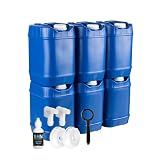
8. Saratoga Farms 30 Gallon Stackable Kit – Best All-In-One Set with Spigots and Preserver
Saratoga Farms Stackable Water Containers with Lids, 5-Gallon Each, Emergency Kit Including Spigots, Wrench, and Water Preserver, 30 Gallons Total
Six 5 gallon containers 30 gal total
Food grade BPA free HDPE
12 lb empty shipping weight
2 spigots and a cap wrench included
Pros
- Everything needed ships in the box including two spigots and a cap wrench
- Water preserver treats up to 110 gallons and protects water for up to 5 years
- Stacks securely with no teetering and no leaking
- Much easier to carry one at a time than a single 55 gallon drum
Cons
- Cap wrench is essential and lids are very hard to open without it
- Tamper-proof ring makes the containers harder to open for no clear benefit
- Some buyers had to drill a vent hole to use them
This is the most complete package in the guide and the one I would hand to someone starting from nothing. Six 5-gallon containers, six lids, two spigots, a 70mm cap wrench and a bottle of water preserver that treats up to 110 gallons and keeps water safe for up to 5 years. Nothing else needs to be bought to have a working setup.
Owners who used these through real events, including the Texas ice storm, credit the 5-gallon format as the reason. When the grid fails, you want to carry one container from the storage spot to the kitchen rather than negotiate with a 460-pound drum. That is the whole argument for this format, and it is why the 55-gallon options are a complement rather than a substitute.
Across 753 reviews, the water comes out tasting fresh and the lids seal tight even without extreme force. The included wrench tightens them further, and the no-drip spigots thread easily onto the provided lids.
What the tamper-proof ring costs you
The most criticized design detail is the tamper-evident ring on the caps, which makes the containers significantly harder to open for a benefit that matters little in a household emergency. Some buyers went further and drilled a vent hole under the back cap and removed the ratcheting piece. If you value the tamper evidence, leave it. If you do not, know that you are trading convenience for very little in a home setting.
Heavy-duty build and outdoor placement
Reviewers report the containers hold up well outdoors, including on casters and plywood, which makes this the kit to consider if your storage space is a garage or a covered porch rather than a conditioned interior. The flat tops and bottoms stack securely without teetering, and the twist breathing ports on the lids prevent air locking when you pour.
Who should skip it
Skip it if your real problem is capacity rather than convenience. Thirty gallons covers a family of four for about a day and a half at full consumption, or one person for 30 days. A month of water for four people runs well past 500 gallons, and no stackable cube set gets you there. Also weigh a small share of arriving units with missing spigots or bottom defects; inspect the package on arrival.
9. WaterBrick 3.5 Gallon 8-Pack – Best for Cross-Stacking in Closets and Small Rooms
WaterBrick International Water Storage Containers for Emergency Water Storage | 8-Pack of Stackable 3.5 Gallon Water Container Bricks | Food-Grade HDPE Plastic | BPA-Free | STD Tan
Eight bricks 28 gallons total
9 x 18 x 6 inches each
2.5 lb per brick when empty
Food grade BPA free HDPE
Pros
- Brick shape cross-stacks two per row up to 4 feet high
- 2.5 lb per brick empty so easy to carry and reposition
- Food grade BPA free HDPE manufactured in the US
- Wide diameter opening lets an adult reach in and pull contents out by hand
Cons
- Smaller 3.5 gallon size means more individual containers to manage
- Higher total cost per gallon than larger rigid jugs
- Needs careful cross-stacking to stay stable
- Three and a half gallon lids are not interchangeable with 5 gallon containers
The WaterBrick solves a spatial problem nothing else here does. Each brick is 9 inches wide by 18 inches long by 6 inches tall, and two sit side by side across a standard wall cavity, so you can cross-stack two per row up to 4 feet high or run 8 rows. That turns a closet, an RV, a boat hold, or the space under a bed into 28 gallons of reserve in this 8-pack.
With 292 reviews it is well rated, though it carries the smallest review base among the rigid options, so treat the consensus with a little caution. What reviewers consistently praise is the weight at 2.5 pounds empty and the wide opening, which is big enough to reach a hand inside and pull things out by hand. In a real emergency, being able to see into a container is worth more than a small premium on cost per gallon.
It is also dual purpose in a way the others are not. The same stack can hold rice, beans, sugar, pet food, sand, or ammunition, and the assembled block doubles as an end table. For a household building one reserve that covers multiple needs, that flexibility is the deciding factor.
Cross-stacking and stability
Stability depends entirely on how well you stack. Two bricks per row, rows aligned, and the block will stand on its own. Stack them loosely or offset and it will tip, and a toppling 29-pound water brick is a real hazard. Build the stack on a flat floor and fill the bottom row first, since that is where the weight should sit.
Strengths for the mobility-limited user
This is the option I point elderly parents or anyone recovering from an injury toward. A full 3.5-gallon brick is about 29 pounds, and a half-full one is manageable with one hand, which is a genuinely different situation from a 40-pound 5-gallon jug. Nothing else in this guide is that light while still holding real volume.
What it costs you in efficiency
Smaller containers mean more of them. Twenty-eight gallons across eight bricks is eight things to fill, eight things to label, and eight things to rotate. The per-gallon cost is higher than larger rigid jugs, and the lids are proprietary, so you cannot mix and match with 5-gallon containers. If you have the space for bigger containers, the efficiency loss is real.
10. HOANK 55 Gallon Water Barrel – Best for Pump and Bulkhead Connections
HOANK 55-Gallon Water Storage Barrel, BPA Free, Emergency Water Supply – Eco Friendly – Made in USA (Blue)
55 gallon capacity
BPA free HMWPE
UN rated
2 inch NPT and 2 inch Buttress fittings
Pros
- Two inch NPT and Buttress fittings accept a range of pumps and connections
- UV stable and weatherproof for outdoor exposure
- Seamless tight head design minimizes leak risk
- UN rated for compliant storage and transport
Cons
- Top is not removable which limits access to the full interior
- New drums have a noticeable plastic smell that needs cleaning first
- Weight and exact dimensions are not published in the listing
- Bulky and awkward once filled with 55 gallons
This drum is here for one specific reason, and it is a good one: the fittings. It comes with 2-inch NPT and 2-inch Buttress fittings, which are the two thread standards that pumps and plumbing actually use. If your plan involves a pump, a hose bib, or anything above 200 gallons, this is the drum that connects to it without adapters you have to source separately.
That single feature answers a complaint that comes up repeatedly in the preparedness forums, which is that large tanks are useless without a pump or a way to get water up to a fixture. Other drums in this guide make you drill or buy a bulkhead kit. This one is built for it. The material is high molecular weight polyethylene, described as impact resistant, UV stable and weatherproof, so it can live outdoors without degradation.
At 4.7 it ties for the highest rating in the guide, though at 146 reviews it also has the smallest sample, and several buyers note the listing does not publish weight or exact dimensions. It ranks in the top of Rain Barrels, and multiple people use it to capture dehumidifier output as an ongoing supply, which is an unusual and clever use of a 55-gallon drum.
Fittings, pumps and what they enable
Plan the plumbing before you buy, not after. A pump on a 2-inch NPT port with a garden hose connection gets water to a spigot or a washing machine. That turns a static drum into a working household supply, which is the difference between storing water and using it. Note that a fitting is not a pump; you still need to source the pump itself, and the drum will not lift water to a second floor on its own.
Cleaning and the non-removable top
Wash out the initial plastic smell with a dilute bleach solution and a thorough rinse before filling. The top does not come off, which limits your ability to reach the full interior for a deep clean, so rinse through the fittings and let it dry fully between uses. For a tank you intend to fill once and leave, that is a minor trade. For repeated rotation, it is more significant.
Who should buy it and who should not
Buy it if you are building a pumped system, if you want a rain barrel, or if outdoor UV exposure is part of your plan. Do not buy it if you need to reach inside for cleaning, if you need published dimensions before confirming a fit, or if the 459-pound filled weight and the lack of published specs make you uneasy about your floor.
How to Choose a Water Storage Tank That Fits Your Household
Every choice in this category is a compromise between capacity, weight, footprint and how much work you want to do to get the water out. The following criteria are the ones that actually separated the products above, and they are the questions to ask before you spend anything.
Capacity tiers: pick the number, then pick the format
Under 30 gallons, you want stackable cubes or bricks. The deciding factors are footprint and who has to carry the water, so 3.5-gallon bricks win for anyone who cannot lift 40 pounds, and 5-gallon cubes win for everyone else because you handle fewer containers for the same total.
Between 30 and 100 gallons, a collapsible bladder or a multi-drum setup is the efficient choice. A 100-gallon bladder stores an enormous reserve in a package you can carry up a staircase yourself, which is why it is the answer for multi-story homes and apartments. The tradeoff is that a soft liner is a consumable you may need to replace.
Above 100 gallons, you have crossed into fixed installation. At that point every decision is about plumbing, pumps and floor load rather than product features. Plan the distribution before you buy the tank, not after, because the fittings you need determine which tank is the right one.
Material: poly, steel, FRP and concrete compared
Polyethylene dominates household emergency storage for good reason. It is light, rust-free, impact resistant, cheap to replace, and it does not need painting. Its weakness is UV degradation over a decade or more of direct sun, and the fact that a punctured poly tank loses its entire contents rather than being repairable.
Steel tanks last far longer and are structurally stronger, but they need corrosion protection, they are heavy enough that moving one is a project, and if they are not properly coated they will rust from the inside where the water sits. Published lifespan guidance puts coated steel at 50 years or more, polyethylene at 10 to 20, fiberglass at 30 to 40, and concrete at 30 to 50. For a household emergency reserve, the difference rarely justifies the weight, but for a permanent installation it can.
Fiberglass and concrete belong to the same category as steel: fixed installations with lifespans measured in decades. If your plan is a permanent 1000-gallon system, look there. If your plan is a 55-gallon drum in a garage, the material question is already answered.
Food safety: food grade is not the same as NSF/ANSI 61
This is the section I would not skip, because the difference between the two terms is the difference between a marketing claim and a tested certification. Food grade describes the resin. NSF/ANSI 61 certifies that the completed tank, including its seals, gaskets and pigments, does not leach contaminants into drinking water at a tested level. Several products in this guide carry the food grade description and do not carry the certification.
On the microplastics question, which comes up constantly in forums, the honest answer is that polyethylene is one of the least reactive plastics available and carries far less leaching risk than PVC or polystyrene. But less risk is not no risk, and the factors that most affect your water are not the resin. They are the source water, the age of the container, sun exposure, and whether you rotate it. Replacing a scuffed, sun-bleached container matters more than agonising over resin type.
Two rules I hold to. Never reuse a container that held a non-food substance. And if you are collecting rainwater, no food grade tank on the market makes untreated rainwater drinkable, because the problem is the roof, the gutter, the birds and the airborne particles, none of which the tank controls.
Weight, floor load and placement
Water weighs 8.34 pounds per gallon, and that single fact should drive where you put everything. A full 5-gallon cube is about 42 pounds. A full 55-gallon drum is about 459 pounds. Four 5-gallon containers together can put 160 pounds on one shelf. This is the most repeated question in the forums and the one most often skipped in product guides.
Ground-floor garage slabs and typical basement floors handle these loads easily, which is why drums live there. Older homes with widely spaced joists, upper floors, and any deck or platform you built yourself deserve a closer look. A simple test is a gallon of milk on a 5-gallon bucket, added gradually, watching for deflection.
On placement, the rule is simple: cool, dark, and out of the way of the sun. Freezing is less of a risk for poly than most people assume, but leaving 10 percent headspace in any container stored where it might freeze is cheap insurance. A full rigid drum in an unheated garage in winter, with the fill line above the bung, is a headache waiting to happen.
Treatment, labelling and rotation
Here is the protocol I use. Wash the tank with a dilute bleach solution, rinse thoroughly, and let it dry completely. Fill with treated municipal tap water rather than raw well water, since municipal supply is already disinfected and you are adding a layer, not creating one. Add a potable preservative if the product includes one, following its dosage exactly. Label the container with the fill date in permanent marker, on the container itself, not on the lid.
Rotate on a 6 to 12 month cycle unless a preservative rated longer is in the water. The refill becomes a refill of the drinking supply too, which is a habit worth building. Forum users often fear that self-filled tap water spoils and then waste an entire tank rather than rotate it. The answer is that untreated municipal tap water in a clean food-grade tank will keep far longer than 6 months, but a 12-month discipline is a good habit regardless.
For a boil advisory, the CDC guidance is a rolling boil for 1 minute, and 3 minutes above 6,500 feet. That is faster and more reliable than any chemical treatment, so the real lesson is to keep a working kettle or a camp stove, not just a tank.
Pumps, spigots and bulkhead fittings
Anything under 50 gallons you can dispense by lifting or tilting. Anything above that needs a plan. The simplest useful step is adding a 1-inch bulkhead fitting near the base so a hose or pump can connect, and forum users report this is the most common basement install. The step beyond that is a pump, which is what turns a large tank into a household supply rather than a container you have to dig into.
For under 200 gallons, gravity and a decent hose bib are enough. Above that, you need a pump, and you need to think about how far and how high the water travels. A drum in a basement feeding a second-floor fixture is a pump problem, not a storage problem, and it is where many preparedness plans quietly fail.
Mistakes we see in the forums
Four mistakes come up repeatedly. Storing water from a source that was never treated, which is the most serious. Leaving containers in direct sun, which degrades both the plastic and the water. Forgetting to label the fill date, which turns a rotation schedule into a guessing game. And reusing containers that previously held oil, chemicals, or non-food liquids, which is far more common than anyone admits.
A fifth is planning storage without planning access. People fill a large tote, discover the hatch needs a ladder, and then leave it. Test the refill and the dispense path before you fill, not after, and that includes checking that the full weight is something you can physically move.
One more piece of advice that costs nothing: buy more containers than you think you need and fill them in stages. A 30-gallon reserve you have actually filled this month is worth more than a 300-gallon plan you have not started, and the second one is what most people end up with.
Frequently Asked Questions
How much emergency water should I store per person?
Store 1 gallon per person per day for a minimum of 3 days, and 1.5 gallons if the household includes pets, small children, or anyone who must stay mobile. A family of four needs 28 gallons for 7 days at the lower rate, or 42 gallons at 1.5 gallons each. Add cooking, hygiene and laundry needs as a separate reserve on top.
What is the best container to store water for emergency purposes?
For most households the best container is a stackable 5-gallon food-grade container, because it balances capacity, footprint and a 40-pound carry weight most adults can manage. Use 3.5-gallon bricks if someone cannot lift 40 pounds, and a collapsible bladder if you have more capacity than storage space.
How long will water stay good in a 5 gallon container?
Untreated municipal tap water in a clean, dark, food-grade container keeps far longer than most people expect. For a defensible plan, treat with a potable preservative, label the fill date, and rotate on a 6 to 12 month cycle. Preservatives rated at 3 to 5 years remove the need to rotate, but only if the fill water was potable to begin with.
Which is better, steel or poly water tank?
Poly wins for household emergency storage: it is light, rust-free, impact resistant, and costs far less, with published lifespans of 10 to 20 years. Coated steel lasts 50 years or more and is structurally stronger, but it is far heavier, needs corrosion protection, and must be coated well or it rusts from the inside. For a permanent installation, steel longevity can justify the weight.
Can I store a water tank in my basement or garage?
Yes, and a garage slab or typical basement floor handles the load easily. Water weighs 8.34 pounds per gallon, so a full 55-gallon drum is about 459 pounds. Keep tanks cool and out of direct sun, leave 10 percent headspace anywhere it might freeze, and consider older homes with widely spaced joists before filling a large drum upstairs.
Is it safe to drink water from a rainwater tank?
Not without treatment. No food grade tank makes untreated rainwater drinkable, because the contamination comes from the roof, gutters, birds and airborne particles rather than the container. For a boil advisory, the CDC guidance is a rolling boil for 1 minute, and 3 minutes above 6,500 feet. Chemical treatment and filtration are backup options, not the primary one.
Which Water Storage Tank Should You Buy?
If you live in an apartment or anywhere space is genuinely tight, start with the WaterStorageCube. It holds 10.6 gallons across two collapsible containers, stores flat when empty, and it is the choice I keep coming back to for cars, closets and go-bags. It is our Editor’s Choice because it does the most with the least and it has the deepest review history of anything we tested.
If you want maximum capacity in minimum space, the waterBOB bathtub bladder is the answer, and the 4.7 rating across more than 5,400 reviews makes it the most proven product in the guide. Just plan on treating it as a seasonal tool with a refill every 6 to 12 months rather than a permanent installation.
If durability and portability outrank footprint, the Scepter military jug is the one. It survives drops, heat, freezing cold and years of transport, and many owners with service background confirm it is the same can they used. If you need one complete setup with spigots, a wrench and preservative included, the 30-gallon Saratoga Farms kit is the most complete package here.
If you need bulk capacity, the BayTec 55-gallon drum is the proven workhorse, with bung threads that seat properly and a weight you need to plan for at roughly 459 pounds filled. Pair it with the HOANK drum if you intend to run a pump, because its 2-inch NPT and Buttress fittings are the ones that actually connect to equipment. And if someone in your household cannot lift 40 pounds, the WaterBrick 3.5-gallon bricks are the only option here that stays genuinely light while still holding real volume.
Before you buy anything, do the sizing math and check your floor. Ten minutes of arithmetic and a tape measure will save you from a tank you cannot move and a reserve you cannot reach. Fill in stages rather than all at once, label every container with its fill date, and you will have a supply that is still there and still drinkable when the water stops.
Whichever format you choose for emergency preparedness storage, fill it this month rather than planning to fill it next month. A completed 30-gallon reserve beats an unfinished 300-gallon plan every time.
For the gear that sits alongside your water supply, our picks for the best outdoor storage cabinets for weatherproof storage cover the same prepared-space logic in a different form.
Leave a Reply