


The best well pressure tanks for home wells are the WaterWorker 25009 for most households, the Amtrol WX-202 if you want the highest-rated steel tank on the market, and the Amtrol WX-203 when four or more people share the same pump.
That verdict comes from sizing math rather than brand loyalty. A well pressure tank does not deliver its nameplate gallons to your faucets. It delivers its drawdown, which is the usable water released between the moment your pump cuts out and the moment it cuts back in, and that number is typically only a quarter to a third of the total volume printed on the tank.
A 32-gallon tank, for example, holds roughly 9 gallons of usable water on a common 40/60 switch. Buyers who shop by gallons alone end up with a pump that starts every few minutes, and short cycling is the number one reason well pumps die early. Get the drawdown right and the same pump can last far longer.
Our team compared eight tanks across diaphragm and bladder construction, shell material, connection type, warranty length, and real owner feedback. We also measured the practical details that decide whether a tank works in your well house: footprint, height, empty weight, and whether it will clear a crawlspace door.
One rule applies to every tank in this guide. Set the air pre-charge to 2 PSI below the cut-in pressure on your pressure switch, which means 28 PSI for a 30/50 switch and 38 PSI for a 40/60 switch. Every published drawdown figure assumes that setting, and a tank that arrives at a lower transit charge will underperform until you correct it.
If you are still choosing a pump rather than a tank, start with our shallow well pump picks for garden irrigation and shallow well pumps for sprinkler systems first, because tank drawdown has to be matched to the pump flow rate.
Our Top 3 Best Well Pressure Tanks for Home Wells (October 2026)
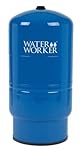
WaterWorker 25009 20 Gal
- 20-gallon vertical tank
- Butyl diaphragm
- Polypropylene liner
- 5-year warranty
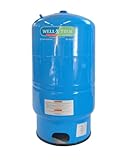
Amtrol WX-202 20 Gal
- 20-gallon steel tank
- Virgin polypropylene liner
- Hoop ring seal
- 7-year warranty

Amtrol WX-203 32 Gal
- 32-gallon capacity
- Freestanding steel stand
- Deep-drawn domes
- 7-year warranty
Quick Overview: 8 Well Pressure Tanks Compared Side by Side
All eight tanks below are NSF listed or built to ANSI/NSF Std 61 for drinking water contact, and every one of them uses a sealed pressure vessel design rather than the old air-over-water bladderless layout.
| Product | Specs | Action |
|---|---|---|
| WaterWorker 25009 20 Gal Vertical |
|
Check Latest Price |
 WaterWorker 153921 44 Gal WaterWorker 153921 44 Gal |
|
Check Latest Price |
| Amtrol WX-202 20 Gal |
|
Check Latest Price |
| Amtrol WX-203 32 Gal Stand |
|
Check Latest Price |
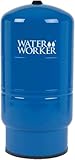 WaterWorker HT-30B 30 Gal WaterWorker HT-30B 30 Gal |
|
Check Latest Price |
 Wellmate WM-6 19.8 Gal Wellmate WM-6 19.8 Gal |
|
Check Latest Price |
 Goulds V60 HydroPro 60 Gal Kit Goulds V60 HydroPro 60 Gal Kit |
|
Check Latest Price |
 WaterWorker HT-32B 32 Gal WaterWorker HT-32B 32 Gal |
|
Check Latest Price |
How We Picked: Five Criteria We Applied
We did not rank these tanks on appearance or brand name. Every product here was assessed against the same five tests, and a tank that failed hard on any one of them dropped out of consideration even if it was well reviewed.
1. Drawdown that matches real pump flow. We converted each nominal capacity into estimated usable gallons on both a 30/50 and a 40/60 switch, then checked whether the result clears the one-minute minimum run time for common pump sizes.
2. Water-contact materials that stay out of the water. A polypropylene liner, a butyl diaphragm or bladder, and a shell that does not flake or peel matter more than any cosmetic finish.
3. Physical fit. Diameter, height, empty weight, and whether the tank needs a stand all decide whether a swap is a one-person afternoon job or a two-person job in a crawlspace.
4. Corrosion tolerance. Steel shells are fine in neutral water and wrong in low-pH, sulfate-heavy, or salt-air locations. We flagged which tank to buy for those environments.
5. Warranty and parts reality. Warranty length in years, plus whether replacement air cells and tees are actually available, tells you more about year-ten ownership than the specification sheet does.
Owner feedback carried real weight, particularly on transit damage and pre-charge handling, because those two issues generate most of the complaints in this category.
1. WaterWorker 25009 (20 Gal) – Best Overall for Most Homes
WaterWorker 25009 20Gal Vertical Well Tank, 20 Gallon, Blue
20 gal vertical
Butyl diaphragm
Polypropylene liner
15 x 15 x 32 in
12.2 kg
5-year warranty
Pros
- Butyl diaphragm and polypropylene liner keep water off the steel shell
- NSF listed under ANSI/NSF Std 61
- Deep-drawn domed shell rated twice as strong as rolled steel
- 5-year warranty with accessible replacement parts
- Metal base with 1 inch inlet
Cons
- Arrives in a bare cardboard box so dents and bent bases are common
- Pre-charge must be set to match your pressure switch before install
- Bottom cast-metal elbow is a long-term corrosion point
This is the tank we install in our own mental default: a 20-gallon vertical unit that handles a typical two or three bathroom home without drama. It carries a 4.6 star average across more than 1200 owner reviews, one of the two largest review pools in this roundup, and that volume matters because the pattern in those reviews is remarkably consistent.
Owners keep describing the same install. The tank is 15 inches square at the base, stands 32 inches tall, and weighs about 12.2 kg empty, which is a manageable one-person lift for most homeowners working with a helper at the tee.
The one complaint that repeats far more than any other is packaging. This tank arrives in a plain cardboard box with no foam, so reviewers routinely report cosmetic dents and bent bases on arrival. The important part is that almost none of those owners report a performance problem afterward, which tells you the shell survives the trip even when it looks scuffed.
The second repeated theme is the pre-charge. The tank is factory charged to 25 PSI, and 25 PSI is not correct for either of the common switches. If you leave it alone, the bladder starts the day already compressed and you lose usable drawdown before the pump ever runs.
Drawdown and Where It Fits
A 20-gallon tank of this size yields roughly 5 to 6 gallons of usable water between pump cycles on a 30/50 switch, and somewhat more on a 40/60 pair because the wider pressure band squeezes more water out of the same air cushion. That lands it squarely in the range needed by a household of two or three people on a pump moving roughly 5 to 7 gallons per minute.
If your pump is a 10 GPM unit, a 20-gallon total volume is undersized and the pump will start often. Move up the ladder to the 30 or 32-gallon models later in this guide.
Diaphragm and Liner Build Quality
The water never touches the steel. A seamless butyl diaphragm flexes instead of stretching and creasing the way a bladder can, and a polypropylene liner sits between that diaphragm and the domed steel shell. The liner is the part that stops the tank from ever giving water a metallic taste, because polypropylene will not flake, chip, crack, or peel the way a painted steel interior eventually can.
The shell itself is deep-drawn rather than rolled, which the manufacturer rates at roughly twice the strength of a rolled shell of the same thickness. That matters most on the domes, where pressure stress concentrates.
Pre-Charge Setup and First Startup
Before you plumb anything, kill the pump at the breaker, open a faucet to bleed the system down to zero, then set the Schrader valve on top of the tank to 28 PSI for a 30/50 switch or 38 PSI for a 40/60 switch. That is the 2 PSI below cut-in rule, and it is the single step most often skipped.
After the tank is charged, shut the faucet, restore power, and let the pump fill until the switch cuts out. Then open a faucet slowly and note how long the pressure holds before the pump kicks back on. That interval is your real cycling frequency.
Who Should Skip It
If your water is acidic, sulfate-heavy, or you live within a few miles of salt water, the steel shell and the cast-metal bottom elbow are the wrong choice, and a composite tank is the better spend. If you need more than about six gallons of drawdown, this capacity is also too small.
One r/Plumbing poster described a 20-gallon well pressure tank that lasted 40 years in service, which is not unusual for a well-maintained diaphragm tank. That is a legitimate outcome for this design when the pre-charge is checked annually.
2. WaterWorker 153921 (44 Gal) – Best for 4+ Bathrooms and High-Flow Homes
WaterWorker 153921 44Gal Vertical Well Tank, 44 Gallon, Blue
44 gal vertical
Alloy steel with PP liner
Butyl diaphragm
22 x 23 x 36 in
5-year warranty
Pros
- 44 gallons is the largest capacity among the four vertical tanks here
- Same proven diaphragm and liner design as the 20-gallon model
- NSF listed under ANSI/NSF Std 61
- Deep-drawn shell rated at twice rolled-steel strength
Cons
- Footprint and empty weight rule out tight crawlspace installs
- Pre-charge must be set to the installed pressure switch
- Minimal packaging leads to cosmetic transit damage
This is the capacity answer for a busy house. At 44 gallons it stores roughly 12 gallons of usable water between pump cycles, which is enough headroom for four or more bathrooms, a stacked laundry pair, and a dishwasher running at the same time without the pump restarting between fixtures.
It also holds the highest review count of any tank we looked at, at 1226 owner ratings averaging 4.6 stars. Owners installing it are almost always upsizing from a smaller tank in the same product line, and the feedback reads like the 20-gallon version scaled up rather than a different design.
Watch the footprint before you commit. The base measures 22 by 23 inches and the tank stands 36 inches tall, so it needs a noticeably wider pad than the 15-inch models. Households with an existing 20-gallon tank on a small concrete block in a crawlspace frequently find the new tank will not fit where the old one sat.
That is a real constraint and worth measuring before ordering. If the clearance is short, the 32-gallon models in this guide are the safer upgrade, or you can plan on a different mounting arrangement in your mechanical room.
Drawdown for Whole-House Demand
On a 40/60 switch, a 44-gallon tank delivers drawdown in the low teens. On a 30/50 switch the band is narrower, so expect a little less. Either way, the number comfortably clears the one-minute minimum run time for pumps up to about 12 GPM, which covers the majority of residential submersible installations.
Owners with large households consistently report fewer pump starts and steadier pressure at fixtures far from the well. That translates directly into longer pump, switch, and check valve life.
Why Capacity Alone Is Not the Whole Story
A veteran r/Plumbing contributor put it plainly: bigger is not better, and the best tank is the one properly sized for your system. Forty-four gallons is generous for a two-bathroom home with a 5 GPM shallow well pump, and in that case you are paying for capacity you will never draw on while adding a footprint you may not have.
Match the drawdown to pump GPM and household demand together. If your pump nameplate says 5 GPM and you have two bathrooms, a 20-gallon tank is already adequate.
Installation Notes and Lifespan
Plan on a two-person handling job. Empty weight and overall bulk make this awkward to shoulder down a cellar stairs alone, and the pre-charge step is the same as on the smaller models: set it to 2 PSI below cut-in with a tire gauge before the pump is re-energized.
With a properly maintained butyl diaphragm in neutral water, expect roughly 7 to 12 years of service, and considerably more if you keep the tank out of standing humidity and check the charge once a year.
Where It Falls Short
Corrosive water rules it out. A steel shell and steel fitting in low-pH or high-sulfate water will eventually fail at the connection, and that is exactly the situation where a fiberglass composite tank earns its place.
Its size also makes it a poor choice for a vacation home or a seasonal cabin that draws water only a few weeks a year. Those systems are better served by a small tank that is easy to drain and store.
3. Amtrol WX-202 (20 Gal) – Highest Rated Steel Tank We Tested
Amtrol WX-202 Well Pressure Tank
20 gal vertical
High-strength steel shell
PP inner liner
Hoop ring seal
23 lb
7-year warranty
Pros
- Highest average rating in this roundup at 4.7 stars
- Virgin polypropylene inner liner will not crack chip or flake
- Positive hoop ring seal secures the diaphragm and liner
- Compact 15-inch footprint suits tight mechanical rooms
- 7-year manufacturer warranty
Cons
- Tank tee union and valves are sold separately
- Pre-charge must be verified against your pressure switch
- A minority of owners report diaphragm failure near the decade mark
When we wanted the strongest steel tank in the category, this is the one. The WX-202 averages 4.7 stars across 656 reviews, the highest rating of the eight tanks we compared, and the Well-X-Trol name carries the kind of recognition that makes it the first name a plumber reaches for.
At 20 gallons it covers the same ground as our editor’s choice, so the decision between the two comes down to build detail and warranty length rather than capacity. This tank is 15 inches square, 31 inches tall, and weighs 23 pounds empty.
The differentiator is the positive hoop ring seal that locks the diaphragm and liner to the shell. On paper that is a more positive mechanical capture than a simple clamp, and it is the feature owners point to when they explain why this tank keeps performing after a decade.
The catch is what arrives in the box. The tank itself, yes, but no tank tee, no union, and no valves. If you are starting from bare pipe you will need a brass tee kit and a union to complete the install, and owners mention this as the most common surprise.
Where It Sits Against the WaterWorker 25009
Both are 20-gallon vertical steel tanks of almost identical footprint, so they are direct substitutes. The Amtrol runs a longer warranty at seven years against five, and the ring seal is a genuine construction upgrade. The WaterWorker offers a pre-fitted base and a wider published feature set, and its review pool is nearly twice as large.
For a first-time replacement where a plumber is handling the parts list, either works. For a tank you expect to keep for the life of the well, the seven-year warranty is the tiebreaker.
Pre-Charge and Commissioning
Treat the pre-charge as a required install step, not an optional refinement. With the pump off and the system bled to zero, set the top Schrader valve to 28 PSI on a 30/50 switch or 38 PSI on a 40/60. Owners who skip this and then blame the tank for weak pressure are the most common source of confusion in this category.
After charging, restore the pump and let it fill to cut-out before opening a faucet. That first fill is when the diaphragm seats fully.
Common Failure Reports
A minority of reviews describe diaphragm failure and waterlogging inside roughly ten years, and one detailed account ties a failure to an unrelated damaged submersible pump. That is a small share of 656 reviews, and the same reports show up on every steel tank in this guide because a butyl diaphragm has a service life.
The practical takeaway is to check the air charge once a year. A charge that has dropped well below the cut-in setting is the earliest warning you will get.
Best For and Not For
Choose this tank for a two or three bathroom home, a tight mechanical room where 15 inches of width is all you have, and a household that values the longest warranty in the comparison. Skip it if you are replacing a bladderless air-over-water tank in corrosive water, or if you need more than about six gallons of drawdown.
If you already own a good brass tee kit from the failed tank, this is often the cleanest swap. If you do not, budget for the fittings.
4. Amtrol WX-203 (32 Gal) – Best Mid-Size Upgrade With a Freestanding Stand
Amtrol WX-203 Well-X-Trol Stand Well Water Tank
32 gal vertical
Freestanding steel stand
Deep-drawn domes
1 x 15 x 47 in
31 lb
7-year warranty
Pros
- 32 gallons yields noticeably more drawdown than any 20-gallon tank
- Freestanding stand raises the fitting to a workable height
- Deep-drawn domes are twice as strong as rolled steel while staying light
- Steel system connection tolerates aggressive water
- Double-boxed packaging protects the tank in transit
Cons
- Tall 47-inch format needs real vertical clearance
- Stand sheet metal can arrive slightly bent at the fitting cut-out
- Adapter nipple and coupling are often needed to match existing plumbing
This is the tank we recommend for a household that has outgrown 20 gallons but does not need 44. A 32-gallon vessel gives you roughly 9 gallons of usable water between pump cycles, which is the sweet spot for three to four people on a 10 GPM submersible pump.
What separates it from the generic 32-gallon steel tank is the freestanding stand. The tank sits in a welded steel frame that holds it off the floor and lifts the inlet fitting to a height you can actually work on with a wrench instead of lying on a wet pad.
Packaging is another point in its favor. Owners frequently mention the tank arriving in perfect condition, which is a genuine change from the bare-box handling that produces dent reports on other models in this roundup.
The geometry is the trade. At 1 by 15 by 47 inches, this is the tallest tank we recommend, and headroom is the constraint to check first in a low-ceiling mechanical room or a crawlspace with joists close to the floor.
Drawdown Against the 30-Gallon Alternative
Both the WX-203 and the WaterWorker HT-30B sit in the same band, and the difference is small. Thirty-two gallons yields a little more usable water than the 30-gallon model’s 26-gallon stated capacity, and the Amtrol brings a seven-year warranty and a stand base.
Choose the WX-203 when fitting height is available and you want the standing base. Choose the 30-gallon model when you are working in a space where every inch of height matters and you already have a tee and elbow that fit.
Deep-Drawn Domes and the Steel Connection
Deep-drawn domes are stamped rather than rolled and joined, which concentrates the metal where it is strongest. The manufacturer rates them at about twice the strength of a rolled shell of comparable thickness while keeping weight down, and at 31 pounds empty the tank is manageable with two people.
The steel system connection is specified to withstand aggressive water, which is a meaningful claim for households with hard water or mildly acidic chemistry. It is not a substitute for a composite shell in genuinely corrosive conditions.
Installation Notes and Adapter Parts
Expect to need an adapter nipple and coupling to reach an existing tee, which is the most common extra part on this install. Set the pre-charge to 2 PSI below cut-in before the pump is energized, and let the tank fill fully before the first faucet is opened.
One recurring minor complaint is slight bending in the stand sheet metal at the fitting cut-out. It is usually straightenable with a wrench and rarely affects the seal.
Who This Tank Is For
This is the default pick for a family of three or four, a home with a 10 GPM pump, and any property with irrigation that shares the same well. It also suits anyone who wants a smaller cycling interval than a 20-gallon tank without moving up to a 44-gallon footprint.
Skip it in a crawlspace with low headroom, and consider a composite shell instead if your well water runs acidic or you are near the coast.
5. WaterWorker HT-30B (30 Gal) – Budget Pick in the Middle of the Ladder
WaterWorker HT-30B Vertical Pressure Well Tank, 30-gallon tank with 26-gallon capacity, Blue
30 gal nominal / 26 gal usable
Butyl diaphragm
Steel with PP liner
15 x 15 x 39 in
41 lb
5-year warranty
Pros
- 26-gallon usable capacity fills the gap between 20 and 44 gallon models
- 15-inch diameter is narrow enough for cramped mechanical spaces
- Welded base with pre-fitted 1 inch FNPT elbow accepts existing tee assemblies
- Made in the USA
Cons
- Factory pre-charge does not reliably match the installed pressure switch
- Occasional models arrive dented from transit
- Diaphragm life reported as short as six to seven years in humid uncovered installs
This is the value slot in the roundup and the tank we would put in a home that has outgrown 20 gallons without the budget or the floor space for 44. It is listed at 30 gallons nominal with 26 gallons of stated usable capacity, and it is narrow enough at 15 inches across to fit where many larger tanks will not.
Owners highlight one feature more than any other: the welded base with a pre-fitted one-inch FNPT elbow. Several reviewers say it accepted their existing tee assembly without modification, which removes the most tedious part of a tank swap.
The trade for that narrow footprint is height. At 39 inches tall and 41 pounds empty, it is the tallest and heaviest tank relative to its capacity in this roundup, so check your headroom before ordering.
It also carries the lowest average rating of the three WaterWorker steel tanks here, at 4.4 stars across 346 reviews, and the reviews reflect that. The complaints cluster around transit dents and diaphragm life in humid, uncovered installations.
Where the 30-Gallon Size Actually Wins
The 15-inch diameter is the deciding factor in a narrow mechanical room or a well house with a low platform. A 32-gallon tank at 16 inches or a 44-gallon tank at 22 by 23 inches simply will not sit on the same pad.
On drawdown, the 26-gallon stated capacity puts this between the 20-gallon and 32-gallon models, which works for a household of three or four on a pump in the 7 to 10 GPM range.
Pre-Charge Is Not Optional Here
Owners repeatedly stress that the factory pre-charge should not be trusted and should be set to match the installed switch. Set it to 28 PSI for a 30/50 or 38 PSI for a 40/60, using a tire gauge on the top Schrader valve with the system bled down.
This is worth repeating for any tank in this guide, but the feedback on this model in particular is consistent enough to treat it as a required step on day one.
Humid and Uncovered Installs
One detailed review describes a failed diaphragm after roughly seven years in a humid Florida well pit. That is a realistic lifespan figure for a butyl diaphragm in a damp, poorly ventilated enclosure rather than a defect.
If your tank lives in an open pit or an unheated shed, expect the short end of the service range and consider a composite shell, which owners on r/Plumbing recommend repeatedly for that reason.
Verdict and Best Fit
Pick this tank for a three or four person home, a narrow installation space, and a plumber or helper who can manage a 41 pound tank. It delivers most of the benefit of a 32-gallon unit in a slimmer footprint.
Pass on it if you are coastal, if your water runs low in pH, or if no one can help with the lift.
6. Wellmate WM-6 (19.8 Gal) – Best for Corrosive or Coastal Well Water
Wellmate WM-6 / WM0075 QC Captive Air and Retention Fiberglass Tank, Quick Connect (19.8 gal / 75 LTR.)
19.8 gal / 75 L
Fiberglass composite shell
Quick connect air cell
16 in diameter
26 lb
Pros
- Composite shell will not rust in high-sulfate or coastal well water
- Higher drawdown than comparably sized steel tanks
- Quick connect replaceable air cell services in the field
- 26 pounds is a realistic one-person handling weight
Cons
- Smallest review pool of these picks at 141 reviews
- Composite shell costs more than a comparable 20-gallon steel tank
- Fiberglass can crack if the tank is dropped during handling
This is the answer for water that eats steel. A fiberglass composite shell will not corrode in the way a steel tank does, and owners with high-mineral or coastal wells report that these units keep working where steel tanks eventually fail at the fitting.
At 19.8 gallons and a 16-inch diameter, it is the same capacity class as the 20-gallon steel tanks. What it does better is drawdown per gallon, because the composite air cell geometry yields more usable water than a comparably sized steel diaphragm tank.
Quick Connect Air Cell Serviceability
The replaceable air cell is a quick connect design, which means the pressure cell can be swapped without draining and dismantling the whole unit. On a diaphragm tank the repair path is often a full teardown, so this is a meaningful serviceability difference for a homeowner who intends to keep the tank long term.
An extended labor warranty option is also available to homeowners, which is worth asking about if you plan to stay on the property.
Handling and Installation
At 26 pounds empty and 16 inches in diameter, this is the tank most likely to be a genuine one-person install in this roundup, which is a repeated theme in owner feedback and on plumbing forums. Fiberglass being light relative to its strength is the reason r/Plumbing users recommend Wellmate tanks so consistently.
The counterpoint is fragility during handling. A dropped composite shell can crack, so set it on padding and get it into position before you tighten the union.
Where Composite Wins and Where It Does Not
Composite wins on low-pH water, sulfate-heavy wells, and coastal or salt-air homes, and it wins on handling weight. The failure point in a steel system is usually galvanic corrosion at the connection, and a non-metallic shell removes that path entirely.
Steel still wins on cost in neutral water. If your well chemistry is ordinary and you are on a tight budget, a 20-gallon steel tank with a five-year warranty is the more sensible purchase.
What the Smaller Review Pool Means
With 141 reviews at a 4.5 average, this tank has the thinnest long-term data of the eight, so expect less evidence on decade-plus durability than the steel models provide. Reviewers in high-mineral wells are its strongest advocates; owners with ordinary water are largely silent on it.
That pattern matches the physics. The composite shell matters most exactly where steel fails, and that is where you will find the enthusiastic feedback.
7. Goulds V60 HydroPro Kit (60 Gal) – Best Box if You Are Replacing a Goulds V60
Goulds V60 HydroPro pressure tank With or Without brass tank tee kit + UNION + Valves Square D fsg2 40-60 (V60Tank + 1″x11″ Tee Kit + Union + Valves)
60 gal HydroPro tank
1 in by 11 in brass tee kit
Union and valves
Square D FSG2 40-60 switch
Pros
- Kit includes tank plus tee kit union valves and a 40-60 pressure switch in one box
- Direct replacement for the widely deployed Goulds V60
- Arrives factory pressurized so swapover takes about half an hour
- Lead-free brass tank tees and non-corroding plastic base
- Union connections make future servicing straightforward
Cons
- Fixed 40-60 switch and a 30-50 must be requested separately
- Bulk configuration is wasteful if you already own tees and a switch
- Smallest sales footprint of the picks in this roundup
The largest capacity in this roundup comes bundled, and that bundle is the entire point. Instead of a bare tank, you get the 60-gallon HydroPro vessel, a one-inch by eleven-inch brass tank tee kit, a union, valves, and a Square D FSG2 40/60 pressure switch in a single package.
For most homeowners the missing parts list is what turns a tank swap into an afternoon of hunting through a plumbing aisle. This kit removes that step, and owners describe the changeover as roughly a half-hour job because the tank arrives factory pressurized.
This is specifically a replacement path for homes that already run a Goulds V60 from the early 2000s. If that is your situation, the geometry and the fittings are designed to go back into the same footprint, which removes the clearance problem that trips up people upsizing from other brands.
If you do not own a V60, the bundle is partly wasted. You may already have a serviceable tee, union, and switch, in which case a plain tank is the more efficient purchase.
What 60 Gallons Actually Buys You
A 60-gallon vessel of this class delivers drawdown in the mid teens, which is well beyond what a typical two or three bathroom household needs. It earns its place in a home with four or more bathrooms, a whole-house irrigation zone, or a pump that runs at 12 GPM or more.
It also means fewer pump starts per day, and pump starts are what wear out the motor, the pressure switch, and the check valve. Owners with high-demand systems report noticeably steadier pressure across the whole house.
The Pressure Switch Question
The bundled switch is a Square D FSG2 set at 40/60. That is a good modern setting with a wider band than 30/50, and it produces more drawdown from the same tank. If your existing system is on 30/50, the manufacturer will supply a 30-50 switch on request, but you need to ask for it.
Whichever switch you run, the tank pre-charge should sit at 2 PSI below cut-in, which is 38 PSI for the 40/60 setting here.
Installation Notes and Serviceability
The union connections are a quiet but real advantage. When the tank eventually needs to come out for a bladder replacement, a union means you spin it off rather than cutting pipe, which turns a slow job into a short one.
The tee kit is lead-free brass and the tank base is a non-corroding plastic, which matters more than it sounds in a damp well house. The tank carries a five-year warranty.
Who Should Buy the Kit
Buy it if you are replacing a Goulds V60, if you are building a new well system and want tank, tees, valves, and switch from one source, or if a high-demand household needs drawdown in the mid teens. It is also a good fit for a water treatment pressure vessel application that needs generous stored volume.
Skip it if you already have sound tees and a working switch, or if 60 gallons is far more drawdown than your pump and household can ever use.
8. WaterWorker HT-32B (32 Gal) – Best Value With a Same-Size Swap Footprint
Water Worker HT-32B Well Tank, 32 GAL Capacity, 1 in FNPT
32 gal steel vertical
1 inch FNPT connection
Air pressure powered storage
Mid-size footprint
Pros
- Least expensive 30-plus gallon steel option in this roundup
- 1 inch FNPT connection matches common well pump plumbing
- Owners replacing an identical older unit report it fits the same footprint
- Steel construction suited to standard residential wells
Cons
- Lowest average rating here at 4.3 stars with an 11 percent one-star share
- Brand listing and published weight and dimension values are inconsistent
- Steel shell is wrong for corrosive or sulfate-heavy water
At 32 gallons with a one-inch FNPT connection, this is the lowest-cost way into the mid-size capacity class, and for a household replacing a tank of the same size in the same spot it can be a clean like-for-like swap.
The feedback is genuinely mixed, and we would rather show you that than smooth it over. Owners who replaced an identical older unit report acceptable performance and an easy fit, while the one-star share of 11 percent is the largest of any tank in this comparison.
Two practical warnings. First, the listing brands this tank inconsistently between Amtrol and Water Worker, which makes it unclear who owns the fit and who handles support. If the fit is wrong, that ambiguity is what you will be dealing with.
Second, the published weight and dimension values on the listing do not match the physical tank, so do not plan a crawlspace install from the numbers on the page. Measure a comparable tank you already own.
Drawdown in the 32-Gallon Class
As a 32-gallon steel tank, it delivers roughly 9 gallons of usable water between cycles on a 40/60 switch. That is the same usable range as the Amtrol WX-203 and a little more than the 30-gallon model, which puts it squarely in the right band for a family of three or four on a 10 GPM pump.
Set the pre-charge to 2 PSI below cut-in before energizing the pump. Owners repeatedly flag this as the step they had to correct after install.
Why the Rating Is Lower
A 4.3 average across 319 reviews is not a failure, but it is a signal that the experience is more variable than the models above it. Common threads in the negative reviews are the inconsistent branding, the inaccurate published specifications, and long-term diaphragm durability.
Owners who replaced an identical unit and kept the same footprint are the group that reports the best results, which suggests the tank performs predictably when the install matches the design intent.
When the Budget Pick Is the Right Call
Choose it when you need to move from 20 gallons to 32 gallons without moving to a stand-mounted design, when you already have a matching tee and FNPT connection, and when budget is the deciding factor for a standard residential well with neutral water.
Pass on it if your water is corrosive, if support and warranty ownership matter to you, or if the tank is going into a crawlspace where the real dimensions matter and the listing will not tell you.
How to Size a Well Pressure Tank Without Guessing
Sizing a well pressure tank comes down to one number, and that number is not the gallon capacity on the label. It is the minimum drawdown, and it is calculated from your pump.
Minimum drawdown (gallons) = pump flow rate in GPM multiplied by one minute. A 10 GPM pump needs at least 10 gallons of drawdown. Anything less and the pump starts too often for its own good.
To get from that minimum drawdown to a tank size, use the relationship between tank volume, air pre-charge, and the pressure band. A common rule of thumb is that a tank delivers roughly a quarter to a third of its nominal volume as usable water, which is why a 32-gallon tank gives you about 9 gallons and a 44-gallon tank gives you about 12.
Use this lookup list to get close, then confirm with the switch differential:
5 GPM pump, 1 to 2 bathrooms, cabin or small home: a 20-gallon tank is enough. Look at the WaterWorker 25009 or the Amtrol WX-202.
7 to 10 GPM pump, 2 to 3 bathrooms: a 20-gallon tank still works, but a 30 or 32-gallon tank gives a noticeably longer interval between starts. The Amtrol WX-203 is the middle rung.
10 GPM pump, 3 to 4 bathrooms: you want roughly 10 gallons of drawdown, so move to 32 gallons or higher. The 44-gallon model covers a fourth bathroom with margin.
12 GPM or larger pump, 4 or more bathrooms, or a home with irrigation: 44 gallons minimum, and 60 gallons if the irrigation zone shares the well. Tank sizing also matters if you are planning a lawn irrigation project, since both draws pull from the same pump.
Any pump, acidic or sulfate-heavy water: skip the steel shells and choose a composite. The Wellmate WM-6 is the corrosion answer in this roundup.
If you want the pump side of the equation first, our guide to shallow well pumps for small farms walks through how flow rate is chosen for higher-demand properties.
The Pre-Charge Rule and Why It Decides Your Drawdown
Set the tank’s air charge to 2 PSI below the cut-in pressure on your switch. On a 30/50 switch that is 28 PSI. On a 40/60 switch that is 38 PSI. On a 50/70 switch that is 48 PSI.
Too little air and the bladder expands against the shell wall, which shortens its life and cuts your usable volume. Too much air and the tank gives up drawdown before the switch ever closes. Tanks that arrive at a low transit charge, as several in this roundup do, are unusable out of the box until you correct the setting.
To check it, kill the pump at the breaker, open a faucet until the system is at zero, then read and set the Schrader valve on top of the tank with a tire gauge. Reading close to zero, or seeing water come out of the valve, means the bladder has failed and the tank is waterlogged.
Is Oversizing a Mistake?
Oversizing is not dangerous to your plumbing, because your pressure switch, not your tank, sets the maximum system pressure. A larger tank simply takes longer to drain, which means fewer pump starts and longer pump life.
But oversized means wasted money and a bigger footprint, and a drawdown that far exceeds pump GPM adds no benefit. Size the drawdown to the pump first, then let household size decide how far above that line you want to sit.
Well Pressure Tank or Water Heater Expansion Tank?
These are different products and the confusion is common on plumbing forums. A well pressure tank sits on the cold well line before the pressure switch, stores water, and feeds the pump. A water heater expansion tank is a small tank on the hot water line that absorbs thermal expansion in a closed system.
If your well pump runs and your faucets lose pressure, you need a well pressure tank. If you are adding a backflow preventer or a pressure-reducing valve and now have no thermal expansion tank on the hot side, you need an expansion tank. They are not interchangeable.
Before you order, note whether the tank you are removing is bladderless air-over-water. Older galvanized tanks from decades past have no bladder, and replacing one with a sealed diaphragm tank is an upgrade as well as a repair.
What to Check Before a Bigger Tank Arrives
Measure the diameter of the old tank and the available pad. A 20-inch diameter tank will not go where a 16-inch one sat, and that is the most common reason an upgrade is called off before the install date.
Measure vertical clearance, check the doorway and stair width for the empty weight, and decide who is doing the lift. A 44-gallon tank at that bulk is a two-person job. Related planning for larger water volumes is covered in our water storage tanks for greenhouse irrigation guide if you are planning broader storage alongside the well.
Waterlogged, Short Cycling, and Other Signs Your Tank Is Done
Short cycling is the symptom that brings most people to this category, and it is frequently misdiagnosed as a dead pump. The order you check things in matters, because forums show owners replacing pumps when a leaking check valve was the real fault.
Check the check valve first. A leaking check valve lets water flow back down the well, which drains the tank and makes the pressure switch see a low-pressure condition immediately. This is a more common cause of rapid cycling than a failed tank.
Check the air charge second. If the charge is well below 2 PSI under cut-in, add air with a tire gauge. This is a ten-minute fix that solves the problem outright.
Check the waterlogged bladder third. Bleed the system to zero, then read the Schrader valve. Zero or near zero means the bladder has ruptured. Water dribbling from the valve confirms it. For a tap test, shut the pump off, open a faucet, and listen for a sputter or gurgle as air pushes through a failed bladder.
Check the pressure switch fourth. A switch that is out of adjustment or set too close to cut-in will cycle the pump regardless of how good the tank is.
Size the tank last. If all four of the above check out and cycling continues, the tank is undersized for your pump. That is when a larger drawdown or a constant-pressure pump solves it.
One r/Plumbing user traced constant short cycling to a leaking check valve rather than a tank failure, and a single well tank in that thread ran 40 years. The lesson is that a tank in good condition can be much older than most people assume, as long as the charge is maintained.
Check the air charge once a year, and treat any reading that has dropped by 5 PSI or more as a maintenance item rather than a replacement trigger.
Diaphragm vs Bladder vs Composite: Which Shell Fits Your Water
Diaphragm tanks use a flat or cone-shaped butyl diaphragm that flexes rather than stretches. Because the diaphragm does not crease the way a bladder does with repeated cycling, this is the construction in most of the picks in this guide and the one we recommend for the widest range of homes.
Bladder tanks use an inflated rubber balloon inside the shell. Bladders are simple and effective, but they expand and contract against the shell wall, and a pre-charge that is too low accelerates the creasing and eventual failure. Most bladderless legacy tanks are an older category entirely, where air sits directly on the water.
Composite or fiberglass tanks replace the steel shell with a fiberglass shell that cannot rust. They weigh less than steel of the same size, service more easily when the air cell is replaceable, and are the right answer in low-pH water, high-sulfate wells, and coastal or salt-air homes. They cost more and can crack if dropped during handling.
On liner materials, polypropylene and polyolefin liners are the standard, because they will not flake, chip, crack, or peel, and they do not impart taste or odor to the water. Every tank we recommend uses one.
On connections, material choice changes the corrosion picture. Stainless steel fittings resist galvanic attack, and the Amtrol WX-202 is built with stainless steel in its material specification. Plain steel system connections are acceptable in neutral water and the Amtrol WX-203 is specified to tolerate aggressive water, but galvanic corrosion at the fitting is the usual long-term failure point in a corrosive well.
For planning broader water supply around your well, our rainwater tanks for home gardens guide covers the storage side of a household water system.
Frequently Asked Questions
What size well pressure tank do I need?
Size it by drawdown, not by the gallon number on the label. Multiply your pump flow rate in GPM by one minute to get the minimum drawdown you need, then choose a tank that delivers it. As a practical guide, a 5 GPM pump on a one or two bathroom home is served by a 20-gallon tank, a 7 to 10 GPM pump on three or four bathrooms wants 30 to 32 gallons, and pumps above 10 GPM or homes with four or more bathrooms want 44 gallons or more.
Is a 20 gallon well pressure tank big enough?
For a two or three bathroom home on a modest pump, yes. A 20-gallon tank holds roughly 5 to 6 gallons of usable water between pump cycles, which is enough for most households as long as the pump moves about 5 to 7 GPM. If your pump is 10 GPM or larger, move up to 30 or 32 gallons so the pump does not start every few minutes.
Is it better to have a larger well pressure tank?
Yes, up to a point. A larger tank means more drawdown, longer intervals between pump starts, and longer pump, switch, and check valve life. Oversizing is not dangerous, because the pressure switch sets your maximum system pressure. But extra capacity you never draw on is wasted cost and floor space, and drawdown should track your pump’s GPM rather than house size alone.
Which brand of well pressure tank is considered the best?
Amtrol Well-X-Trol is the industry reference brand and the one most plumbers reach for, with a seven-year warranty on the WX-202 and WX-203 models and the highest average rating in our comparison. WaterWorker is the best value, with the largest owner review pool and a five-year warranty. For corrosive or coastal water, Wellmate composite shells are the right answer because they cannot rust.
What PSI should my well pressure tank be set at?
Set the air pre-charge to 2 PSI below your pressure switch’s cut-in pressure, which is 28 PSI for a 30/50 switch, 38 PSI for a 40/60 switch, and 48 PSI for a 50/70 switch. Kill the pump at the breaker, bleed the system to zero by opening a faucet, then read and set the Schrader valve on top of the tank with a tire gauge.
Is a 30/50 or 40-60 pressure switch better?
A 40/60 switch is better for most modern systems because the wider pressure band between cut-in and cut-out squeezes more usable water out of the same tank. A 30/50 switch delivers lower pressure at the fixture but may suit older plumbing or fixtures rated for lower working pressure. Whatever you run, set the tank pre-charge to 2 PSI below the cut-in value.
What causes a well pressure tank to short cycle?
Five causes account for nearly every case: an undersized tank, a waterlogged bladder, a leaking check valve, a failing pressure switch, or a switch set too close to cut-in. A leaking check valve is the most commonly missed, because it drains the tank and makes the switch read low pressure immediately. Check the check valve and the air charge before you replace a pump.
How do I stop my water pump from short cycling?
Work in this order. First, test the check valve for leakage. Second, check and correct the tank’s air pre-charge with a tire gauge. Third, test the bladder for waterlogging by bleeding the system to zero and reading the Schrader valve. Fourth, verify the pressure switch is adjusted and not set too close to cut-in. Only after all four check out should you size up the tank or consider a constant-pressure pump.
How do I tell if a well pressure tank is waterlogged?
Turn the pump off at the breaker, open a faucet until the system is fully depressurized, then read the Schrader air valve on top of the tank with a tire gauge. Zero or near zero PSI, or water coming out of the valve, means the bladder has failed. For a tap test, leave the pump off and open a faucet slowly, listening for a sputter or gurgle as air pushes through a ruptured bladder.
Are fiberglass well pressure tanks better than steel?
In corrosive water, yes. Composite shells cannot rust, which matters with low-pH water, high sulfate levels, and coastal or salt-air homes, and they weigh less so a single person can usually install one. Steel is still the better value in neutral water, where the corrosion path does not exist. The usual long-term failure point in a steel system is galvanic corrosion at the connection.
How long does a well pressure tank last?
A butyl diaphragm or bladder in neutral water typically lasts 7 to 12 years, and composite shells often outlast their rubber cells because the shell itself does not corrode. Check the air charge once a year, because a charge that has dropped by 5 PSI or more is an early warning. Replace immediately if the bladder is ruptured, regardless of the tank’s age.
Can I install a well pressure tank myself?
A same-size swap is a realistic two to four hour job for a confident homeowner with the right fittings, and swapping a tank for its identical replacement is the easiest case. Upsizing, relocating, or fitting a horizontal tank in a crawlspace is professional work. Whatever you do, budget time to set the air pre-charge correctly, because that is the step people most often get wrong.
Which Well Pressure Tank Should You Buy?
If you have two or three bathrooms and a pump in the 5 to 7 GPM range, start with the WaterWorker 25009. It carries the largest owner review pool in this roundup, the footprint fits most well houses, and the 20-gallon capacity matches what your household will actually draw.
If you want the highest-rated steel tank and the longest warranty, the Amtrol WX-202 is the pick, and budget separately for the tee kit. For a household of three or four on a 10 GPM submersible pump, the Amtrol WX-203 with its freestanding stand is the right middle rung. If you have four or more bathrooms, high flow, or irrigation sharing the well, move up to the 44-gallon WaterWorker, or the 60-gallon Goulds kit if you are replacing an existing V60 and want the fittings included.
If your water is acidic, sulfate-heavy, or you live near salt water, choose the Wellmate WM-6 composite and stop worrying about galvanic corrosion at the fitting.
Whichever tank you land on, set the pre-charge to 2 PSI below your switch’s cut-in pressure, check it once a year with a tire gauge, and remember that a tank cannot fix a leaking check valve. That is the step that will give you the longest service life from the best well pressure tanks for home wells in 2026, and it costs nothing but ten minutes.
Leave a Reply