

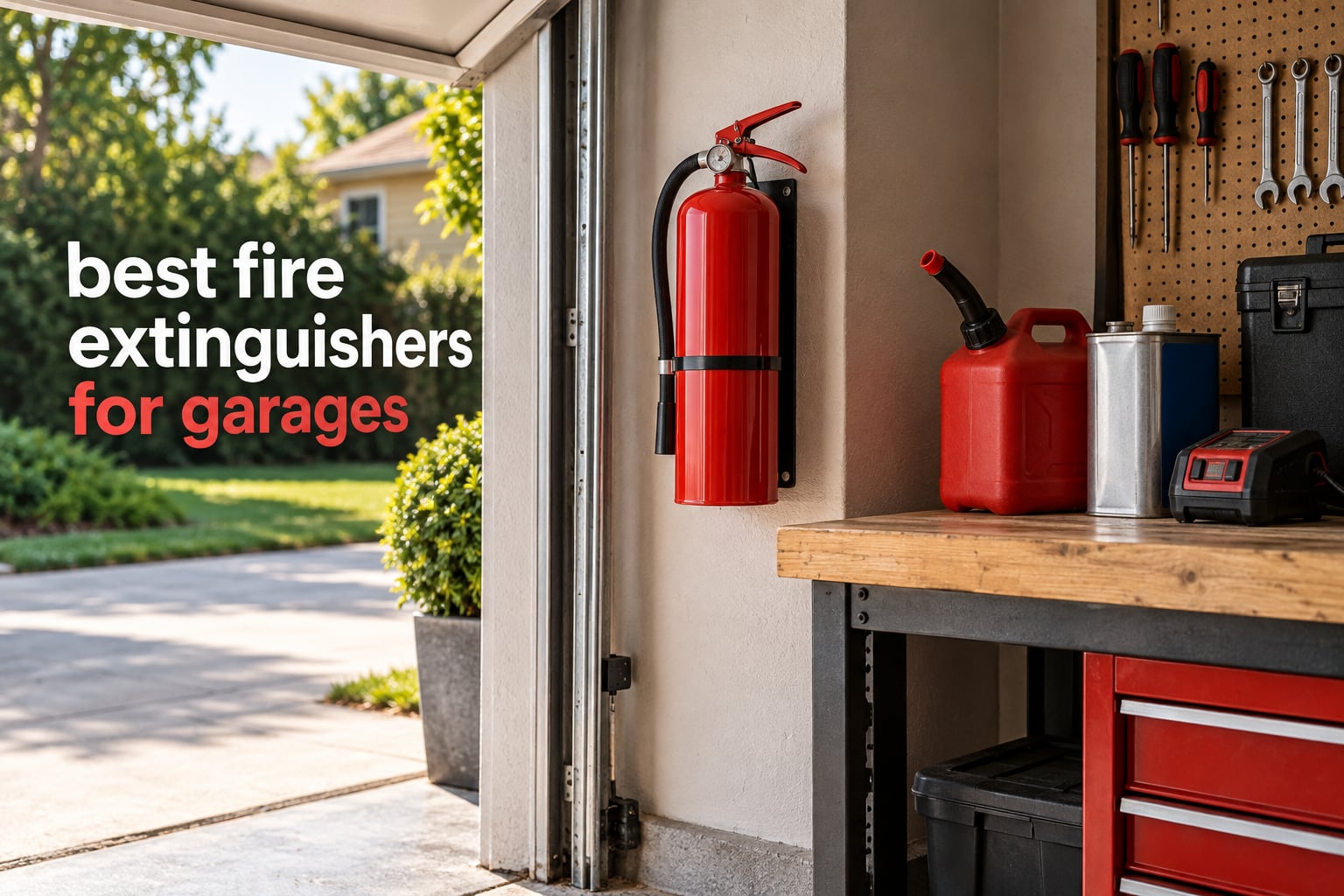
A UL listed ABC-rated dry chemical extinguisher is the right default for a garage – one rated at least 2A 10B:C, and ideally 3A 40B:C. That single unit covers ordinary combustibles like wood and cardboard, flammable liquids like gasoline and paint thinner, and energized electrical equipment like a charger or a power tool. My team has worked through the current crop of garage extinguishers rating by rating, mounting by mounting, and the ten picks below are the ones that survive a garage-specific look rather than a kitchen-shelf one.
The reason a garage deserves its own analysis is that its fuel load has almost nothing in common with a kitchen. Gasoline cans, a lawn mower with a fuel line, paint thinner, propane, aerosol cans, sawdust and lithium-ion tool batteries all live in the same square footage, often within arm’s reach of a vehicle. A fire there develops fast, and it develops Class B and Class C as often as Class A.
What I checked on every unit: the UL rating string, the actual agent weight, the discharge time and stream range, whether the valve is metal or plastic, whether it is rechargeable, and what the residue does to a workbench. I also read the customer reviews closely, because the recurring complaint across garage forums is not performance but mess – monoammonium phosphate powder attacks tools, paint and bare metal, and a fire extinguisher that ruins an expensive welder is a real cost.
One practical note before we start. Extinguishers can discharge in transit if they are exposed to heat or rough handling, and forum buyers on r/VEDC and r/homeowners repeatedly raise this. If you can, buy in person and carry the unit home upright.
Our Top 3 Fire Extinguishers for Garages in 2026
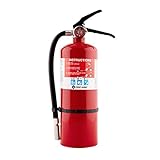
First Alert HOME2PRO 2-A:10…
- UL rated 2-A:10-B:C
- Mono ammonium phosphate agent
- All-metal valve and rechargeable
- 9.6 lb all-metal body
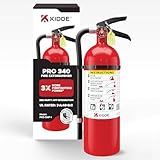
Kidde Pro 340 3A:40-B:C
- UL rated 3A:40-B:C
- 13-15 second discharge
- 12-18 foot stream range
- UL-approved metal wall hanger

Amerex B500 5 lb ABC 2-Pack
- 2A:10B:C across Class A B C
- 14 second discharge at 12-18 feet
- Rechargeable all-metal valve
- Two units per pack
Comparing the Best Fire Extinguishers for Garages in 2026
| Product | Specs | Action |
|---|---|---|
| First Alert HOME2PRO 2-A:10-B:C Rechargeable |
|
Check Latest Price |
| Kidde Pro 340 3A:40-B:C |
|
Check Latest Price |
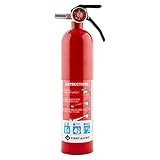 First Alert GARAGE10 10 B:C First Alert GARAGE10 10 B:C |
|
Check Latest Price |
 Kidde Auto 10 10-B:C Vehicle Unit Kidde Auto 10 10-B:C Vehicle Unit |
|
Check Latest Price |
 First Alert EZ Fire Spray Aerosol First Alert EZ Fire Spray Aerosol |
|
Check Latest Price |
 AmzBoom 2-Pack Water-Based Canisters AmzBoom 2-Pack Water-Based Canisters |
|
Check Latest Price |
| Amerex B500 5 lb ABC 2-Pack |
|
Check Latest Price |
 Ougist FF1KG 2.5 lb 1-A:10-B:C Ougist FF1KG 2.5 lb 1-A:10-B:C |
|
Check Latest Price |
 Buckeye 10914 5 lb ABC with Aluminum Valve Buckeye 10914 5 lb ABC with Aluminum Valve |
|
Check Latest Price |
 Amerex B456 10 lb ABC 4A:80B:C Amerex B456 10 lb ABC 4A:80B:C |
|
Check Latest Price |
1. First Alert HOME2PRO – The Rechargeable All-Metal Unit for a Working Garage
First Alert Fire Extinguisher, Heavy Duty for Home & Commercial Use
UL rated 2-A:10-B:C
Mono ammonium phosphate agent
All-metal rechargeable build
9.6 lb total weight
Pros
- Meets the residential code minimum at 2-A:10-B:C
- All-metal body and commercial-grade valve
- Rechargeable by a certified technician
- Color-coded gauge and wall hook included
- Covers wood
- trash
- plastics
- gasoline
- oil and electrical
Cons
- Heavier than typical household units at 9.6 pounds
- Mono ammonium phosphate leaves a corrosive residue on equipment
This is the unit I keep coming back to for a garage that is actually worked in. It is built like commercial equipment that happens to be UL listed for residential code minimums, and that combination is exactly what a garage asks for: a metal valve, a metal trigger, a recharge path, and a rating that covers all three fire classes that actually show up out there.
The 2-A:10-B:C rating is the honest headline. The A number is water equivalency, meaning it carries the firefighting capacity of two gallons of water against ordinary combustibles. The B number is square footage of flammable-liquid coverage, ten square feet. That is not a spectacular string, but it clears the residential code minimum and it covers wood, paper, trash, plastics, gasoline, oil and energized equipment in one cylinder.
At 9.6 pounds this is not a small cylinder, and that cuts both ways. It is heavy enough that a teenager or an older adult can still pick it up and hold a stream, which is the single most important handling factor in a fire. It is also heavy enough that you will feel the weight when you are trying to move it across a cluttered garage floor with smoke already in the room.
Why the Metal Valve Matters More in a Garage
The all-metal valve and trigger assembly is the reason this is rechargeable, and rechargeability is worth more in a garage than in a kitchen. A rechargeable unit gets serviced after use or after a pressure drop instead of thrown away, which over a twelve-year life adds up to far fewer replacements sitting in a landfill. Metal also tolerates the temperature swings and humidity of an unheated garage better than the plastic valve assemblies on disposable units.
Corrosion resistance is the other metal advantage. A garage is a damp place, and a steel cylinder with a plastic valve will eventually develop a seep around the stem. The color-coded pressure gauge on this unit is the tool you will use monthly to confirm it has not drifted.
Weight You Can Still Lift, and the Mess You Cannot Avoid
Reviewers love the balance of this unit and note it reads as workshop-grade rather than consumer-grade. The consistent complaint is weight relative to smaller household models, and the second is the familiar powder problem. Monoammonium phosphate leaves a residue that is aggressively corrosive to bare metal, paint and electronics, so any unit you discharge near a workbench or a bench-top saw means a cleanup job.
Given the same constraint, some restorers on r/projectcar reach for clean-agent units near vehicles precisely to avoid that. The trade is real: you give up raw knockdown power to protect finished surfaces. For most garages, I still take the knockdown power and plan the cleanup.
For Whom This Is the Right Buy
Pick this one if you have an attached garage that doubles as a workshop, if you want a unit you can service instead of replace, and if you can commit to not spraying it near your good tools. It also pairs naturally with a smaller B:C unit mounted at the workbench, so you cover a gasoline spill quickly without using the big cylinder.
Skip it if your priority is a lightweight unit an older adult can lift without strain. In that case the Ougist below gives you Class A, B and C coverage in a much smaller body.
2. Kidde Pro 340 – More Firefighting Capacity Than Any Handheld Unit Here
Kidde Pro 340 Commercial Fire Extinguisher, 3A:40-B:C, PRO-5MP-1
UL rated 3A:40-B:C
13-15 second discharge
12-18 foot stream range
195 PSI operating pressure
Pros
- Highest practical capacity in the group at 3A:40-B:C
- All-metal valve and impact-resistant handle
- Rechargeable after professional servicing
- UL-approved metal wall hanger included
- Clear pressure gauge
Cons
- Short cylinder frustrates some users
- Heavier and bulkier than 2.5 lb residential models
- Can feel slower to deploy than its size suggests
If your garage holds fuel – multiple fuel cans, a mower, a snowblower, a generator – capacity is not a luxury. This unit carries 3A:40-B:C, which is four times the flammable-liquid coverage of the 10 B:C models and one and a half times the water equivalency of the HOME2PRO. Several owners describe putting out real fires in garages and outbuildings with it, and buyers who previously used small units consistently advise going bigger.
That 3A number matters specifically because wood and cardboard in a garage are not a small problem. A two-car garage with shelving, cardboard and a workbench has a genuine Class A fuel load, and 2A ratings under-serve it. Stepping to 3A buys real headroom.
Discharge Time and Stream Range Are What You Actually Feel
Two numbers define how this performs in a hallway between a car and a workbench: a 13 to 15 second discharge and a 12 to 18 foot stream range. That combination lets you stand back far enough to keep heat off your face while still covering a two-foot-wide engine bay. At 195 PSI the stream has authority that a 100 PSI unit cannot match, and it is the reason owners describe the experience as forceful.
The recurring complaint is the cylinder height. It is short and wide relative to the agents it carries, and a few reviewers say that shows up as a slightly static feeling during the first second of discharge. A handful also report it deploying slower than expected for a unit of this size. Neither complaint touches the rating or the coverage, and both are the kind of thing you only notice if you are expecting showroom performance instead of firefighting.
Build Quality and Mounting in a Busy Space
The all-metal valve assembly, rust and impact-resistant handle and pull safety pin are commercial-duty components, and the unit is rechargeable after professional servicing. The included UL-approved metal wall hanger is more than a nicety in a garage: a fixed mounting point near the exit door means the extinguisher is exactly where you left it in the dark, instead of on a shelf that got buried under a season of clutter.
One thing to plan for: at just under nine pounds and roughly 18 inches tall, this needs a solid anchor into a stud or masonry, not a drywall screw into a hollow wall. Set the bracket high enough that a small child cannot pull it down, but low enough that an adult can grab it without a stool.
For Whom This Is the Right Buy
This suits a detached workshop, a two-car garage with a mower and fuel cans, or any space where a wood-frame structure shares a room with flammable liquids. If you only store a couple of tools and no fuel, the capacity is more than the hazard demands, and a 5 lb unit is the better balance of power and handling.
It is also the pick for anyone who wants the single largest UL rating available without moving to a cylinder too heavy to lift. That threshold is the 10 lb Amerex further down, and the weight difference is dramatic.
3. First Alert GARAGE10 – The Compact B:C Unit for the Workbench Wall
First Alert Fire Extinguisher, Standard Garage Use
UL rated 10 B:C
Sodium bicarbonate agent
Metal head with safety seal
Mount, bracket and strap included
Pros
- Purpose-built for garage and workshop placement
- Small enough to mount by a workbench
- 10 B:C handles flammable liquid and electrical
- Included mount
- bracket and strap
- Cool to the touch after discharge
Cons
- No Class A rating for wood and paper
- Less agent capacity than larger ABC units
- Works best paired with a separate Class A unit
This is the unit people mount inside the garage door, right beside the workbench, where the fuel and the power tools are. It is purpose-built for that spot – short, narrow, and light enough that you can pull it down one-handed while holding nothing else.
It is also the honest counterpoint to every big ABC unit on this list. The GARAGE10 carries no A rating at all. It is 10 B:C, and that means it handles flammable liquids and energized electrical equipment but is not certified for ordinary combustibles like wood, paper and trash. In a garage full of sawdust and cardboard, that is a real gap and you should buy it as a partner unit, not as your only one.
Why Sodium Bicarbonate Matters at the Workbench
The agent here is sodium bicarbonate rather than monoammonium phosphate, and that choice shows up in daily use. Soda-based powder is noticeably cooler to the touch after discharge and is less aggressively corrosive to bare metal than MAP powder. For a unit mounted inches from a tool chest, that is a meaningful difference in what the cleanup looks like.
It is still powder, and it still needs clearing out of anything you care about. The advantage is degree, not elimination. The durable metal head with a commercial-grade valve and trigger, plus the metal pull pin with a safety seal, is a build quality step above what a small unit usually carries.
A Two-Unit Garage Setup That Works
Owners commonly pair this with a larger Class A rated extinguisher elsewhere in the home or garage, and that is exactly how I would deploy it. Mount the 10 B:C unit at the workbench for fuel spills and charger fires, and keep a 2A or 3A unit near the vehicle door for the wood, plastic and cardboard side of the risk.
Splitting coverage this way is not a compromise. It puts the small, fast, cool agent exactly where spills happen and saves the big cylinder for fires that need real knockdown power. The included garage mount, bracket and strap keep it secure, and the corrosion-resistant color-coded gauge is readable from a step back.
For Whom This Is the Right Buy
Buy it for the gasoline can shelf, the paint thinner cabinet, the charging bench and the mower. It is also US Coast Guard approved for marine use, so if you store a boat or a jet ski in the same bay, that approval carries real weight.
Do not buy it as the only extinguisher in a wood-frame garage. No A rating means the one fire class that consumes the most material per minute is the one it cannot handle.
4. Kidde Auto 10 – The Engine-Bay and Motorcycle Unit
Kidde Auto 10 Fire Extinguisher for Cars and Trucks, 10-B:C, M10G
UL rated 10 B:C
2.9 lbs of agent
8-12 second discharge
Includes plastic strap bracket
Pros
- Compact enough to live in a vehicle or small bay
- 8-12 seconds of agent for engine-bay fires
- All-metal valve handles hot and cold storage
- UL-approved strap bracket included
- Clear pressure indicator
Cons
- Class B/C only with no Class A rating
- Short 6-8 foot discharge range
- Small agent capacity is overwhelmed by a developed fire
Garage fire forums obsess over exactly this scenario. On Garage Journal, owners discuss at length what to reach for when a fuel line fails under a hood, and the consensus repeatedly lands on a small B:C unit as sufficient for an incipient engine-bay fire – provided you catch it in the first seconds.
This is that unit. It carries 2.9 pounds of sodium bicarbonate agent, discharges for 8 to 12 seconds, and streams 6 to 8 feet at 100 PSI. That is enough to smother a small fuel leak fire if the hood is open and you are aiming at the base of the flames from the fender.
Mounting It Where It Will Not Hurt Anyone
The included UL-approved plastic strap bracket is the point of this product, and forum advice on r/Jeep is blunt about how to use it: mount it low, mount it solid, and mount it where it cannot injure an occupant if it comes loose in a crash. A heavy cylinder loose in a footwell during a collision is a genuine hazard, so a two-point strap into a seat bracket or a cage tube beats a single hook.
The all-metal valve assembly is specified to tolerate both hot trunks and cold unheated garages, which matters if the unit lives in a car through winter. The white powder-coated aluminum cylinder is also more visible in a dark garage than a red one, which is a small but real advantage when you are looking for it with smoke in the room.
Where 10 B:C Falls Short in a Garage
Two limits are worth stating plainly. First, there is no A rating, so a burning pile of sawdust or cardboard is out of scope. Second, the 6 to 8 foot range means you cannot stand back, and a hood fire in a confined single-car bay can push heat at you faster than eight seconds of agent can cover.
Reviewers are consistent that this is a first-response tool, not a developed-fire tool. Its job is to kill a small fuel leak in the seconds after it starts, so a person can get out and call the fire department, not to save a car.
For Whom This Is the Right Buy
It is for the motorcycle bay, the project car, the classic car under a cover, and the EV charging corner where a connector can heat. Buy two, keep one in the vehicle and one on the garage wall. At this size, redundancy costs nothing in storage space.
For a working garage with a lot of wood and cardboard, this complements a full ABC unit rather than replacing one. Think of it as the fuel-and-fluid specialist in your setup.
5. First Alert EZ Fire Spray – The Supplement That Needs No Training
First Alert EZ Fire Spray, Extinguishing Aerosol Spray
32 seconds of discharge time
Press and spray activation
Biodegradable nontoxic formula
Aerosol can format
Pros
- No pin
- lever or gauge to fumble under stress
- 32 seconds of discharge for a can this small
- Biodegradable nontoxic formula wipes clean
- Stores in cabinets
- trunks and glove compartments
- Aerosol form needs no mounting hardware
Cons
- Handles only small incipient fires
- A supplement rather than a replacement
- No gauge and no refill path
- Short 3-year warranty
This is the highest-reviewed product in the group by a wide margin, and the reason is not firefighting capacity – it is the total absence of fumbling. There is no pin, no lever, no gauge to interpret. You pull the cap, press the nozzle, and spray. Under stress, that simplicity is worth more than raw capacity.
In a garage it earns a narrower role than its review count suggests. It is genuinely useful on a small electrical fire, a trash-bin smolder, a candle or a grease flare-up on a portable burner. It is not going to stop a fuel-can fire that has developed past incipient stage, and no aerosol will.
32 Seconds of Agent, and What It Can Realistically Reach
The manufacturer specifies 32 seconds of firefighting time, which is an unusually long discharge for an 18-ounce aerosol can. Owners describe it knocking down real grease, candle and even a truck engine fire with no messy residue, and that last detail is the reason to keep one in a garage at all. The biodegradable, nontoxic formula wipes clean, so discharging it near a bench does not start a cleanup project.
Because it leaves nothing behind, it is a reasonable partner to a dry chemical unit in a garage with electronics, a project car or freshly painted surfaces. Where MAP powder would require an hour of cleanup, this requires a wipe.
The Honest Limits of Aerosol Coverage
The recurring theme in customer reviews is that this is an extra layer, not a substitute. The agent volume physically cannot match a 5 lb cylinder. Forum posters who have tested aerosols against a real extinguisher on a campfire consistently found the aerosol effective on small fires and irrelevant on anything larger.
It is also not refillable and carries a 3-year limited warranty, which makes it a consumable you replace rather than a tool you service. Treat the shelf life as a calendar reminder, not a gauge reading.
For Whom This Is the Right Buy
Buy it to mount on a shelf above the workbench, in the mudroom, and in the vehicle. Multiple cans cost little, store anywhere, and give you a zero-training option when a real unit feels too far away.
Just do not count it as your garage’s rated fire protection. Pair it with a UL listed ABC unit and treat it as the thing you grab in the first five seconds before you remember where the real one is mounted.
6. AmzBoom 2-Pack – Residue-Free Coverage for Two Locations
AmzBoom 2-Pack Fire Extinguisher for Home, Kitchen, Car, and Grill with Mounting Bracket– Extinguishing Spray, Compact A, B, C, K – Eco-Friendly, Prevents Reignition.
Rated for Class A B C K
Two canisters and brackets
500 ml water-based agent
Press and spray activation
Pros
- Water-based formula leaves no residue
- Two units and brackets cover two locations
- No pin or lever to operate
- Claimed lithium-ion coverage for small devices
- Bright and easy to spot on a shelf
Cons
- Canisters smaller than listing photos suggest
- Supplemental rather than stand-alone coverage
- Limited volume covers only very small fires
The reason to consider a canister extinguisher at all is cleanup. This uses a water-based, non-toxic, residue-free formula, and in a garage where the extinguisher hangs inches from a bench, a car or a charging station, that is a genuinely different proposition from a powder unit. Discharging one and then wiping the surface is a two-minute job instead of a two-hour one.
The two-pack format is the smart part. Owners typically install one canister in a garage or kitchen and the second in a vehicle, and the two included mounting brackets make that placement easy. At 500 milliliters and roughly a pound, they fit drawers, glove compartments and small lockers that a cylinder never could.
Reading the Lithium-Ion Claim Carefully
The listing states coverage of Class A, B, C and K fires, including lithium-ion battery fires in phones and laptops. Treat that as a manufacturer claim about small devices, not a garage-scale capability. A tool battery pack, a scooter, or an EV produces a thermal runaway event that no 500-milliliter canister is going to extinguish, and none of the ABC units on this list claim they will either.
That said, having a canister near a charging bench where a phone or a laptop sits is not a bad idea. Small lithium failures are the most common electrical fire in a home garage, and the vector to the main battery pack is often heat rather than flame.
Expect a Smaller Can Than the Photos Suggest
The most repeated caveat in the reviews is size. Several buyers note the canisters are smaller than the listing images imply, and best treated as an extra layer of protection. That is an honest expectation to set: this is a fast, clean, always-there tool for small fires, not a rated cylinder.
The protective barrier agent that helps prevent reignition is a real benefit on smoldering materials, and the press-and-spray activation needs no training at all. Combined with the zero residue, that is a package that works well alongside, not instead of, your main unit.
For Whom This Is the Right Buy
It suits a garage that stores a project car, electronics, camera gear, or freshly finished cabinetry, anywhere powder cleanup would be a problem. It also fits a small detached garage where you want a quick-response tool without the weight of a cylinder.
Skip it if you want a single unit with a UL rating on the label that covers your whole garage. Buy the cylinder for that job and put these where the second and third fires are most likely to start.
7. Amerex B500 2-Pack – The Two-Unit Garage Setup Done Properly
Amerex B500 5 lb ABC Dry Chemical Fire Extinguisher 2-Pack
UL rated 2A:10B:C
Two units per pack
14 second discharge
Rechargeable steel cylinders
Pros
- 2A:10B:C covers wood
- liquids and electrical in one unit
- 14 seconds of discharge at 12-18 feet
- Light enough for most adults and teens one-handed
- Steel cylinder and all-metal valve survive hot and cold
- Rechargeable and wall-mountable
Cons
- One review reported the safety pin arriving pulled
- Metal safety pins fit loosely during handling
- Included hangers ship without screws
- Printed instructions are thin
Two 5 lb ABC cylinders is the setup I would build first for a standard two-car garage, and the Amerex B500 2-pack is the most direct way to get there. The 2A:10B:C rating covers Class A, B and C in a single unit, which means each cylinder is a complete answer rather than half of a system.
Amerex also has a reputation that matters in this buyer group. Forum users on r/homeowners describe the brand as costlier but USA-made and rechargeable, and that combination – build quality plus a service path – is why this two-pack keeps a strong following among people who maintain their own equipment.
Discharge Numbers That Matter in a Bay
At 14 seconds of discharge and a 12 to 18 foot stream, each unit gives you more working time and more standoff distance than the small B:C models. Fourteen seconds is the difference between extinguishing a fire and running out of agent while it is still going. In a garage where you may be dealing with a burning mower or a spreading fuel spill, that margin is what makes the difference.
At five pounds per unit, the weight sits in the range most adults and older teens can manage one-handed while aiming. Reviewers repeatedly emphasize that you can hold a stream, which is not something you can say about the 10 lb unit further down this list.
Two Units, Two Mounting Points
The two-pack format solves the placement problem that most single-unit buyers get wrong. Mount one near the vehicle entry door and one by the workbench, and you satisfy the NFPA guidance to have an extinguisher on the path to your exit rather than one unit in a corner you only reach after passing the fire.
The steel cylinders and all-metal valves tolerate the temperature swings of an unheated garage, and the units are rechargeable by a certified technician rather than disposable. The color-coded gauge gives you a quick at-a-glance status check.
Hardware and Assembly Quirks to Expect
Honest downsides worth planning around: the included hangers ship without screws, so bring your own fasteners. Several reviewers note the metal safety pins fit loosely and can work their way out during handling, which is exactly the defect that matters because a loose pin means an accidental discharge. At least one review reported a unit arriving with the pin already pulled and the retaining strap severed – check both units the moment you open the box.
The printed instructions are also described as thin, so read the label on the cylinder itself before you rely on the enclosure. None of these are fire performance problems, but all of them are the kind of small annoyance that shows up on day one instead of during an emergency.
For Whom This Is the Right Buy
This is the pick for a single-car attached garage, a workshop, or a home with a garage plus a basement level, because it gives you two complete rated units in one order. It also suits anyone who wants a rechargeable build and is willing to find a certified shop for servicing.
It is not the right choice if storage is tight or if you only plan to mount one unit. Buy a single larger cylinder in that case, rather than two small ones you will only ever use one of.
8. Ougist FF1KG – A 2.5 lb Unit That Handles Classes A, B and C
Ougist ABC Fire Extinguisher for Home & Vehicle – 2.5 lb 1-A:10-B:C Rated, Dry Chemical Fire Safety with Quick-Release Handle, Certified for Kitchen/Car/Boat Use-Model FF1KG
Pin-free quick-release handle
UL-style 1-A:10-B:C rating
4.4 lb total weight
Operates from -22F to 140F
Pros
- No safety pin to twist
- drop or fumble
- Class A B and C coverage in a 2.5 lb body
- Light enough for seniors and teens
- Includes wall hook
- inspection card and location sign
- Wide operating temperature range
Cons
- Small 2.5 lb capacity limits it to incipient fires
- Quick-release handle takes practice under stress
- Fewer reviews than the major brands
The design choice here is the handle. This unit has no safety pin at all – it uses a patented quick-release handle that deploys the trigger directly. Owners, including older users, single this out as the feature that makes the unit genuinely easy to put into action, and that is a meaningful advantage in the seconds when adrenaline and smoke are working against you.
It is also unusual among 2.5 lb units in carrying a 1-A:10-B:C rating, which covers wood, paper, trash, flammable liquids and electrical fires. Most cylinders this small are B:C only. Getting Class A coverage without stepping up in weight is the reason this earns a place here.
Why Cold-Garage Storage Matters Here
The listed operating range runs from -22F to 140F, which is the most explicit cold-weather specification in this group. For an unheated or detached garage, that range is a meaningful reassurance, because a canister that has seen deep freeze and then warmed up can lose pressure or cake the agent, and a garage is exactly where that happens.
The thick-wall carbon steel body also holds up better than thin-wall units, and the wall-mount hook, monthly inspection record card and self-adhesive location arrow sign make it easy to set up a maintenance habit rather than shoving the unit on a shelf and forgetting it.
Compromise Points to Weigh
At 2.5 pounds of agent, this is an incipient-fire tool. It will handle a spill, a smolder, a small electrical fault or a waste-bin fire. It will not hold a growing Class A fire involving structural wood, and no 2.5 lb unit will. Several users note the quick-release handle itself takes a little practice, so practice it while it is still an empty cylinder rather than during a fire.
The review base is also the smallest of the First Alert and Kidde units here, which means less long-term feedback on valve longevity. The rating distribution is among the strongest, with 92 percent five-star, but a smaller sample deserves a slightly wider margin of caution.
For Whom This Is the Right Buy
This suits an older adult, a household with a teenager who might be the first to react, or anyone who wants full ABC coverage in the smallest sensible package. It works well as a second unit in a two-car garage, mounted near the exit on the opposite side from the big cylinder.
It is also the easiest to handle in a confined space, which matters when a car is between you and the wall you want the extinguisher on.
9. Buckeye 10914 – The Aluminum-Build 5 lb Unit for Damp Garages
Buckeye 10914 ABC Multipurpose Dry Chemical Hand Held Fire Extinguisher with Aluminum Valve and Wall Hook, 5 lbs Agent Capacity, 3-3/8″ Diameter x 7-1/4″ Width x 16-3/8″ Height
ABC dry chemical agent
Anodized aluminum valve
5 lbs agent capacity
Wall hook included
Pros
- ABC coverage for Class A
- B and C
- Anodized aluminum valve resists corrosion and impact
- Wall hook provides a secure mounting point
- Color-coded gauge for at-a-glance status
- Fire department and inspector approved in the field
Cons
- Listed weight is lower than a full 5 lb charge suggests
- Older catalog design with fewer photos
- Smallest review base in the group
The Buckeye’s differentiator is material. It uses an anodized aluminum valve assembly rather than plated steel or plastic, and anodizing is genuinely more resistant to both corrosion and impact than a coated steel valve. In a humid garage, in a coastal climate, or on a unit that will sit for a decade, that is the part most likely to still be working at inspection time.
It also carries 5 pounds of ABC dry chemical agent in a compact hand-held body, which puts it in the same class as the Amerex B500 but in a different metal. Buyers often switch up to it from small consumer units, and it is popular in multi-packs for placing one unit per level of a home or garage.
Field Approval and Real-World Accounts
One reviewer reports that their fire department inspector approved the units as replacements at a church, which tells you something about how authorities in the field regard the brand. Several accounts describe extinguishing a truck engine fire and an early house fire with it, and the ABC rating covers the full range of garage hazards rather than a subset.
The included wall hook matters more than it sounds. A hook keeps the unit off the floor, out of the way of a shop vac or a mower tire, and visible instead of buried. The color-coded gauge lets you confirm charge status without picking it up.
Reading the Listing Weight Carefully
The listed item weight of 2.2 pounds is lower than a full 5 pound agent charge would suggest, and that is a discrepancy worth resolving before you buy rather than after. Confirm the actual charged weight with the manufacturer. The unit is also an older catalog design with fewer customer photos than current models, and its 381-review base is the smallest in this group, so long-term owner feedback is thin.
Those caveats are not about fire performance. They are about buying with open eyes, which is a habit worth keeping in a category where the label is the whole product.
For Whom This Is the Right Buy
This suits coastal, humid, or unheated garages where corrosion is the dominant long-term threat, and buyers who have been disappointed by a plastic-valve disposable that failed after a few seasons. It also works well as a per-level unit if you are outfitting a house and garage together.
For a dry, climate-controlled space, the Amerex B500 gives you the same agent weight with a bigger service network and far more reviews to draw on.
10. Amerex B456 – Maximum Capacity, With a Weight Problem Attached
Amerex B456, 10lb ABC Dry Chemical Class A B C Multi-Purpose 10 Pound Fire Extinguisher with Wall Bracket
UL rated 4A:80B:C
10 lb ABC dry chemical
All-metal fittings
17.5 lb total weight
Pros
- Highest UL rating available in this group at 4A:80B:C
- All-metal fittings with no plastic components
- Powder-coated steel and marine approval
- Popular as a garage unit after a fire
- Available across a wide size family
Cons
- Roughly 18 pounds is unusable for many people
- Cumbersome to handle one-handed
- Basic hook mount rather than a strap bracket
- Occasional reports of missing or damaged parts
This is the top of the capacity curve. At 4A:80B:C it carries the highest UL rating of any unit in this group – double the Class B coverage and more than triple the water equivalency of a typical residential 5 lb ABC. If you want the biggest margin of firefighting capability on the wall, this is it.
Several owners added it specifically after losing a garage to a fire, and they describe it as heavy-duty and able to handle any fire pointed at it. The all-metal fittings with no plastic components and the powder-coated finish are commercial construction, and the unit is UL and marine approved.
The Weight Is the Whole Conversation
At roughly 18 pounds, this unit is not liftable or usable by many people, including smaller adults, and reviewers consistently flag the weight as the real limitation. An extinguisher you cannot lift in a burning garage is not a safety device; it is a very expensive paperweight. The single-handed handling problem is not hypothetical either, because you will be aiming one-handed while the other hand holds a door or a hose.
That makes this a two-person household item or a workshop unit mounted on a bracket near the door, positioned for an adult who can handle it deliberately rather than someone trying to grab and aim in the same motion. Mounting hardware is also thinner than it should be – a hook-style mount rather than a heavy-duty strap bracket – so plan on upgrading the bracket and anchoring it properly.
When the Extra Capacity Actually Pays Off
There are real cases. A detached workshop with substantial stored combustibles, a garage that also serves as a small commercial operation, or a space where a wood-frame structure and fuel are genuinely close together, all benefit from the headroom. A family that lost a garage to a fire, or one with a fire marshal or AHJ inspection requirement, may need a rating at this level for compliance rather than preference.
Owners also like that the same family is available from 2.5 pounds to 20 pounds, so if the 18-pound size is wrong for your household you are not forced into a different brand to resize.
For Whom This Is the Right Buy
It suits a commercial-grade workshop, a large detached shop, or a household with at least one adult who can lift and aim 18 pounds without strain. It is also the right pick when an inspector, insurer or local code requires a rating above what a 5 lb residential unit carries.
For most homeowners, the 5 lb Amerex or the Kidde Pro 340 gives you 80 to 90 percent of the capability at a third of the handling penalty. Buy this one when you have a specific reason.
How to Choose a Garage Fire Extinguisher
Most buying mistakes in this category come from treating a garage like a kitchen. A garage fire is usually a combination of flammable liquid, energized equipment and ordinary combustibles, and the unit that handles all three is the one to buy. Here is how to narrow the field in five decisions.
What Type of Fire Extinguisher Is Best for a Garage?
A UL listed ABC-rated dry chemical extinguisher rated at least 2A 10B:C, ideally 3A 40B:C or higher is the right answer for almost every garage. The A rating covers wood, paper, cardboard and plastics; the B rating covers gasoline, oil, solvents, paint thinner and propane; the C rating covers energized electrical equipment such as chargers, power tools and welders. Monoammonium phosphate is the default agent because it is cheap, widely available and effective on all three at once.
Only deviate from ABC when you have a specific reason. A clean-agent or water-based unit makes sense if you are storing an EV, a project car, electronics or freshly finished surfaces that powder would ruin. A dedicated B:C unit makes sense as a second unit at the workbench. Neither replaces the ABC unit that covers your whole bay.
How to Read a UL Fire Extinguisher Rating (2A 10B:C vs 3A 40B:C)
The rating string encodes two numbers and a letter. The A number is water equivalency: how much water it takes to put out the same amount of ordinary combustibles, expressed in gallons. The B number is square footage of coverage for flammable liquids. The C simply certifies it works on energized electrical equipment, and C carries no number because there is no meaningful scale for it.
So 2A 10B:C means two gallons of water-equivalent coverage for combustibles and ten square feet of flammable-liquid coverage. 3A 40B:C is 50 percent more water equivalency and four times the flammable-liquid coverage. In a garage, 3A 40B:C is a meaningful step up because the wood and cardboard load in a two-car bay is larger than most living rooms.
Look for the UL listed mark on the label, not just a rating number. Every serious forum answer checks it, and a rating without a certification mark tells you nothing about who tested the unit.
How Big Should Your Garage Extinguisher Be? 2.5 lb vs 5 lb vs 10 lb
2.5 lb is a first-response unit for incipient fires, small electrical faults, and trash-bin smolders. It is easy to hold and quick to deploy, which is why the pin-free model is popular with older adults. 5 lb is the garage default: enough agent for a real fire, light enough to aim one-handed, and the size most households should own. 10 lb is a workshop or commercial scale unit that offers the highest ratings but at 18 pounds is unusable for many people.
For a two-car attached garage with a mower, fuel cans and shelving, 5 lb is the right answer. For a detached workshop with a wood-frame structure and heavy Class A fuel, step up to the 3A:40-B:C class. For a home workshop in which a teenager or an older adult might be the one to react, favor a lighter unit with full ABC coverage over a heavier one with more capacity.
How many you need follows NFPA guidance loosely: one per level, positioned so you never travel more than about 40 feet to reach one, and always with at least one on the path to your exit. Most garages are well served by two units – a large one near the vehicle door and a small one at the workbench.
Rechargeable vs Disposable: Metal Valve or Plastic
A rechargeable unit has a metal valve and handle and is serviced by a certified technician after use or after a pressure drop. A disposable unit has a plastic valve assembly and is thrown away after a single discharge, with a twelve-year shelf life either way.
Rechargeable wins on lifespan and total cost if you have a service shop within reach, and the metal components tolerate garage humidity and temperature swings better. Disposable wins on convenience and price, and there is nothing wrong with owning one if you replace it on schedule.
On a twelve-year horizon, a rechargeable unit that gets serviced two or three times can cost less than replacing disposables, and it keeps a working extinguisher on the wall rather than a hole in your budget. The forum consensus is blunt: a rechargeable unit with a metal valve is simply a higher build.
The Garage Fire Risk Checklist: What Actually Burns
No competitor publishes a garage-specific hazard list, so here is the inventory that should drive your rating choice. Flammable liquids: gasoline, gas cans, motor oil, oil filters, brake fluid, paint thinner, varsol, acetone, aerosol cans. Flammable gases: propane cylinders, welding gases, a natural gas grill. Ordinary combustibles: sawdust, wood offcuts, cardboard, paper, trash bins, plastic storage totes, old upholstery. Energized equipment: battery chargers, welders, table saws, air compressors, extension cords, EV chargers. Heat sources: a space heater, a welding arc, a hot engine block, a clothes dryer vent.
Lithium-ion batteries deserve their own line. Tool battery packs, e-bikes, scooters and EVs in a garage are a growing hazard, and no consumer ABC extinguisher on this list claims to extinguish a thermal runaway. The realistic strategy is prevention – charge on a non-combustible surface, away from stored fuel, and away from the vehicle – plus a plan to evacuate and call the fire department rather than to fight it.
Count your own inventory. If the list includes fuel cans, propane and shelving full of cardboard, you want 3A:40-B:C or better. If it is a couple of tools and a mower with no fuel stored inside, 2A 10B:C is adequate.
Where to Mount a Fire Extinguisher in a Garage
Mount it near the exit door, on the path you would walk to leave, not above the workbench where a fire would block your approach. Keep it clear of heat sources and of the vehicle path, and do not bury it behind a parked car or a stack of lumber. Set the bracket high enough that a small child cannot pull it down, but low enough that an adult can reach it without a step stool.
For a working garage, a strap bracket or cabinet is better than an open hook, because sawdust, spray paint overshoot and swinging vehicles all damage or dislodge an exposed unit. Anchor into a stud or masonry, and for a vehicle-mounted unit, follow the forum advice: mount it low, mount it solid, and mount it where it cannot injure an occupant if it comes loose in a crash.
For a garage you use as a workshop, setup planning and storage layout matter as much as the extinguisher, since an uncluttered floor is what gives you a clear path out.
Maintenance Schedule: Gauge Checks, Service and Disposal
Monthly: glance at the pressure gauge. The needle should sit in the green zone. Walk the path from your extinguisher to the exit and confirm it is still clear. Yearly: read the label, confirm the pin and tamper seal are intact, and check that the unit is still where you put it. Every 6 years for rechargeable metal-valve units: professional servicing per NFPA 10. At 12 years for disposable plastic-valve units, or when the gauge drops and cannot hold pressure: replace it.
After any discharge, even a brief one, a rechargeable unit goes to a certified shop for a refill and a pressure test. A disposable unit goes in the trash. Never try to service an extinguisher yourself – the cylinder is pressurized and the agent must be verified and refilled to standard.
Forum users note the most common failure mode is not a bad unit but a neglected one: several cheap extinguishers bought at once, none of them ever checked, and pressure slowly leaking down in a corner where nobody looks. Put the monthly check on your calendar.
What Not to Use a Garage Fire Extinguisher On
Do not use water on a fuel or electrical fire, and do not treat a water extinguisher as a substitute for ABC dry chemical in a garage full of vehicles. Water conducts electricity and spreads burning liquid. Forum advice about pairing 2.5 gallon water units with dry chemical exists, but it applies to specific Class A scenarios, not to a general garage default.
Do not aim at Class D metal fires involving magnesium or titanium – those need a special Class D agent. Do not rely on any consumer unit for a lithium-ion battery fire or a fully developed structure fire; evacuate, close the door behind you and call 911. And do not aim at the flames – aim at the base of the fire, sweeping side to side, which is the single most common correction in any training session.
The PASS sequence is the whole technique: Pull the pin, Aim at the base of the fire from a safe distance, Squeeze the lever, Sweep side to side. And know before you need it that a fire extinguisher is one part of a plan alongside smoke and carbon monoxide alarms, a clear escape route, and calling 911 the moment a fire does not go out immediately.
One more garage-specific note that comes up constantly among owners: a fire pit in the yard and a garage full of fuel are a bad combination on a dry, windy day, so think about where you light things and where you store flammables separately. If the yard itself is your concern, our picks for durable outdoor fire pits cover the same wind and spark risks on the patio side of the property.
Frequently Asked Questions
What type of fire extinguisher is best for a garage?
A UL listed ABC-rated dry chemical extinguisher rated at least 2A 10B:C, and ideally 3A 40B:C, is the best choice for a garage. The A rating covers ordinary combustibles like wood and cardboard, the B rating covers flammable liquids like gasoline and paint thinner, and the C rating covers energized electrical equipment like chargers and power tools.
Do I need a 5 lb or 10 lb fire extinguisher?
For most home garages, a 5 lb unit is the right answer. It carries enough agent to handle a real fire while staying light enough to lift and aim one-handed. Step up to a 10 lb unit only for a detached workshop with heavy wood and paper fuel, and only if an adult in the household can comfortably lift and aim 18 pounds.
Is a 2a or 3a fire extinguisher better?
A 3A rating is better, and the difference is meaningful in a garage. The A number is water equivalency, so 3A covers 50 percent more ordinary combustibles than 2A, and the paired B number usually quadruples as well. If your rating is 3A:40-B:C rather than 2A:10B:C, you have noticeably more capacity for a wood-frame structure sharing a room with fuel.
Is a 2.5 lb fire extinguisher enough?
A 2.5 lb unit is enough for incipient fires, small electrical faults, trash-bin smolders and fuel spills caught in the first seconds. It is not enough for a developed fire involving structural wood or cardboard. Many owners keep a 2.5 lb unit rated for A, B and C as a fast-response companion to a larger ABC unit rather than as a replacement.
How do I know which fire extinguisher to buy?
Check four things in order. Confirm the UL listed mark on the label. Confirm the rating string covers A, B and C, and that the A number matches the combustible load in your garage. Confirm the agent weight is 5 lb for most garages. Then confirm you can lift and aim the unit one-handed, because an extinguisher you cannot handle is worthless.
How many fire extinguishers should a garage have?
Most garages are well served by two units. Put a 5 lb or larger ABC unit near the vehicle door on your path to the exit, and a smaller B:C or 2.5 lb unit at the workbench where fuel spills and electrical faults actually start. The rule of thumb is that you should never travel more than about 40 feet to reach an extinguisher.
Where should I mount a fire extinguisher in my garage?
Mount it near the exit door on your path out of the building, not above the workbench where a fire would block your approach. Keep it clear of heat sources and the vehicle path, high enough that a child cannot pull it down but low enough to reach without a stool, and use a strap bracket anchored into a stud or masonry in a working garage.
Are Kidde fire extinguishers reliable?
The specific models in this roundup are UL listed, carry commercial-grade all-metal valve assemblies, and rate 4.7 to 4.8 across thousands of customer reviews. However, the brand has a long CPSC recall history that has cost it a lot of trust, so verify the model number against the CPSC recall database before you buy and check the pin and tamper seal on arrival.
Final Verdict: Which Fire Extinguisher Belongs in Your Garage
If you want one unit and no compromises, the First Alert HOME2PRO is the one I would put on the wall – a rechargeable all-metal build at a code-compliant 2-A:10-B:C rating. If your garage holds real fuel, step up to the Kidde Pro 340 at 3A:40-B:C for four times the flammable-liquid coverage. If you want a complete two-unit garage covered in one order, the Amerex B500 2-Pack gives you two rated 5 lb ABC cylinders you can mount on opposite walls.
For specific corners of the garage: the First Alert GARAGE10 or Kidde Auto 10 at the workbench and in the vehicle for fuel and electrical fires, the Ougist FF1KG when the lightest full ABC option matters most, the Buckeye 10914 in a damp or coastal garage where valve corrosion is the threat, and the AmzBoom or EZ Fire Spray canisters where zero-residue cleanup is worth more than raw capacity. The Amerex B456 at 4A:80B:C is the right answer only for a workshop-scale hazard or an inspection requirement.
Whatever you choose for the best fire extinguishers for garages, mount it near the exit, keep the gauge in the green, and pair it with alarms, a clear escape route and a plan to call 911 the second a fire does not go out. This roundup was updated for 2026, and every rating here is worth re-checking against the UL label on the actual cylinder before you buy.
Leave a Reply