


A workshop first aid kit is not the same thing as the kit in your car or the hall closet. Shop injuries arrive in seconds: a saw blade opens a forearm, a workpiece kicks back, a grinding spark hits a wrist, metal swarf lands in an eye. The kit that handles those is judged against ANSI/ISEA Z308.1-2021 and OSHA 1910.151(b), not against a marketing page. Below is my shortlist of the best first aid kits for workshops in 2026, chosen after months of reading spec sheets, comparing case layouts, and watching how shop owners actually stock and restock them.
I spent six weeks working through the differences between these kits, and the gap between a basic 111-piece box and a 700-piece steel cabinet is not about piece count. It is about gauze depth, glove supply, burn dressings, eye wash, and whether the container survives being bolted above a workbench. My criteria were simple: meet a stated ANSI or OSHA class, hold real quantities of gauze, tape and nitrile gloves, survive shop conditions, and be restockable without replacing the whole case.
One note before the list. None of these kits carries a tourniquet or hemostatic gauze. A dedicated bleed-control module is a separate purchase, and the recurring advice in woodworking forums such as r/woodworking and the threads on forum.easel.com is to keep two kits: a basic first aid drawer near the saw and a trauma module near the machines. I cover that split, the training caveat that comes with trauma gear, and the monthly inspection routine in the buying guide below.
If your shop is brand new, start with placement rather than shopping. Decide where injuries actually happen, put a kit within a few minutes’ walk of that spot, and only then pick a case. It is the single change forum users describe making that mattered most.
Our Top 3 Workshop First Aid Kits in 2026
These three cover the widest range of real shop sizes. The first is the one I keep recommending to anyone running a crew, the second is the strongest all-round stocking depth, and the third packs the most supplies into a wall-mounted case.
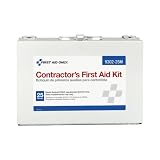
First Aid Only 9302-25M
- 178 pieces for 25 people
- Wall-mountable metal case
- Burn cream and gauze
- Gloves
- scissors and tweezers

Be Smart Get Prepared 326 Pc
- 326 pieces for 100 people
- Two-layer tilting shelves
- Impact-resistant case
- Refill order form

M2 BASICS 350 Piece Kit
- 350 pieces
- Wall-mount hard case
- Dual swing-out compartments
- Suited to garages and job sites
Comparing the 10 Best First Aid Kits for Workshops in 2026
Each kit below is listed with the class or standard it claims, what it is built to hold, and the situation it fits best. Every one is a complete shop kit rather than a household kit.
| Product | Specs | Action |
|---|---|---|
| First Aid Only 9302-25M Contractor Kit |
|
Check Latest Price |
| Be Smart Get Prepared 326 Pc OSHA Kit |
|
Check Latest Price |
| M2 BASICS 350 Piece Wall-Mount Kit |
|
Check Latest Price |
 24/7 First Aid 336 Piece OSHA Kit 24/7 First Aid 336 Piece OSHA Kit |
|
Check Latest Price |
 First Aid Only SmartCompliance 50-Person First Aid Only SmartCompliance 50-Person |
|
Check Latest Price |
 ProHeal 10 Person Type III Class A ProHeal 10 Person Type III Class A |
|
Check Latest Price |
 First Aid Only 25-Person OSHA Kit First Aid Only 25-Person OSHA Kit |
|
Check Latest Price |
 Rapid Care 3-Shelf Steel Cabinet Rapid Care 3-Shelf Steel Cabinet |
|
Check Latest Price |
 Ever Ready Class B 190 Piece Kit Ever Ready Class B 190 Piece Kit |
|
Check Latest Price |
 Rapid Care 25 Person Premium Kit Rapid Care 25 Person Premium Kit |
|
Check Latest Price |
1. First Aid Only 9302-25M Contractor Kit – the metal case that shrugs off a workshop
First Aid Only 25-Person Contractor First Aid Kit for Jobsites
178 pieces
25 person capacity
Wall-mountable metal case
6.5 x 19.51 x 27.71 inches
1.38 pounds
Pros
- Wall-mountable metal case built for shop conditions
- 178 pieces covering cuts
- burns and minor injuries
- Easy-release latch and carry handle
- Long-standing design with 6796 reviews
Cons
- Bulkier than a soft bag for transport in a small vehicle
- No CPR barrier or trauma pads
- Periodic restocking of gauze and tape needed
This is the kit I keep coming back to for a working shop. The 9302-25M hangs on a stud wall, the latch flips with one hand, and the 178-piece assortment leans toward what a shop actually produces: gauze roll and pads, burn cream, BZK antiseptic towelettes, antibiotic ointments, gloves, scissors and tweezers. That is a sensible weighting for a room with a table saw and a router rather than a kitchen drawer.
The metal case is the reason it earns the top slot. It is 1.38 pounds, mounts flat, and survives being opened and closed thousands of times in a dusty room. It is also the biggest reason people who bought it complain, because that size and shape makes it awkward to haul to a truck or a job site. If your shop is a single room, you will not care.
Ratings sit at 4.7 across 6796 reviews, with roughly 83% five-star feedback. Owners single out the case, the breadth of the assortment and the latch, and few report missing core components. For most one- to four-person shops this is the correct amount of kit.
Why a metal case matters above a bench
Plastic cases scuff, crack and lose a latch after a season of being knocked by offcuts. A formed steel cabinet with a single easy-release latch tolerates that and keeps gauze dry when the room is humid. For a shop that also handles metal work, the resistance to impact and rust is a real advantage.
What 178 pieces actually gives you
Piece counts are misleading on their own, so read the list. This one is weighted toward wound care and burns with a full set of gloves, scissors and tweezers. That mix matches a woodshop or general fabrication space where the injuries are cuts, splinters, abrasions and the occasional burn from a hot bit or a lit tool.
Where it falls short
There is no CPR barrier, no trauma pads and no eye wash in this configuration. The forum consensus is clear that a separate bleed-control module matters in a shop with saws and grinders, so budget for one rather than assuming the piece count covers it.
Mount it near the door or the main aisle, not buried in a back drawer, and check the gauze and tape every month. Forum users report the opposite pattern constantly: the kit gets used for a real cut and quietly runs empty because nobody replaced the roll.
2. Be Smart Get Prepared 326 Piece OSHA Kit – the deepest supply list for busy rooms
Be Smart Get Prepared 326 Pc OSHA ANSI First Aid Kit Hard Case 100 People
326 pieces
100 person capacity
Two tilting shelves
13 x 12 x 4 inches
3.2 pounds
Pros
- 326 items covering cuts
- burns and minor injuries
- Two-tier tilting shelf layout speeds access and restocking
- Rugged impact-resistant plastic case
- Wall-mountable or folds flat for storage
Cons
- Bulky 13 x 12 x 4 inch footprint demands wall or shelf space
- Refill supplies ordered separately
- Small items can shift during transport
This is the one to look at if your shop has several people in it at once. At 326 pieces and rated for 100 people, it holds far more than a small crew will consume in a year, and the two separate layers with tilting shelves mean you can see the back row without pulling everything out onto the bench.
The build suits a shop floor better than a garage. The impact-resistant high-density plastic case wall-mounts, or folds compactly when you need it somewhere else, and the easy-slide latches open quickly with dusty hands. At 3.2 pounds it is a two-person carry, which is worth knowing before you mount it high.
At 4.7 stars with 7194 reviews, this is the most-reviewed kit in the group. Buyers credit the huge assortment, the organized shelving and the case, and the common friction is the bulk plus the need to buy refills once items are used. Roughly 82% of reviews are five-star.
Two-level shelving as a real advantage
Tilting shelves are not a gimmick. When a shelf tips toward you, the items behind the front row stay visible and reachable, which is exactly the moment that matters with blood on your hands. Stuffed kits fail here, and this is the most common complaint in forum threads about cheap kits.
Sizing it to a crew, not a building
The 100-person figure is generous for a workshop. Choose this one when you have multiple people on site at once, or when you want supplies that will not run down in the first year. A single-person shop is better served by something smaller and mounted closer to the saw.
Restocking is the catch
Refills are sold separately, and no case solves the discipline problem. This kit includes a refill order form, which helps, but the shop still needs a nominated person and a monthly check. Budget for refills as a yearly line item rather than a surprise replacement.
3. M2 BASICS 350 Piece Wall-Mount Kit – the deepest supply list in a wall-mount case
M2 BASICS 350 Piece Professional Wall-Mount First Aid Kit, Business, Home
350 pieces
Wall-mount hard case
Dual swing-out compartments
13 x 11 x 4 inches
3 pounds
Pros
- 350 pieces covering cuts
- burns and minor injuries
- Sturdy wall-mount case with dual swing-out layers
- Supplies are organized and easy to identify
- Reviewers cite it as good value for a small shop
Cons
- Internal plastic compartments and latch described as flimsy and stiff
- Takes a full wall-mount footprint
- No refill program included
More supplies, more usable layout. The swing-out dual-layer compartments mean the back layer opens toward you, so the deep stock sits visible rather than buried. The contents cover the standard workshop range: bandages, gauze pads, antiseptic wipes, dressings, wraps, gloves and tools.
It is listed for offices, warehouses, classrooms, garages, job sites and fleet vehicles, which tells you the design intent: a mounted unit that serves several purposes. At 3 pounds and 13 x 11 x 4 inches, it needs a real wall position rather than a shelf corner. Reviews repeatedly call it good value for a small shop or office.
Ratings hold at 4.7 across 4472 reviews with about 81% five-star feedback. The recurring criticism is mechanical rather than medical: some owners describe the internal plastic compartments and the latch as flimsy or stiff. Contents-wise, few report gaps.
Swing-out layers versus tilting shelves
Both solve the buried-supplies problem, differently. Swing-out panels give you wide flat access to a whole layer, while tilting shelves conserve depth. If your wall space is shallow but wide, the swing-out design uses the space you probably have.
What the piece count does not tell you
With 350 pieces, assume a broad but general mix. There is no dedicated burn module, no trauma pads and no eye wash in the standard configuration. For a metal shop or welding bay, add those as a separate module rather than expecting the count to cover them.
Who should pass on it
If your shop is rough, treat the case gently. Composite wall kits survive a tidy machine room better than a grinding bay. Pair it with a wall mount positioned away from splash zones and check the latch tension periodically, since that is the part owners flag.
4. 24/7 First Aid 336 Piece OSHA Kit – a clear cover you can scan at a glance
24/7 First Aid OSHA Compliant First aid Kit, All-Purpose 100-Person Emergency First Aid Kit for Business, Home, and Car in Plastic Case with Easy-Slide Latches, 336 Pieces
336 pieces
100 person capacity
Clear cover
3.25 x 11.5 x 13 inches
3.02 pounds
Pros
- Highest rating in the group at 4.8 stars
- Clear cover shows supplies without opening the case
- Compact 3.25 inch depth suits narrow mounting
- 336 pieces sized for a 100-person workplace
Cons
- Case color can vary from the listing photo
- Plastic case is less impact-resistant than a metal cabinet
- No unitized or color-coded refill system
The defining feature here is the transparent lid. You can see whether the gauze is there, whether the burn cream packets are still sealed and whether someone already took the last dressing, without opening the case. In a shop where the kit gets picked up with one hand, that visibility is worth more than extra pieces.
It holds 336 pieces rated for 100 people, and the depth of just 3.25 inches makes it easy to mount between studs or on a narrow shelf where a deeper case will not fit. Contents include bandages, antibiotic ointments, BZK towelettes, burn cream, gauze, gloves, scissors and tweezers.
This is the highest-rated kit in the lineup at 4.8 stars from 1712 reviews, with about 86% five-star feedback. Buyers cite the clear cover, the easy-slide latches and the compact depth. The only recurring note is that the case color can vary from the listing photo.
Why a clear lid changes inspection habits
Monthly inspection fails when the kit is opaque, because nobody opens it. A clear cover turns a five-second glance into a real check, and it makes a half-empty kit obvious after a bleed-through event. That is a small design choice that supports a monthly routine far better than any checklist.
Shallow depth, wide usability
At 11.5 by 13 inches and 3.25 inches deep, this fits above a door, beside a dust collector or on a shallow shelf. The shallow profile also means the individual compartments stay in plane instead of items sliding to the back, which is a real difference from a deep plastic case.
Where it is not the answer
For a rough fabrication shop, a plastic case with slide latches is a compromise. It is also not unitized or color-coded, so restocking takes more discipline than a refill-program cabinet. Choose it for visibility and footprint, not for toughness.
5. First Aid Only SmartCompliance 50-Person Cabinet – built around restocking, not opening
SmartCompliance 50-Person OSHA First Aid Cabinet with Medications
245 pieces
50 person capacity
SmartTab ezRefill system
4.5 x 13.25 x 14.25 inches
5.8 pounds
Pros
- SmartTab ezRefill system makes restocking systematic
- Color-coded packaging matches ANSI recommendations
- Large wall-mount cabinet with a built-in handle
- Backed by a full cabinet and station product line
Cons
- Heaviest plastic option at 5.8 pounds
- No latched or lockable door for controlled access
- Does not include over-the-counter medications
Most kits are designed to be opened. This one is designed to be replenished. The SmartTab ezRefill system gives each supply a matching reorder tab, so a depleted item is identified and replaced without a fresh inventory. For a shop with a nominated first aider, that system removes the most common failure mode in forum threads: an empty kit nobody noticed.
Color-coded packaging aligned with ANSI recommendations does the same job at the moment of an emergency. A person under stress can find burn dressings or gauze by color instead of reading labels. The cabinet is a large wall-mountable plastic unit with a built-in carry handle, sized for 50 or more people.
Ratings sit at 4.7 with 1206 reviews and about 85% five-star feedback. The complaints are about the cabinet itself: at 5.8 pounds it is the heaviest plastic option here, and the door does not latch, so it offers nothing for a controlled-access workplace.
Refill systems versus bulk restocking
Bulk gauze and tape from a supply drawer is what most forum users do, and it works until someone restocks the wrong size or forgets the eye wash. A tab-and-refill system tracks the exact unit, which matters more in a shop than in a home. The trade is a bigger case and a heavier empty weight.
Medication is deliberately absent
There are no over-the-counter medications in this configuration, and that is the correct default for a workplace kit. Stocking medication raises labeling, expiry and liability questions, and many shops simply do not include it. Add a separate, clearly sealed item only if your policy covers it.
Who it suits
Choose this one for a shop of five to fifty people, or any space with a designated first aider who will do a monthly walk-through. Skip it for a solo maker, where the weight and wall footprint cost more than the refill system saves.
6. ProHeal 10 Person Type III Class A Kit – the pick for a solo maker or a truck
OSHA Compliant First Aid Kit for Car, Home & Business – 10 Person, Type III, ANSI Class A, 111 Pieces Emergency Kit for Office, Truck & Construction Site – Latex Free, Wall Mountable | ProHeal
111 pieces
10 person capacity
Ansi Type III Class A
2.76 x 5.12 x 7.87 inches
14.39 ounces
Pros
- Compact case fits a truck cab or a glove compartment
- ANSI Type III Class A compliance in a 10-person format
- Includes latex-free nitrile gloves
- Wall-mounting tabs and carry handle
Cons
- Only rated for 10 people
- Small internal capacity means frequent restocking
- Lower rating than the higher-scoring kits here
One person, one bench, one machine. This kit is built for that situation and nothing more. It is 111 pieces, rated for 10 people, and the case measures under 8 inches long at just over 14 ounces, so it mounts on a wall, sits on a shelf or lives in a vehicle without taking a whole footprint.
The useful detail for a shop is the latex-free nitrile gloves and the eye wash in the contents list, alongside gauze, bandages, burn cream, cotton applicators, alcohol prep pads and antibiotic cream. The Type III classification marks it as water-resistant and mobile, which matches a kit that moves between a bench and a truck bed.
Ratings are 4.6 from 378 reviews, with around 81% five-star feedback. The limit owners name is sizing: it is built for 10 people, so a busy shop buys more than one. Some reviewers also note that a small case needs restocking more often.
Type III suits a working, mobile kit
Type III is the classification for kits that get moved and exposed to moisture. A Type I mounted cabinet can be dustier and more exposed to splashes, so a mobile kit earns a different grade. For a one-person shop that unloads the truck at the job site, that distinction is the whole point.
Where eye wash matters more than you expect
Sawdust, grinding dust and metal swarf drive more eye injuries in a small shop than cuts do. Including eye wash in a compact case is a real advantage over kits of similar size that skip it. Place a second bottle at the sanding or grinding station as well.
Where it stops being enough
Two or more people cutting, grinding or welding at the same time and this kit will thin out fast. Mount a second one near the saw if you share the space. The advantage is that two small kits in the right rooms beat one large kit in the wrong one.
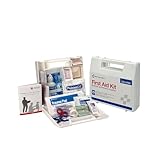
7. First Aid Only 25-Person OSHA Kit – the compact case that still includes eye wash
First Aid Only 25-Person OSHA First Aid Kit for Worksites & Vehicles
25 person capacity
9 x 8 x 2.5 inch case
Includes 4-ounce eye wash
Mounting holes and compartments
Pros
- Compact case stores in a closet
- vehicle or on a wall
- Includes 4-ounce eye wash that many compact kits omit
- Individual compartments for fast access
- Long-running OSHA-compliant design
Cons
- Small capacity for busy multi-person shops
- No dedicated refill ordering program
- Plastic case offers no controlled access
This is the kit I suggest when a shop is small but the machine list is serious. It carries a 25-person OSHA-compliant supply set in a 9 by 8 by 2.5 inch plastic case with a carry handle and mounting holes for vertical surfaces, so it fits inside a wall cabinet, a vehicle or a crowded bench drawer.
What sets it apart in this size class is the 4-ounce eye wash. Most compact kits drop it to save a few pieces, and eye irritation from sawdust and grinding dust is exactly the complaint forum users raise most. Contents also cover bandages, antibiotic ointments, BZK towelettes, gauze roll and pads, gloves, scissors and tweezers.
Ratings are 4.7 from 352 reviews, with about 83% five-star feedback. Owners point to the compact case, the mounting holes and the eye wash. The limitation is straightforward: the supply count is modest for a larger crew, and there is no refill program.
Why eye wash earns its place
Small-particle irritation is the most common workshop eye complaint and the one most likely to be treated on site rather than in a clinic. A 4-ounce bottle handles a flush-and-rinse for dust, sawdust and coolant contact. It is a small bottle that changes the outcome more often than people expect.
Placement beats capacity in a small shop
A kit in a back corner of the shop is not reachable in time. This one has vertical-surface mounting holes, so fix it at eye level near the exit path from the machine area, not in a drawer. If the saw is in another room, put a second compact kit there rather than moving this one.
Where it is outgrown
Two to three workers cutting or grinding on the same shift will consume the gauze and tape faster than you expect. At that point, step up to a 100-person configuration with tilting shelves. Until then, this case is hard to argue with on footprint and contents.
8. Rapid Care 3-Shelf Steel Cabinet – the choice for a rough, high-traffic shop
Rapid Care 3-Shelf First Aid Kit Cabinet, Class A+ ANSI/OSHA Compliant – 700+ Pieces – Wall Mountable Steel Cabinet – Serves up to 150 People
700+ pieces
Up to 150 people
Class A+ ANSI Z308.1-2015
17 x 14 x 5 inches
15 pounds
Pros
- Steel cabinet protects supplies in rough shop environments
- 700+ unitized and color-coded components
- Serves up to 150 people
- Latched swing door deters casual access
Cons
- Heaviest kit here at 15 pounds
- Large wall footprint of 17 x 14 inches
- Larger commitment for a small shop
When the shop is genuinely industrial, this is the case that stops worrying you. The steel cabinet with a swing-open latched door tolerates impacts, dust and moisture far better than any plastic box, and the latched door keeps walk-past traffic from opening it. It is the only steel option in this group.
Inside, three shelves hold 700-plus unitized, boxed and color-coded compartments, and the listing states it meets and exceeds ANSI Z308.1-2015 workplace requirements at a Class A+ level for up to 150 people. Color coding is what makes a deep cabinet usable under stress, since you find the supply by color before you read anything.
At 4.6 stars from 270 reviews with around 83% five-star feedback, the feedback is consistent: people buy it for durability and sheer stocking, then note the 15-pound weight and the wall space it demands. It is a facility purchase, not a bench purchase.
Steel versus plastic, honestly assessed
A steel cabinet costs you weight and footprint. In exchange it tolerates the environment a workshop actually has: chips, sparks, a forklift near the aisle, damp concrete in winter. If your kit lives in a finishing room, a welding bay or a shared production floor, that trade is worth making.
Unitized compartments as an inventory method
Unitized, boxed components are single-item packets with their own labelling, so a used item is replaced by exactly the same thing. That is the difference between restocking in a minute and rebuilding a shelf from a mixed pile. It is the reason cabinets in this class are chosen for larger shops.
When it is too much
At 15 pounds, this is a two-person carry, and the 17 by 14 inch face needs real wall space. For a two-person hobby shop it is overkill. For a facility with many people, grinding, welding and vehicle work, it is the one that will still be full in five years.
9. Ever Ready Class B 190 Piece Kit – the compliance level for larger, higher-risk shops
Class B OSHA ANSI Compliant First Aid Kit – Emergency Medical Supplies in Wall-Mountable Plastic Case for Workplace, Office, Home – 190 Piece
190 pieces
Ansi Class B
Intended for workplaces over 40 staff
14 x 9.5 x 3 inches
3.55 pounds
Pros
- Class B rating suits high-risk shops with more than 40 people
- Covers wound care
- CPR
- eye care and burns in one case
- Wall-mountable plastic case with a sturdy handle
- Instruction card aids use under stress
Cons
- Thinnest feedback of the group at 53 reviews
- Only 190 pieces for a Class B rating
- Basic plastic case rather than a locking cabinet
Class B is the class most workshop buyers overlook. It is intended for high-risk workplaces with more than 40 employees, where injury potential is above the baseline, and this kit holds 190 pieces covering wound care, injury treatment, CPR, eye care and burn treatment in a wall-mountable plastic case with a sturdy handle.
The practical difference from a Class A kit is quantity and coverage rather than a different kind of supply. A Class B configuration carries more of each item and adds categories a Class A kit leaves out. If you employ enough people that the higher risk class applies, this is the specification to match rather than a shopping preference.
One detail worth having: the kit includes a first aid card with emergency contacts and instructions. Under stress, most people do not remember the steps, and a card in the lid settles that.
When a workshop actually needs Class B
Class B is aimed at workplaces where the hazard assessment shows greater injury potential, not simply at a headcount threshold. Metal fabrication, welding, vehicle maintenance and any shop where a high-consequence event is plausible all push in that direction. For a one-person woodshop, Class A sizing is the honest match.
What the thin review history means
At 53 reviews, there is far less long-term feedback than the other kits here. Buyers who own it emphasize the Class B level and the breadth of wound, CPR, eye and burn supplies, and about 83% of feedback is five-star. Treat the rating as reliable and the track record as shorter.
Where it is not the best fit
The plastic case is basic and does not lock, and the supply count is lean for the class it carries. For a controlled-access area or a very rough floor, a steel cabinet is the better container. For a standard high-risk room, this case is fine.
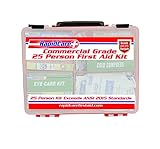
10. Rapid Care 25 Person Premium Kit – the only one here with a CPR barrier
Rapid Care First Aid 839-1-12AN Premium Commercial Grade 25 Person First Aid Kit, Exceeds OSHA/ANSI 2015 Standards, in Detachable Wall Mountable Poly Case
130 pieces
25 person capacity
Exceeds OSHA and ANSI Z308.1-2015
10 x 9 x 4 inches
1.9 pounds
Pros
- Includes a CPR barrier that protects the rescuer from blood exposure
- Blood stopper applicator and trauma pads included
- Detachable wall-mount case with hardware
- Compact 10 x 9 x 4 inch footprint for 130 pieces
Cons
- Lowest average rating in the group at 4.5 stars
- Poly case does not lock
- Wider spread of ratings than the other kits
This is the kit I would add to a shop that does grinding, welding or metalwork, because it is the only one in the group with a CPR barrier. A one-way valve mask protects the person giving aid from blood exposure, which is both a safety issue and a reason bystanders hesitate to start. Removing that hesitation is worth a great deal.
It also carries a blood stopper applicator and trauma pads, plus two finger splints, a triangular bandage, an instant cold compress, eye wash and burn dressings.
That is a genuinely shop-shaped contents list for 130 pieces, in a detachable wall-mountable poly case with mounting hardware included.
Rescuer protection as a design decision
Bloodborne pathogens are a named occupational concern in a shop, and the barrier device is what keeps a well-meaning helper from becoming a second casualty. The bloodborne pathogens treatment category also covers cleanup after an incident, which is the part owners forget until it happens. One kit in the room covers both the injury and the spill.
Finger splints and burn dressings for real injuries
Finger injuries are common around woodworking machinery, presses and grinders, and a splint supports a proper assessment rather than a makeshift wrap. Burn dressings and eye wash cover welding spatter and grinding sparks. These are the workshop-specific items generic household kits leave out.
How it rates
It is the lowest-rated kit here at 4.5 stars from 80 reviews, with about 79% five-star and a wider spread than the others, including some three-star and two-star feedback. Buyers single out the CPR barrier and trauma supplies as the reason to buy, while some describe the case as basic and unlocked. Judge it on contents rather than on the container.
Best used as a second kit
The 10 by 9 by 4 inch detachable case mounts neatly on a wall or sits in a vehicle. For most shops, this is the module near the grinding and welding area while a larger general kit covers the main floor. Splitting by hazard beats one kit trying to do everything.
If you are still working out how a shop fits into a wider setup, our guides on greenhouse kits for year-round growing and hydroponic systems for compact counters cover the off-season half of a small workshop property, and broadforks for first-time gardeners is the right read if the yard is part of the same property.
How to Choose a Workshop First Aid Kit: Class, Type, and Hazard
Choosing well takes less than most people expect if you work through it in order. Decide the class, then the type, then the hazard, then the extras. Skipping to the brand list is how shops end up with a case that looks right and is missing the three items they need.
Class A vs Class B vs Class C: what each one covers
A Class A kit meets the minimum requirements for a workplace with a low risk of injury, a Class B kit is for workplaces with a higher risk of injury or a greater number of employees, and a Class C kit is for groups in remote or isolated settings away from an accessible emergency care facility. Most workshops fit Class A sizing, and shops with a formal hazard assessment showing greater injury potential should look at Class B.
Two practical notes. OSHA 1910.151(b) requires that first aid supplies be “adequate” for the workplace, so the class alone does not settle the question when a machine can cause a severe injury. And under ANSI/ISEA Z308.1-2021, larger kits must hold larger minimum quantities of key items, so piece count and class move together rather than independently.
Type I to Type IV: mounted, portable, or weather-resistant
The type classification describes the environment, not the size. A Type I kit is a mounted indoor unit, and a Type II kit is a portable indoor unit. A Type III kit is for mobile or outdoor use where the case must be water-resistant. A Type IV kit is a portable outdoor unit. The ProHeal kit in this roundup is explicitly Type III, which suits a shop where the kit lives in a truck or moves between a bench and a job site.
Match the kit to the hazards your shop actually creates
A woodshop produces deep cuts, splinters, kickback injuries and dust irritation. A machinist or metal shop adds swarf, coolant burns, metal fragments in the eye and grinding sparks. A welding bay means spark and spatter burns plus eye injury. An automotive garage adds fluid burns, crush injuries and vehicle-specific crush points. Write your list before you shop.
Then buy for what the list actually says. Sawdust and grinding dust mean eye wash. Spark and spatter work means burn dressings. Heavy equipment near people means splints and a pressure dressing. A separate bleed-control module covers the severe end, and the consensus in the woodworking forums is that it belongs in its own pouch rather than mixed into the main case.
What makes a workshop first aid kit good quality
Six criteria decide quality in this category, and all six can be checked before you buy:
Stated compliance. The listing should name ANSI/ISEA Z308.1-2021 or an OSHA guideline and say whether it is Class A, Class B or Class A+.
Supply depth, not piece count. Count the gauze pads, gauze roll, tape, nitrile gloves, burn dressings and eye wash. Buyers report cheap kits arrive with too many adhesive bandages and too little of everything else.
Organization under stress. Compartments, tilting shelves or a clear cover. Items must be findable one-handed and while distracted.
Container durability. Steel for a rough floor, plastic with secure latches for a tidy shop, and a case shape that mounts rather than sits.
Restock path. Refill tabs, a refill order form, or a documented way to buy the same unit again. Restockability is what keeps a kit compliant after a year.
Weight and footprint. A kit you cannot lift or cannot mount near the hazard will not be used. Match size to your space, not to your ambition.
What not to put in a workshop first aid kit
Four things belong in the no list. First, expired medication and loose, unlabelled tablets, which arrive in budget kits and are a liability in a workplace. Second, prescription medication or anything restricted beyond over-the-counter use that has not passed your own policy check. Third, home remedies and herbal items that cannot be safely explained to an emergency responder. Fourth, unsterile or opened items, including any tool whose packaging has been broken.
Many employers also exclude pain medication entirely, and that is a reasonable default. If you do include anything medicinally, keep it factory-sealed, in its original packaging, and inside the manufacturer’s expiry window, with a written policy behind the decision.
How many kits a workshop needs and where to mount them
Proximity decides it, not headcount. The widely cited rule is that supplies should be reachable within about four minutes of any work area. Walk your shop and mark the points where a serious injury is most likely: the table saw, the welder, the grinder bench, the vehicle bay.
One person, one room. A single compact case, mounted at eye level near the main exit route from the machine area.
Two to four people, one room. A 25-person configuration for the main floor, plus a small kit at the saw if the distance feels long.
Multiple rooms or bays. One kit per hazard zone, each stocked for that zone. A welding bay and a saw area have different needs.
Mobile work. A Type III kit in the vehicle, so it travels to the job site instead of waiting in the shop.
Mount kits where they are visible and out of the way of moving material, and keep them off the floor. A kit on a high shelf satisfies nobody; a kit at the door gets used.
The monthly refill and inspection routine
Inspection takes ten minutes a month and is the single habit that separates a compliant kit from an empty one. Open it, check it, sign it, and replace what was used.
Check every item against the case list and the refill tabs, if the kit has them.
Inspect each sealed package for tears, discoloration or moisture.
Read the expiry dates on every item and remove anything past the date, regardless of how it looks.
Replace anything used since the last check, including a single bandage.
Count gauze, tape and gloves specifically, since these run out first.
Confirm eye wash bottles are sealed and within date.
Verify the case, latch, handle and wall mount are still sound.
Record the date and the name of the person who checked, and reorder what is missing.
Run the same check immediately after any incident, not just on schedule. Kits that quietly run empty after a real cut are the most common complaint in shop discussions, and every one of those cases traces back to a skipped restock.
Trauma gear needs trained hands, not just an open box
Tourniquets, hemostatic gauze and pressure bandages are worth having in a shop with saws and presses, and they are also the items most often bought and never used correctly. A tourniquet applied with the wrong tension or worn too long causes its own harm. Before you stock them, have someone on staff complete a bleeding-control course, and make sure more than one person knows where the module lives.
Record the training date, set a reminder to renew it, and write down the emergency services address for your shop on a card in the kit. A module nobody has practised is inventory, not first aid.
Frequently Asked Questions
What’s the difference between a class A and a class B first aid kit?
A Class A kit meets minimum requirements for a workplace with a low risk of injury, while a Class B kit is for workplaces with a greater risk of injury or more employees, and it carries a larger quantity of each supply plus additional injury categories. Most small workshops fit Class A sizing. A shop with a formal hazard assessment showing greater injury potential, such as metal fabrication, welding or vehicle work, should look at Class B.
Do the items in a first aid kit expire?
Yes. Adhesive bandages, antibiotic ointments, antiseptic towelettes and eye wash all carry expiry dates, and sterile dressings lose their packaging integrity over time. Adhesive backings lose tack long before printed expiry, and eye wash is usually the first thing to be out of date in a shop. Check dates monthly and remove anything past the date regardless of appearance.
Can I use an expired first aid kit in my shop?
No. An expired kit is not adequate first aid supplies under OSHA 1910.151(b), and expired antiseptic wipes, ointments and eye wash are ineffective or unsafe. Pull expired items immediately, record the check, and replace them through a refill order rather than keeping the old case. Do not use expired eye wash on an eye injury, and do not re-label anything to extend a date.
What should not be included in a first aid kit?
Do not include expired medication, loose unlabelled tablets, prescription medication that has not cleared your workplace policy, home remedies and herbal items, and any opened or non-sealed supply. Many employers also exclude over-the-counter pain medication entirely. Anything you do include should be factory-sealed, in original packaging, inside its expiry window, and covered by a written policy.
How many first aid kits does a small workshop need?
Proximity decides, not headcount. Place supplies within about four minutes of any work area. One person in one room needs a single compact mounted kit, two to four people usually need a 25-person configuration plus a small kit at the saw, and a shop with separate sawing, welding and grinding bays needs one kit per hazard zone. Mobile work needs a Type III kit in the vehicle.
Final Verdict: Which Workshop First Aid Kit Fits Your Shop
If you run a small crew in a working shop, the First Aid Only 9302-25M is the pick: a metal case that mounts flat, 178 pieces weighted toward cuts and burns, and 6796 reviews behind it. For a busier floor with several people on site, the Be Smart Get Prepared 326 Piece kit holds more supplies and its tilting shelves keep the back row visible. If you want maximum stocking in a compact wall footprint, the M2 BASICS 350 Piece kit does it in 13 by 11 inches.
For a one-person maker or mobile work, the ProHeal Type III Class A kit fits a vehicle or a glove compartment and includes eye wash. Where eye injury is the main concern, the compact 25-person kit with 4-ounce eye wash is the sharper choice. A rough industrial floor calls for the Rapid Care steel cabinet with 700-plus color-coded compartments, and a high-risk shop with more than 40 people should match the Class B kit to its hazard assessment. The Rapid Care 25 Person premium kit is the one to add at a grinding or welding station for its CPR barrier and trauma pads.
Whatever you choose, the kit only works if three things happen: it sits within a few minutes’ walk of the hazard, one named person inspects it every month, and someone on staff is trained to use the bleeding-control gear you add. Get those right in 2026 and the best first aid kits for workshops become the least interesting part of your safety setup, which is exactly where they belong.
Leave a Reply