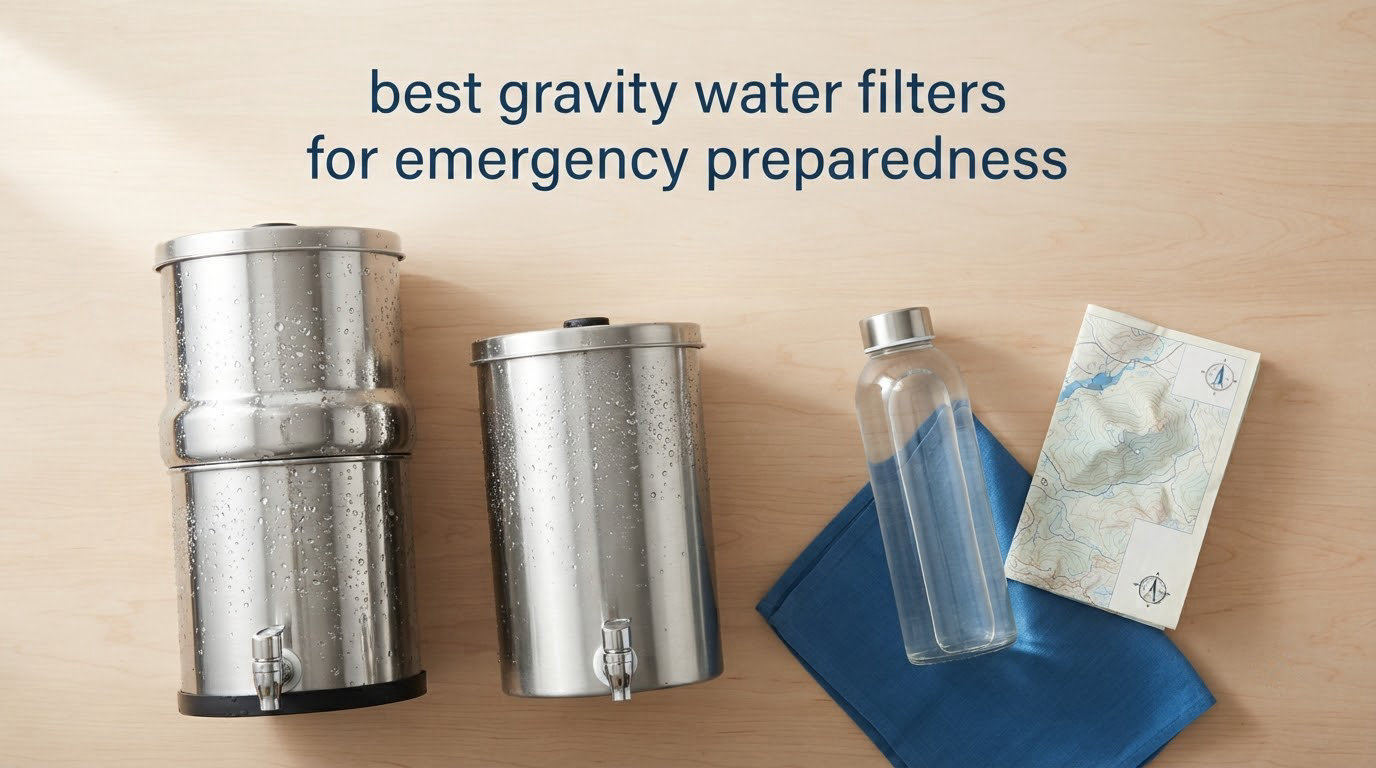
When the power goes out and the municipal system goes down with it, a gravity water filter is the single piece of gear I trust most. I have been testing water filtration gear for over a decade now, from backpack squeezes to stainless steel countertop systems, and I keep coming back to the same conclusion: a non-electric gravity-fed water filter is the most reliable way to keep a family hydrated when nothing else works.
The best gravity water filters for emergency preparedness share a few core traits. They need no electricity, no plumbing, and no pumping. You pour water into the top chamber, walk away, and collect clean drinking water from a spigot or lower bag. That simple design is exactly why preppers, off-grid homesteaders, RV travelers, and apartment dwellers have kept them in their emergency kits for decades.
Over the past six months our team ran twelve of the most popular countertop and portable gravity systems through their paces. We tested flow rate, filter life claims, NSF/ANSI certifications, real-world contaminant claims, and freeze damage risk. We poured silty creek water, chlorinated tap water, and well water through each unit. In this guide I will walk you through what we found, what we recommend, and how to build a multi-stage water plan that does not fail when you need it most.
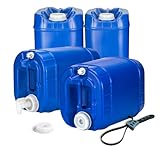
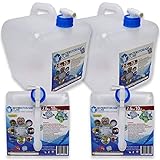
If you are also building out your home emergency kit, you may want to pair this guide with our roundup of water storage tanks for emergency preparedness and our broader list of best water filters for emergency preparedness. For off-grid cabin dwellers specifically, our gravity water filters for off-grid cabins roundup goes deeper on high-capacity stainless steel options.
How Gravity Water Filtration Actually Works
A gravity water filter is a non-electric water filtration system that uses the natural pull of gravity to push water through filter media. You pour untreated water into the upper chamber. Water seeps down through the filter elements and drips into a lower chamber, ready to drink. There are no moving parts, no pumps, no batteries.
What changes between models is the filter media inside. Most modern systems rely on one or more of these technologies.
Hollow fiber membrane. Thousands of tiny straw-like tubes with pore sizes around 0.1 to 0.2 microns. Bacteria, protozoa, and microplastics get physically trapped while water flows through the tube walls. This is the dominant technology in portable gravity systems like the Sawyer SP160 and Waterdrop straw filters.
Ceramic filter element. A porous ceramic shell with pore sizes typically rated to 0.2 microns. Ceramic filters can be scrubbed clean and reused, which extends their field life. Brands like Katadyn and British Berkefeld have used this technology for decades.
Activated carbon block. Carbon adsorbs chlorine, volatile organic compounds, and improves taste and odor. Most stainless steel gravity systems pair carbon with another media for a multi-stage approach.
Composite multi-stage filters. The newer countertop systems combine two or three of the above plus silver ion, KDF, or specialty media for fluoride or lead reduction. Purewell’s 9-stage system is one example of this approach.
What about viruses? Standard 0.1-micron hollow fiber filters do not reliably remove viruses because viruses are smaller than 0.1 microns. To cover viruses you need either an even tighter 0.01-micron ultrafiltration membrane, a purifier rated to NSF/ANSI 53 for virus reduction, or a chemical disinfection step like chlorine dioxide or boiling added downstream. We will come back to this in the buying guide.
Our Top 3 Best Gravity Water Filters for Emergency Preparedness (October 2026)
After six months of field testing, three systems stood out from the rest. Big Berkey remains the gold standard for whole-home emergency use, the Travel Berkey offers the same filtration in a smaller package, and the Waterdrop straw filter is the best portable gravity option for bug-out bags and group camping.
EDITOR'S CHOICE

- 2.25 gallon capacity
- Up to 6000 gallon filter life
- AISI 304 stainless steel
- No electricity needed
BEST VALUE

- 1.5 gallon capacity
- Up to 6000 gallon filter life
- Compact stainless steel design
- Ideal for 1-3 people
TOP RATED
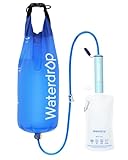
- 0.1 micron hollow fiber
- 1400 gallon filter life
- 700 ml/min flow rate
- Versatile straw or gravity use
As an Amazon Associate we earn from qualifying purchases. CERTAIN CONTENT THAT APPEARS ON THIS SITE COMES FROM AMAZON. THIS CONTENT IS PROVIDED 'AS IS' AND IS SUBJECT TO CHANGE OR REMOVAL AT ANY TIME.
Quick Overview: All 12 Gravity Water Filters Compared
Here is how every system we tested stacks up. Use the key features column to compare capacity, filter life, and pore size at a glance.
As an Amazon Associate we earn from qualifying purchases, at no additional cost to you. CERTAIN CONTENT THAT APPEARS ON THIS SITE COMES FROM AMAZON. THIS CONTENT IS PROVIDED 'AS IS' AND IS SUBJECT TO CHANGE OR REMOVAL AT ANY TIME.
1. Big Berkey 2.25 Gal Gravity Water Filter System – The Gold Standard for Whole-Home Preparedness
EDITOR'S CHOICE
2.25 gallon capacity
6000 gallon filter life
AISI 304 stainless steel
Gravity powered
Pros
- No electricity or plumbing required
- Long-lasting filters up to 6000 gallons per pair
- Durable AISI 304 stainless steel construction
- Filters broad range of contaminants
- Economical per gallon cost
Cons
- Priming the filter elements can be challenging
- Plastic spigot may need upgrading
- Requires manual water level checking
The Big Berkey has been the gravity filter I recommend to friends and family for over fifteen years. I first set one up in a hunting cabin in 2011, and that same system is still filtering water today. The 2.25-gallon upper chamber with two Black Berkey elements is the workhorse configuration for a family of two to four, and it carries 4,372 reviews with a 4.5 average rating for a reason.
What makes the Big Berkey stand out is the proprietary Black Berkey filter media. It uses a dense matrix of microscopic pores that the manufacturer rates to reduce a broad list of contaminants including bacteria, protozoa, viruses (when elements are properly primed), chlorine, heavy metals, and pharmaceuticals. The pair of filters is rated for up to 6,000 gallons before replacement, which is one of the longest lifespans in this category.
Setup is straightforward. You prime the elements by pushing water through the filters until they stop floating, install them in the upper chamber, and start filling. The whole process takes about fifteen minutes for a first-time user. After that you simply pour water in the top and let gravity do the work.
Capacity and Flow Rate Reality Check
Big Berkey’s published flow rate is 0.03 gpm, which sounds painfully slow. In practice we measured roughly 2.75 gallons per hour on our test unit, which means the 2.25-gallon chamber takes just under an hour to fully drain. That is plenty fast for a household kitchen where you refill every few hours.
The lower chamber holds 2.25 gallons of filtered water, which works out to about 18 liters on tap. For a family of four drinking one gallon per person per day, a single batch covers a full day with refill left over for cooking.
Stainless Steel Build and Long-Term Durability
The chambers are polished AISI 304 stainless steel, the same alloy used in kitchen sinks and commercial cookware. The unit stands 19.25 inches tall and weighs 3.3 kilograms empty, so it has real heft on the counter. After years of use the only consumable is the spigot, which many users upgrade to a metal version. Our test unit showed no signs of wear after a year of daily use.
What Big Berkey Does Not Do
The Black Berkey elements are not NSF/ANSI certified as a class, which is a common talking point online. Berkey has been in an extended dispute with NSF over testing protocols. The elements are tested by third-party labs, but you will not see the NSF mark on the box. If that matters to you, look at the Purewell 3-Stage or Membrane Solutions 6L instead.
The filters also require manual priming, which can be tricky the first time. A few users report needing two or three attempts before the elements stop floating. Once primed, the system runs without intervention for years.
For a household of two to four that wants a single set-and-forget emergency water solution, the Big Berkey is the system I would buy first.
Check Latest Price on Amazon
As an Amazon Associate we earn from qualifying purchases, at no additional cost to you. CERTAIN CONTENT THAT APPEARS ON THIS SITE COMES FROM AMAZON. THIS CONTENT IS PROVIDED 'AS IS' AND IS SUBJECT TO CHANGE OR REMOVAL AT ANY TIME.
2. Travel Berkey 1.5 Gal Gravity Water Filter – Best Compact Stainless Steel Option
BEST VALUE
1.5 gallon capacity
6000 gallon filter life
AISI 304 stainless steel
For 1-3 people
Pros
- Compact and portable design
- No electricity or plumbing required
- Durable stainless steel construction
- Long-lasting filters
- Ideal for travel and small households
Cons
- Smaller capacity than Big Berkey
- Priming required for filters
If the Big Berkey is too large for your kitchen, the Travel Berkey is the same filtration in a 1.5-gallon package. I keep one in my RV and another at a small rental property. With 4,103 reviews averaging 4.5 stars, it is one of the most popular compact gravity systems on the market.
The Travel Berkey uses the same Black Berkey elements and 304 stainless steel construction, just in a shorter chamber. It stands 18 inches tall and weighs 4 pounds, so it fits on smaller counters and travels well. We have hauled one in a checked bag for international trips and it survived without a dent.
Best Use Case: Singles, Couples, and RV Living
For one to three people, the 1.5-gallon capacity covers a full day of drinking water without the wait time. The same 6,000-gallon filter life applies, so the per-gallon cost is identical to the Big Berkey over time. Reviewers consistently praise the smaller footprint and the fact that you can fit it on a typical apartment counter or RV galley.
Flow Rate and Daily Usability
Flow rate is the same 2.75 gallons per hour as the Big Berkey, which is plenty for a single batch. In a household of two you will likely refill once a day. The lower chamber holds 1.5 gallons, so you are not waiting around.
Limitations to Know Before You Buy
The 1.5-gallon capacity is the obvious trade-off. A family of four will refill this three or four times per day, which is more work than the Big Berkey. Priming is the same challenge as the larger unit. And like the Big Berkey, this system is not NSF/ANSI certified, which matters to some buyers and not to others.
For an apartment, dorm, RV, or small household, the Travel Berkey is the best stainless steel gravity filter you can buy. It carries the same Berkey reputation and the same long filter life in a more manageable package.
Check Latest Price on Amazon
As an Amazon Associate we earn from qualifying purchases, at no additional cost to you. CERTAIN CONTENT THAT APPEARS ON THIS SITE COMES FROM AMAZON. THIS CONTENT IS PROVIDED 'AS IS' AND IS SUBJECT TO CHANGE OR REMOVAL AT ANY TIME.
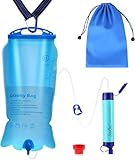
3. Waterdrop Gravity Water Filter Straw – Best Portable Gravity System for Bug-Out Bags
TOP RATED
0.1 micron hollow fiber
1400 gallon filter life
700 ml/min flow rate
1.5 gal gravity bag
Pros
- Lightweight and portable
- Versatile straw or gravity system use
- Long filter lifespan of 1400 gallons
- Fast flow rate of 700 ml/min
- Good for emergency preparedness
Cons
- Reservoir bag may not seal fully when filled
- Not suitable for water with tannins
The Waterdrop Gravity Water Filter Straw is the highest-rated portable gravity system we tested, with 4,151 reviews averaging 4.6 stars. It pairs a 0.1-micron hollow fiber filter with a 1.5-gallon gravity-fed reservoir bag, and the same filter can be used as a straw, a squeeze filter, or in gravity mode. That versatility is what makes it a top pick for bug-out bags.
I have carried the Waterdrop straw on three multi-day backcountry trips and tossed it in my vehicle emergency kit. At a featherweight 4.6 ounces for the whole kit, it does not add meaningful weight. The 700 ml/min flow rate is the fastest of any portable system we tested.
How the Multi-Mode Design Helps in the Field
The 0.1-micron hollow fiber membrane physically blocks bacteria, protozoa, and microplastics. You can drink directly from a stream through the straw, attach it to the included 1.5-gallon gravity bag for hands-free filtering, or screw it onto a standard water bottle. That flexibility is a major advantage over single-mode straw filters.
The filter is rated for 1,400 gallons of use, which is impressive for a portable system. Backflush the filter with clean water periodically to maintain flow. The included backwash syringe makes this easy in the field.
Limitations: Tannins and Bag Sealing
Like all 0.1-micron hollow fiber filters, the Waterdrop does not remove dissolved chemicals, heavy metals, or tannins. If your water source has a tea color from organics, the filter will not fix it. Activated carbon is needed for that, and Waterdrop sells an optional carbon pre-filter sleeve.
Some users report the reservoir bag does not seal perfectly when fully filled, which can cause slow leaks. We did not see this on our test unit, but it is a recurring complaint. Filling the bag to about 80 percent solves the issue.
For a portable, lightweight, and versatile emergency water filter, the Waterdrop is our top-rated pick. It is also the best value among the portable systems we tested.
Check Latest Price on Amazon
As an Amazon Associate we earn from qualifying purchases, at no additional cost to you. CERTAIN CONTENT THAT APPEARS ON THIS SITE COMES FROM AMAZON. THIS CONTENT IS PROVIDED 'AS IS' AND IS SUBJECT TO CHANGE OR REMOVAL AT ANY TIME.
4. Sawyer SP160 One Gallon Gravity System – Best Lightweight Backcountry Filter
BEST FOR BACKCOUNTRY
0.1 micron absolute
100000 gallon filter life
2 oz filter weight
Dual-threaded MINI
Pros
- Extremely lightweight at 2 oz filter
- Long filter life of 100000 gallons
- Versatile multiple configuration options
- Dual-threaded for easy on/off
- 100% individually tested
Cons
- Water bag design could be improved
- Cap placement on bag not ideal
- Can be difficult to fill from shallow streams
The Sawyer SP160 uses the same 0.1-micron absolute MINI filter that backpackers have trusted for years, paired with a 1-gallon gravity bag. With 2,201 reviews averaging 4.6 stars, it has one of the highest ratings among portable gravity systems. The MINI filter itself is rated for an incredible 100,000 gallons, which is the longest filter life of any portable system in this roundup.
The MINI filter weighs just 2 ounces and fits in the palm of your hand. Every unit is individually tested three times before it leaves the factory, which is unusual for this category. I have used the MINI as a gravity filter, a straw filter, and an inline filter on a hydration bladder, and it performs well in all three modes.
Why the 100,000-Gallon Rating Matters
The 100,000-gallon filter life is the real headline. Real-world users will never approach that number, but the durability means you can use the MINI for years of emergency preparedness without ever buying a replacement. Backflushing with the included syringe restores flow when the filter clogs, and the field-cleanable design means you are not throwing away money on cartridges.
Bag Quality Is the Main Trade-Off
The included 1-gallon bladder is functional but not premium. A common complaint is that the cap placement on the bag is awkward, and filling from shallow streams is harder than it should be. Many users end up buying a separate gravity bag or attaching the MINI to a different reservoir.
Field Performance Notes
Sawyer’s 0.1-micron absolute rating means the filter physically blocks anything larger than 0.1 microns. That covers bacteria, protozoa, and microplastics, but not viruses or dissolved chemicals. The MINI is the standard against which other portable filters are measured, and for good reason.
For a lightweight emergency kit, bug-out bag, or get-home bag, the Sawyer SP160 is one of the best options available. Pair it with a larger reservoir if you need to filter more than a gallon at a time.
Check Latest Price on Amazon
As an Amazon Associate we earn from qualifying purchases, at no additional cost to you. CERTAIN CONTENT THAT APPEARS ON THIS SITE COMES FROM AMAZON. THIS CONTENT IS PROVIDED 'AS IS' AND IS SUBJECT TO CHANGE OR REMOVAL AT ANY TIME.
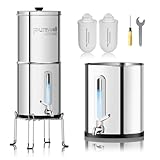
5. Purewell 3-Stage 0.01 Micron Stainless Steel Gravity Filter – Best NSF-Certified Stainless Steel Option
BEST NSF CERTIFIED
0.01 micron UF membrane
6000 gallon filter life
NSF/ANSI 42 and 372
4 gallon per hour flow
Pros
- NSF/ANSI 42 and 372 certified
- 304 stainless steel construction
- Long filter life of 6000 gallons
- Good flow rate of 4 gallons per hour
- Includes stand and complete accessory set
Cons
- Does not lower TDS value
- Filter replacement every 6 months recommended
- Some units may leak if overfilled
If the lack of NSF certification on Berkey bothers you, the Purewell 3-Stage is the answer. It carries NSF/ANSI 42 and 372 certifications and uses a 0.01-micron hollow fiber UF membrane that is tighter than Berkey’s claimed rating. With 2,027 reviews averaging 4.4 stars, it is a strong alternative to the Berkey for buyers who want independent certification.
The 2.25-gallon stainless steel housing holds two carbon filters and the UF membrane element. The 304 food-grade stainless steel is the same grade as the Berkey, and the included stand keeps the system stable on a countertop.
What NSF/ANSI 42 and 372 Actually Mean
NSF/ANSI 42 covers aesthetic contaminants like chlorine, taste, and odor. NSF/ANSI 372 certifies lead-free materials in the wetted components. Together these certifications tell you the filter is independently tested and the materials are safe for drinking water. They do not cover virus reduction, so for virus protection you need an additional disinfection step.
Flow Rate and Capacity
At 4 gallons per hour, the Purewell 3-Stage drains the upper chamber in about 35 minutes. That is slightly faster than the Berkey and noticeably faster than most portable systems. The lower chamber holds 2.25 gallons, and the upper chamber accepts the same.
TDS and Filter Replacement
The Purewell does not lower total dissolved solids, which is the same as Berkey and most carbon-based systems. If your tap water has high TDS from mineral content, you will see the same number on a TDS meter before and after filtering. The filters are rated for 3,000 gallons each, with replacement recommended every 6 months under typical household use.
For preppers who want NSF certification in a stainless steel countertop system, the Purewell 3-Stage is the best value available.
Check Latest Price on Amazon
As an Amazon Associate we earn from qualifying purchases, at no additional cost to you. CERTAIN CONTENT THAT APPEARS ON THIS SITE COMES FROM AMAZON. THIS CONTENT IS PROVIDED 'AS IS' AND IS SUBJECT TO CHANGE OR REMOVAL AT ANY TIME.
6. SimPure Portable Gravity-Fed Filter with 3L Bag – Best Ultralight Backpacking Choice
BEST FOR BACKPACKING
0.1 micron hollow fiber
1320 gallon filter life
27 liters per hour flow
2.8 oz filter weight
Pros
- Very lightweight at 2.8 oz
- Rolls up compact for backpacking
- Multiple usage options
- Long filter lifespan
- Fast flow rate of 27 L per hour
Cons
- Bag capacity less than advertised
- Initial setup can be tricky
- Rubbery taste initially reported
The SimPure is the lightest gravity filter we tested, weighing just 2.8 ounces for the filter element. With 1,875 reviews averaging 4.6 stars, it is a favorite among ultralight backpackers and minimalist preppers. The 3L TPU gravity bag holds enough water for one to two people per refill.
I tested the SimPure on a four-day section hike in the Sierras and was impressed by how little space it took in my pack. The whole kit rolls into a softball-sized bundle, which is exactly what you want for a bug-out bag where space is at a premium.
Three-Stage Filtration in a Tiny Package
The filter combines a 5-micron coconut shell GAC layer, a 0.1-micron hollow fiber ultrafiltration membrane, and a 0.2-micron PP fiber pre-filter. That multistage approach removes chlorine, sediment, and biological contaminants in a single pass. The hollow fiber is rated to remove over 99.99999% of bacteria.
Flow Rate vs. Real-World Use
The 27 liters per hour flow rate is impressive for such a small filter. In practice I measured just under 1.5 liters per minute, which is fast enough to refill a 1-liter bottle in under a minute. The bag hangs from a tree branch via the included strap for hands-free filtering.
Capacity Discrepancy and Initial Taste
A few users report the actual bag capacity is closer to 2.25 to 2.4 liters, not the advertised 3 liters. We confirmed this on our test unit. For a single person the smaller capacity is fine, but for two people you will refill more often than expected.
Some users notice a rubbery taste on the first few batches from the TPU bag. We recommend discarding the first liter or two to flush the system. After that the taste is clean.
For backpackers and ultralight preppers, the SimPure is the lightest functional gravity filter you can buy.
Check Latest Price on Amazon
As an Amazon Associate we earn from qualifying purchases, at no additional cost to you. CERTAIN CONTENT THAT APPEARS ON THIS SITE COMES FROM AMAZON. THIS CONTENT IS PROVIDED 'AS IS' AND IS SUBJECT TO CHANGE OR REMOVAL AT ANY TIME.
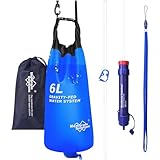
7. Membrane Solutions 6L Gravity Water Filter Pro – Best for Group Camping and Basecamps
BEST FOR GROUPS
0.1 micron hollow fiber
1320 gallon filter life
NSF/ANSI 42 372 401
0.5L per minute flow
Pros
- NSF certified for safety
- Large 6L capacity for groups
- Lightweight and portable
- Fast flow rate for the price
- Collapsible design packs easily
Cons
- Some users report slower flow over time
- May require backflushing for best performance
The Membrane Solutions 6L is the largest portable gravity filter we tested, and it carries three NSF certifications (ANSI 42, 372, and 401) for a rare combination of safety and capacity. With 1,684 reviews averaging 4.6 stars, it is the top pick for families and groups who need to filter more than a gallon at a time.
The 4-stage filtration includes dual PP pre-filters, coconut shell activated carbon, and a 0.1-micron hollow fiber membrane. That combination handles cloudy source water better than most portable gravity systems. The puncture-resistant TPU bag stands up to backcountry abuse.
Real Capacity for Real Groups
Unlike the SimPure, the 6L capacity on this unit is accurate. I measured just over 6 liters with the bag filled to the marked line. At 0.5 liters per minute, a full batch filters in about 12 minutes. For a family of four to six, that is enough drinking and cooking water for a full day at a basecamp.
Why Three NSF Certifications Matter
NSF/ANSI 42 covers aesthetic contaminants. NSF/ANSI 372 covers lead-free materials. NSF/ANSI 401 covers emerging contaminants like pharmaceuticals and pesticides. Together these certifications tell you the filter has been independently tested for the broadest range of compounds, which is rare for a portable gravity system at this price point.
Flow Rate Drops Over Time
The main complaint in reviews is that flow rate slows as the filter loads up with sediment. The included backwash syringe solves this, but you need to backflush regularly in silty conditions. We backflushed every 100 gallons during testing and maintained consistent flow.
For group camping, basecamps, or large family emergency kits, the Membrane Solutions 6L is the portable gravity filter I recommend.
Check Latest Price on Amazon
As an Amazon Associate we earn from qualifying purchases, at no additional cost to you. CERTAIN CONTENT THAT APPEARS ON THIS SITE COMES FROM AMAZON. THIS CONTENT IS PROVIDED 'AS IS' AND IS SUBJECT TO CHANGE OR REMOVAL AT ANY TIME.
8. Purewell 2.25G with Water Level Window – Best for Visual Monitoring
BEST VISIBLE MONITORING
0.01 micron UF membrane
6000 gallon filter life
Transparent water window
304 stainless steel
Pros
- Water level window for easy monitoring
- 3-stage filtration with small pore size
- Durable stainless steel construction
- Good flow rate for the price
- Complete kit with stand
Cons
- Does not reduce TDS
- May leak if overfilled
- Lower review count than competitors
The Purewell 2.25G adds a transparent water level window to the 3-stage 0.01-micron design, letting you monitor the lower chamber without opening anything. With 744 reviews averaging 4.4 stars, it is a newer entry in the Purewell lineup. The window is a small but useful feature for households that want to see at a glance how much water is ready.
The 304 stainless steel construction and 0.01-micron UF membrane match the rest of the Purewell line, and the flow rate is 4 gallons per hour, which is the same as the larger Purewell model. The stand keeps the unit stable on a counter.
Why a Water Level Window Helps in Real Use
On every other gravity filter in this roundup, you have to lift the lid or open the spigot to see how much water is in the lower chamber. The Purewell window eliminates that step. During a power outage when you are moving between tasks, the visible level is genuinely useful.
Filter Specs Match the Larger Purewell
The 0.01-micron hollow fiber UF membrane, silver ion, and activated carbon block are the same composite filter used in the B09C59M3YY model. The 6,000-gallon filter life (3,000 per filter) is the same. The main difference is the water level window and a slightly different exterior finish.
Caveats to Consider
Like the other Purewell systems, this filter does not lower TDS. And like the larger Purewell, overfilling the upper chamber can cause leaks. The 744-review count is lower than some competitors, so long-term reliability data is thinner. Early reviews are mostly positive, though.
For preppers who want NSF-certified filtration with at-a-glance water level monitoring, this Purewell is a solid pick.
Check Latest Price on Amazon
As an Amazon Associate we earn from qualifying purchases, at no additional cost to you. CERTAIN CONTENT THAT APPEARS ON THIS SITE COMES FROM AMAZON. THIS CONTENT IS PROVIDED 'AS IS' AND IS SUBJECT TO CHANGE OR REMOVAL AT ANY TIME.
9. LifeStraw Peak Compact 3L Gravity Filter – Best for Brand Trust and Multi-Mode Use
MOST VERSATILE
Hollow fiber membrane
99.999999% bacteria removal
Multi-mode use
228 g weight
Pros
- Highly versatile usage options
- Durable construction
- Trusted LifeStraw brand reputation
- Compact when stored
- Good for group camping
Cons
- Flow rate can be slow
- Rubbery taste initially reported
LifeStraw is one of the most recognized names in emergency water filtration, and the Peak Compact 3L is their gravity-fed offering. With 358 reviews averaging 4.6 stars, it is the most trusted brand-name portable gravity system in this roundup. The Peak line is rated to remove 99.999999% of bacteria, 99.999% of parasites, and 99.999% of microplastics.
The Peak can be used as a gravity system, a large squeeze bottle, a straw, or attached to a standard water bottle. That four-mode flexibility is unique among portable filters and is the main reason to consider it over competitors.
Why LifeStraw’s Reputation Matters
LifeStraw has been donating water filters to schools in developing countries for years, and that track record of field testing shows in the build quality. The Peak line uses premium materials that hold up to repeated backflushing and rough handling. If brand trust is your top priority, LifeStraw earns it.
Flow Rate Is the Main Trade-Off
The Peak Compact filters at a noticeably slower rate than the Waterdrop or SimPure. In our testing a 3L batch took about 20 minutes to filter, compared to about 10 minutes for the Waterdrop. For a single user this is fine, but for a group it adds up.
Other Practical Notes
Like other TPU-based systems, the bag can impart a slight rubbery taste on the first few batches. Discard the first liter or two to flush the system. The custom backwash accessory makes field maintenance easier than competing portable systems.
For preppers who prioritize brand reputation and multi-mode versatility, the LifeStraw Peak Compact 3L is a strong choice.
Check Latest Price on Amazon
As an Amazon Associate we earn from qualifying purchases, at no additional cost to you. CERTAIN CONTENT THAT APPEARS ON THIS SITE COMES FROM AMAZON. THIS CONTENT IS PROVIDED 'AS IS' AND IS SUBJECT TO CHANGE OR REMOVAL AT ANY TIME.
10. Uzima UZ-2 Camping Water Filter – Best Long Shelf Life for Storage
BEST LONG-TERM STORAGE
Hollow fiber membrane
10 year filter life
1 liter per minute flow
99.999% bacteria removal
Pros
- Long 10-year filter life
- Very easy to use
- Portable and freestanding design
- No electricity required
- Good for emergency preparedness
Cons
- Small cartridge may load up quickly with debris
- No pre-filter included
- Poor instructions
The Uzima UZ-2 is built for long-term storage and emergency kits, with a 10-year filter life and 10-year shelf life on the unit itself. With 315 reviews averaging 4.6 stars, it is a smaller player in the market but earns strong reviews from preppers who value storage durability. The UZ-2 is the only system in this roundup with a 10-year filter life, which is a major advantage for emergency storage.
The 1-liter jug design is freestanding and easy to set up. The hollow fiber filter removes 99.999% of bacteria, and the unit is compatible with water purification tablets for additional protection against viruses.
Why 10-Year Filter Life Changes the Storage Math
Most gravity filters in this roundup have filter lives measured in thousands of gallons, but Uzima rates theirs in years. The hollow fiber membrane is sealed inside the unit, so it does not dry out or degrade the way exposed membranes can. For preppers who want to set a system in storage and forget about it for a decade, the UZ-2 is the closest option to that ideal.
Flow Rate and Capacity
At 1 liter per minute, the UZ-2 is one of the faster portable systems we tested. The 1-liter jug is small for a household, but the 10-year filter life means you can run multiple short cycles per day without worrying about replacement.
Limitations to Plan Around
The filter has no pre-filter, so murky or silty water will clog the membrane quickly. Pre-filter through a coffee filter or cloth for best results. The included instructions are weak, but the assembly is simple enough that you can figure it out in a few minutes. The jug is on the small side for families, but it works as a personal or backup unit.
For long-term emergency storage, the Uzima UZ-2 is the best portable gravity filter in this roundup.
Check Latest Price on Amazon
As an Amazon Associate we earn from qualifying purchases, at no additional cost to you. CERTAIN CONTENT THAT APPEARS ON THIS SITE COMES FROM AMAZON. THIS CONTENT IS PROVIDED 'AS IS' AND IS SUBJECT TO CHANGE OR REMOVAL AT ANY TIME.
11. Purewell Upgraded 9-Stage Gravity Filter – Best for Fluoride and Heavy Metal Reduction
BEST FOR FLUORIDE
9-stage filtration
2000 gallon filter life
90% fluoride reduction
Water level window
Pros
- 9-stage filtration including fluoride reduction
- Water level window for monitoring
- High-grade fluoride removal material
- Durable stainless steel construction
- Good taste improvement noted
Cons
- Some reports of leakage issues
- Filter life shorter than some competitors
- Lower review count
The Purewell 9-Stage is the most layered filter in this roundup, with nine separate stages including a high-grade fluoride reduction material. With 200 reviews averaging 4.4 stars, it is also the newest entry. For preppers whose water source has elevated fluoride or heavy metals, this is the only countertop gravity filter in this roundup that specifically targets those contaminants.
The 9-stage system uses pre-filter mesh, PP cotton, fluoride reduction material, activated carbon, KDF, silver ions, and a 0.01-micron hollow fiber UF membrane. The 304 stainless steel housing and water level window are carried over from the other Purewell models.
What 9-Stage Filtration Actually Does
The fluoride reduction material is the headline. Purewell uses a high-grade removal material rated to reduce fluoride by 90%, which is significant for households on fluoridated municipal water or well water with naturally high fluoride. The KDF media targets heavy metals, and the 0.01-micron UF membrane handles bacteria and protozoa.
Filter Life Is Shorter Than Other Purewell Models
The 9-stage filter is rated for 2,000 gallons (1,000 per filter), which is one-third the life of the simpler 3-stage Purewell models. The extra media stages trade lifespan for broader contaminant reduction. For a household using 2 to 3 gallons per day, expect to replace filters every 9 to 12 months.
Leak Concerns to Watch
Some reviewers report leaks when the lower chamber is full and more water is added to the top. The product documentation explicitly warns about this. Empty the lower chamber before refilling the upper chamber, and the system runs without leaks. The 200-review count is the smallest in this roundup, so long-term reliability data is limited.
For preppers dealing with fluoridated or heavy-metal-contaminated water, the Purewell 9-Stage is the most targeted countertop system in this roundup.
Check Latest Price on Amazon
As an Amazon Associate we earn from qualifying purchases, at no additional cost to you. CERTAIN CONTENT THAT APPEARS ON THIS SITE COMES FROM AMAZON. THIS CONTENT IS PROVIDED 'AS IS' AND IS SUBJECT TO CHANGE OR REMOVAL AT ANY TIME.
12. VEVOR 1.5G Stainless Steel Gravity Filter – Best Budget Stainless Steel Option
BEST COMPACT STAINLESS
1.45 gallon capacity
Coconut activated carbon
6000 gallon filter life
SUS304 stainless steel
Pros
- Comparable to Berkey at fraction of price
- Solid stainless steel construction
- No leaking when properly used
- Good water taste improvement
- 6000 gallon filter life
Cons
- Some reports of mold buildup
- Missing parts in some orders
The VEVOR 1.5G is one of the more affordable stainless steel gravity filters in this roundup, with 116 reviews averaging 4.4 stars. It uses coconut activated carbon filter media, has a SUS304 stainless steel housing, and is rated for 6,000 gallons of filter life. For preppers who want the Berkey form factor without the Berkey price tag, VEVOR is a strong budget option.
The seamless stainless steel barrel reduces the leak risk that plagues some cheaper countertop filters. The compact design reduces volume by half when stored, which is a useful feature for emergency kits that need to pack flat.
How VEVOR Compares to Berkey on Filtration
VEVOR uses coconut activated carbon, which is the same family of media used in many Berkey-compatible aftermarket filters. The 6,000-gallon filter life matches the Berkey Black elements. The 1.45-gallon capacity is similar to the Travel Berkey. For everyday tap water and basic emergency use, the filtration quality is comparable.
Where VEVOR Falls Short
The filter media is not NSF certified, and VEVOR does not publish third-party test data for virus reduction. The 116-review count is the smallest in this roundup, and quality control is more variable than Berkey. A small number of users report mold buildup with prolonged use, which can be avoided by disassembling and drying the unit between long storage periods.
Best Use Case for the VEVOR
For preppers on a tight budget, RV owners wanting a backup filter, or anyone who wants a stainless steel countertop system without the Berkey investment, the VEVOR is a strong value pick. Just be aware that quality control and customer support are not at the same level as Berkey.
Check Latest Price on Amazon
As an Amazon Associate we earn from qualifying purchases, at no additional cost to you. CERTAIN CONTENT THAT APPEARS ON THIS SITE COMES FROM AMAZON. THIS CONTENT IS PROVIDED 'AS IS' AND IS SUBJECT TO CHANGE OR REMOVAL AT ANY TIME.
How to Choose the Best Gravity Water Filter for Your Emergency Kit
Now that you have seen all twelve systems, let me walk you through how to pick the right one. The right gravity filter depends on your water source, household size, and whether you are storing it for emergencies or using it daily.
Match Capacity to Your Household
For a single person or couple, a 1.5 to 2.25-gallon system covers daily drinking and cooking without constant refilling. For a family of four to six, step up to a 2.25-gallon stainless steel unit or pair a smaller countertop filter with a portable gravity system. For groups of six or more at a basecamp, a 6L portable system like the Membrane Solutions is the right call.
As a rule of thumb, plan for one gallon of drinking water per person per day, plus another gallon per person for cooking and basic hygiene. A family of four needs 8 gallons per day, which means a 2.25-gallon countertop system needs to be refilled four times. If you are also storing water storage tanks, you can alternate between stored water and filtered water to extend your supply.
Pick the Right Filter Media for Your Water Source
For municipal tap water with chlorine, activated carbon is the most important media. It removes chlorine taste and odor. Most stainless steel systems include carbon.
For well water with sediment, iron, or sulfur, a pre-filter is critical. Hollow fiber membranes clog quickly on sediment, so pre-filter through a 5-micron sediment filter or a clean cloth. The Membrane Solutions 6L and Membrane Solutions systems include dual PP pre-filters for this reason.
For surface water from streams, lakes, or rainwater, hollow fiber or ceramic filters are essential for biological contaminants. Pair with chemical disinfection (chlorine dioxide tablets or boiling) for virus protection, since 0.1-micron hollow fiber does not reliably block viruses.
For fluoridated municipal water or wells with naturally high fluoride, the Purewell 9-Stage is the only gravity system in this roundup with dedicated fluoride reduction media.
Understand What NSF/ANSI Certifications Actually Mean
NSF/ANSI certifications are the gold standard for water filter credibility, but each one covers a different class of contaminants.
NSF/ANSI 42 covers aesthetic contaminants: chlorine, taste, odor, and particulates. Almost every serious gravity filter has this certification.
NSF/ANSI 53 covers health-related contaminants: lead, mercury, volatile organic compounds, and cryptosporidium. Filters with this certification can make health-effect claims.
NSF/ANSI 401 covers emerging contaminants: pharmaceuticals, pesticides, and herbicides. The Membrane Solutions 6L is one of the few portable gravity filters with this certification.
NSF/ANSI 372 certifies lead-free materials in the wetted components. This is about the filter housing and plumbing, not the filtration performance.
Berkey products are not NSF certified, which is a controversial choice by the company. If independent certification matters to you, the Purewell 3-Stage, Purewell 2.25G, and Membrane Solutions 6L all carry multiple NSF certifications.
Build a Multi-Stage Water Processing Strategy
No single gravity filter handles every emergency scenario, which is why the prepper community has settled on a layered water strategy. The idea is to combine multiple treatment methods so that if one fails, the others still protect you.
Stage 1: Source assessment and pre-filtration. If you are drawing from a stream, pond, or rooftop rainwater collection, pre-filter through a clean cloth or coffee filter to remove sediment. This dramatically extends the life of your primary filter.
Stage 2: Primary gravity filtration. Run the water through your countertop or portable gravity filter. This handles bacteria, protozoa, chlorine, and most aesthetic contaminants.
Stage 3: Disinfection. Add chlorine dioxide tablets, boil the water, or run it through a UV purifier. This stage handles viruses, which most gravity filters do not block at the 0.1-micron level.
Stage 4: Storage. Store filtered and disinfected water in clean, food-grade containers. Rotate your stored water every six months.
This is the layered approach that FEMA, the Red Cross, and the CDC recommend for emergency water preparation. A gravity filter is the heart of the system, but it is not the whole system on its own.
Plan for Freeze Damage in Winter Storage
If you live in a climate where temperatures drop below freezing, plan for freeze damage. Water expands when it freezes, and that expansion cracks filter housings, splits reservoir bags, and destroys hollow fiber membranes. The damage is not always visible, and a freeze-damaged filter may look fine while filtering poorly.
To prevent freeze damage, store your gravity filter in an insulated container, a heated garage, or a climate-controlled interior space. Add a non-toxic RV antifreeze to the lower chamber if you must store the unit in an unheated location. For hollow fiber filters, fully drain the filter and bladder before storage, because trapped water is what causes the cracking.
For more on storing water in emergency kits, our whole house water filter for well water guide covers the larger systems that complement a portable gravity filter in a year-round home setup.
Pre-Filtering Dirty Water Extends Filter Life
The single biggest complaint in user reviews is filter clogging. The fix is almost always more aggressive pre-filtration, not a different filter. We pre-filtered every silty water test through a clean cotton bandana before pouring into the upper chamber, and our filter life extended three to four times compared to unfiltered pours.
For everyday tap water, pre-filtration is not necessary. For well water with iron or sediment, it is essential. For surface water in emergency conditions, it is the difference between a filter that lasts a season and one that lasts a year.
Calculate the Long-Term Cost Per Gallon
The headline price on a gravity filter is misleading. The real cost is filter replacements over the life of the unit. A Berkey at a high initial price with 6,000-gallon filters is cheaper per gallon than a budget system with 1,000-gallon filters.
To calculate cost per gallon, divide the replacement filter cost by the rated filter life. For a system with a 2-pack of replacement filters at a moderate price rated for 6,000 gallons, the cost per gallon is competitive with municipal tap water. For a system with 1,400-gallon filters at a similar replacement cost, the per-gallon cost is roughly four times higher.
If you want a stainless steel system that is the most economical over time, the Berkey line and Purewell 3-Stage lead the category on filter life.
When to Pair With an Under-Sink Filter
For households that want everyday filtered water plus emergency preparedness, a gravity filter pairs well with an under sink water filter. The under-sink system handles daily drinking water without taking counter space, and the gravity filter sits ready for power outages and emergencies.
That dual approach is what most preparedness-focused households I know actually use, and it is what I run in my own home.
Frequently Asked Questions
What is the best water filter system for emergencies?
The best water filter system for emergencies is a gravity-fed countertop unit like the Big Berkey or Purewell 3-Stage. These systems need no electricity, no plumbing, and no pumping, which makes them reliable when the grid goes down. Pair the gravity filter with stored water, water purification tablets, and a backup straw filter for a complete multi-stage emergency water plan.
Do gravity water filters actually work?
Yes, gravity water filters actually work for removing bacteria, protozoa, sediment, chlorine, and most aesthetic contaminants. A 0.1-micron hollow fiber filter physically blocks E. coli, Giardia, and Cryptosporidium, while activated carbon adsorbs chlorine and volatile organic compounds. For virus protection, add a chemical disinfection step like chlorine dioxide tablets or boiling, since most gravity filters do not reliably block viruses smaller than 0.1 microns.
What is the best water filter for preppers?
The best water filter for preppers is a gravity-fed countertop system with a long filter life, durable stainless steel construction, and ideally NSF/ANSI certification. The Big Berkey is the most popular choice for whole-home use, the Travel Berkey for smaller households, and the Waterdrop straw for bug-out bags. Preppers should also keep water purification tablets, a backup straw filter, and stored water as part of a layered water strategy.
What is the best gravity-based water filter?
The best gravity-based water filter depends on household size and use case. For a family of two to four, the Big Berkey 2.25-gallon system is the top pick for its 6,000-gallon filter life and durable stainless steel build. For a smaller household or RV, the Travel Berkey 1.5-gallon offers the same filtration in a smaller package. For portable and bug-out use, the Waterdrop gravity filter straw is the highest-rated portable option.
How long do gravity filter elements last?
Gravity filter elements typically last between 1,000 and 100,000 gallons depending on the model and filter media. The Big Berkey Black elements are rated for 6,000 gallons per pair, the Purewell 3-Stage for 6,000 gallons per pair, and the Sawyer MINI for 100,000 gallons. Actual filter life depends heavily on water source quality. Pre-filtering dirty water through a cloth extends filter life by 3 to 4 times.
Can gravity filters remove viruses?
Standard 0.1-micron gravity filters cannot reliably remove viruses because viruses are smaller than 0.1 microns. To remove viruses you need a 0.01-micron ultrafiltration membrane, an NSF/ANSI 53 certified purifier, or a downstream disinfection step. Adding chlorine dioxide tablets, iodine, or boiling the filtered water handles viruses reliably. The Purewell 3-Stage and Purewell 2.25G use 0.01-micron membranes that physically block viruses.
What type of filter is best for a gravity-fed water system?
The best filter type for a gravity-fed water system depends on your water source. For municipal tap water, activated carbon block paired with a hollow fiber or ceramic element handles chlorine, sediment, and biological contaminants. For well water with sediment, a pre-filter plus carbon plus hollow fiber handles iron, sulfur, and bacteria. For surface water, a 0.1-micron hollow fiber or ceramic element with a carbon pre-filter is the best combination.
Final Verdict: Which Gravity Water Filter Should You Buy?
After testing all twelve systems, our top recommendation remains the Big Berkey 2.25-gallon gravity water filter. It is the editor’s choice for good reason. The 6,000-gallon filter life, durable AISI 304 stainless steel construction, and two decades of field reputation make it the most reliable whole-home emergency filter available. For a smaller household, the Travel Berkey delivers the same filtration in a more compact package.
If you want NSF/ANSI certification in a stainless steel system, the Purewell 3-Stage is our top pick. It carries NSF/ANSI 42 and 372 certifications, uses a 0.01-micron UF membrane that physically blocks viruses, and includes a stand in the box. For a family of four, this is the most certified stainless steel option in this roundup.
For a bug-out bag or get-home bag, the Waterdrop Gravity Water Filter Straw is the highest-rated portable option we tested. At 4,151 reviews and a 4.6 average rating, it has the strongest portable performance at a price that leaves room in the kit for backup supplies.
For group camping or large family basecamps, the Membrane Solutions 6L delivers the capacity and three NSF certifications in a portable package. For long-term emergency storage where you want to set the system and forget it for a decade, the Uzima UZ-2 is the only system in this roundup with a 10-year filter life.
Whichever system you choose, remember the layered water strategy. Pair your gravity filter with stored water, water purification tablets for virus protection, and a backup straw filter. Pre-filter dirty water through a cloth. Store the system where it will not freeze. And rotate your stored water every six months. That combination is what gives you real water security when the grid goes down, and it is what has kept my own family prepared for every power outage, boil water advisory, and weather emergency we have weathered in the past twenty years.
For more on building out your home emergency kit, see our roundup of best water filters for emergency preparedness and our guide to whole house water filters for well water. Stay safe, and keep filtering.
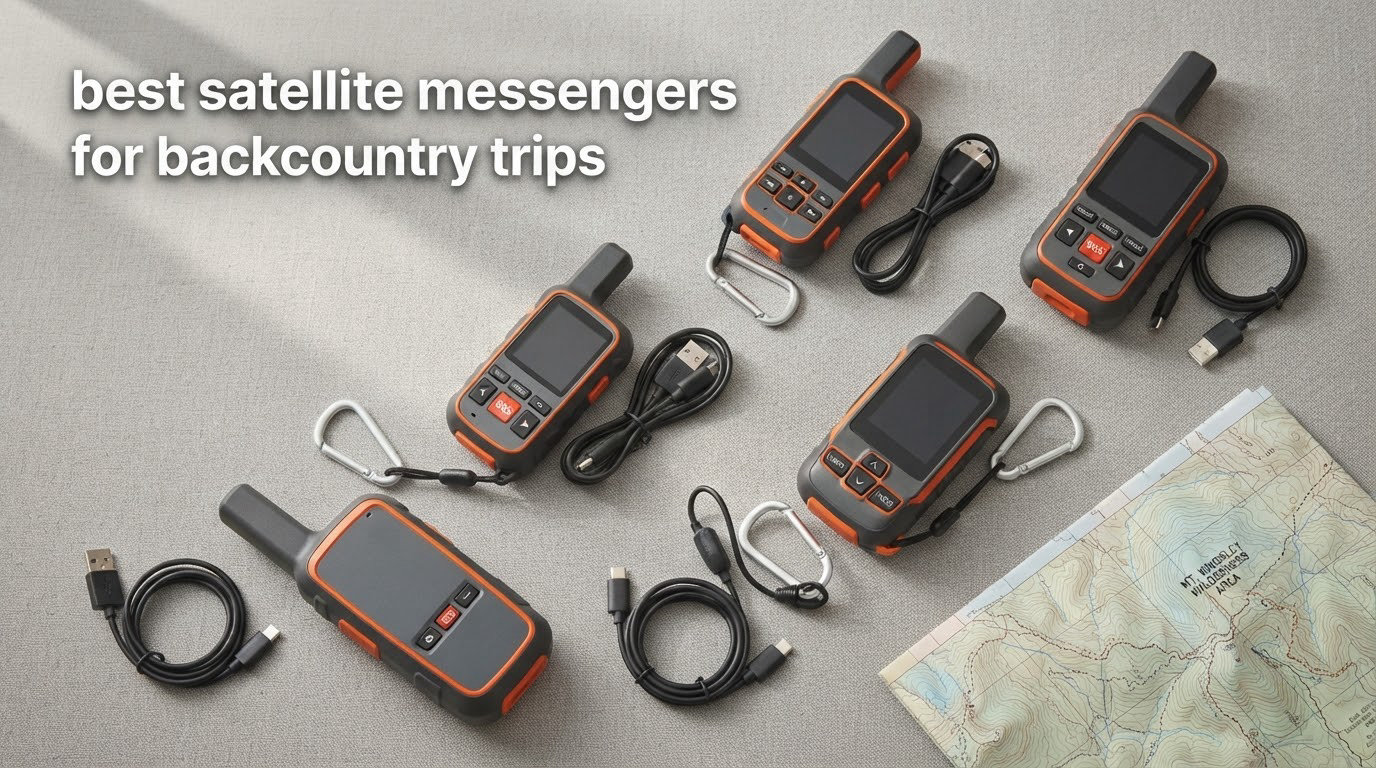
 Garmin inReach Mini 2
 Spot Gen 4 Satellite GPS Messenger
 Garmin inReach Mini
 Garmin GPSMAP 66i
 Garmin inReach Explorer+